

Getting everyone in the family ready for a dental visit can feel like coordinating a small expedition. You’re managing schedules, calming a nervous toddler, tracking insurance cards, and hoping nobody has a meltdown in the waiting room. When you take time to properly prepare your family dental checkup, the whole experience changes. Appointments run smoother, children feel calmer, and you leave with a clear picture of everyone’s oral health. This guide walks you through exactly what to do before, during, and after your visit, from scheduling your first toddler appointment to keeping older kids and adults on track with preventive care.
Key Takeaways
| Point | Details |
|---|---|
| Start dental visits early | Children should see a dentist by age one or within 6 months of their first tooth. |
| Prepare paperwork in advance | Bring insurance info, ID, and completed forms to avoid delays on appointment day. |
| Schedule toddler visits wisely | Book appointments when young children are rested and calm to reduce anxiety. |
| Know what to expect | Checkups include exams, cleanings, X-rays when needed, and fluoride treatments tailored by age. |
| Build positive habits at home | Consistent brushing routines between visits reinforce what your dental team teaches at each checkup. |
How to Prepare a Family Dental Checkup: Logistics First
Before anyone sits in the dental chair, the real preparation happens at home. Coordinating appointments for multiple family members requires a little planning, but the payoff is worth it. Many Woodbridge families find it easiest to book back-to-back or same-day appointments so everyone gets seen in a single trip.
When you call to schedule, let the front desk know the ages of your children and any specific concerns. If someone has dental anxiety, mention it early. The team can often set aside a little extra time or pair a nervous patient with a particularly gentle hygienist. Confirming appointments 24 to 48 hours beforehand prevents last-minute surprises for everyone.
Here is a practical family dental checkup checklist to gather before you arrive:
- Government-issued photo ID for adult patients
- Current dental insurance cards (or plan numbers if cards are digital)
- A completed new patient form if it was not submitted online ahead of time
- A list of any medications each family member currently takes
- Names of any specialists or previous dentists for record transfers
- Your child’s typical snack and drink schedule, which helps dentists tailor fluoride and diet advice to your child’s actual habits
Pro Tip: Most dental offices now offer online forms. Fill them out the night before rather than in the waiting room with a restless toddler on your lap. It saves time and stress.
Arriving 10 to 15 minutes early is one of the simplest tips for a family dental appointment that most parents overlook. That buffer gives children time to look around, get comfortable with the space, and ask questions without feeling rushed.
Preparing toddlers and young children for dental visits
The American Academy of Pediatrics recommends that children establish a dental home by age one or within six months of their first tooth erupting. This is less about treating dental problems and more about building familiarity with the dental setting. When children grow up knowing what a dental office looks and feels like, fear simply does not take root the same way.
Taking your child by their first birthday sets a foundation of positive experiences that reduces long-term dental anxiety. The good news is that first visits for toddlers are short and gentle. A typical first appointment includes:
- A brief, friendly introduction to the dental team and the chair
- A lap-based exam where the child sits or lies across your lap and the dentist’s knee
- A gentle check of erupted teeth for signs of early decay or development concerns
- Fluoride varnish application, which is recommended every 6 months for children under 5
- Guidance on diet, bottle use, and brushing technique specific to your child’s age
- A short conversation with you about any questions or concerns you have noticed at home
To prepare your toddler at home, use simple, positive language. Say “the dentist will count your teeth” rather than “it won’t hurt.” Read children’s books about dental visits in the days leading up to the appointment. Many families in Vaughan find that a short role-play game at home, where you take turns being the dentist and the patient, makes the real thing feel familiar.
Pro Tip: Schedule toddler appointments for morning slots when children are well-rested and calm. An overtired toddler at 4 PM is a much harder patient than a refreshed one at 10 AM.

Bring your child’s comfort item if they have one. A small stuffed animal or blanket in the chair provides a sense of security that makes the exam go more smoothly for everyone.
Preparing older children and adults for checkups
School-age children and adults benefit most from understanding what is coming. Knowing the steps of a visit reduces resistance and builds a sense of control. Routine dental visits catch cavities early, monitor jaw and tooth development in children, and remove plaque and tartar that regular brushing simply cannot reach on its own.
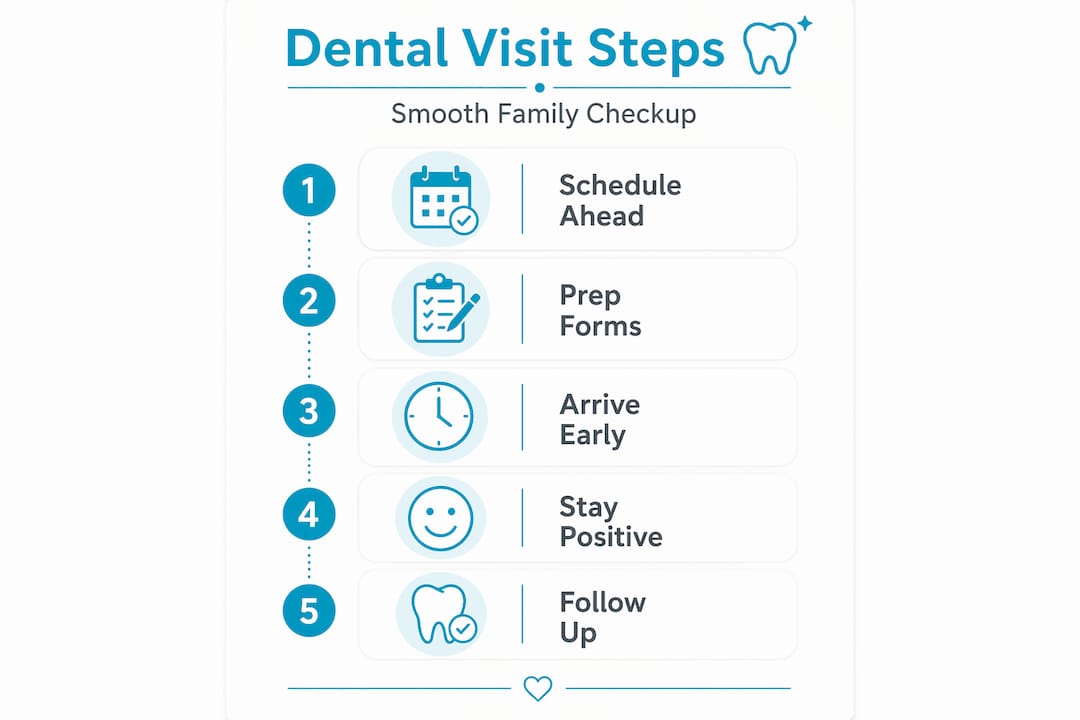
For school-age children, talk about the appointment casually in the days before, not with a big warning tone. Frame it as a normal part of taking care of your body, the same as a haircut or a sports physical.
For adult patients, here is what to prepare before your checkup:
- Review any changes in your health history, medications, or allergies since your last visit
- Note any sensitivity, pain, or changes in your mouth you want to discuss
- Avoid eating a large meal right before, but do brush and floss beforehand
- If you have dental anxiety, tell the front desk when you call so the team can prepare
Pro Tip: If your child has been resisting brushing at home, mention it at the appointment. Family dentists act as coaches for building oral hygiene habits, and a gentle word from the dentist often lands differently than the same reminder from a parent.
Between visits, keep the whole family engaged in consistent brushing routines to reinforce what the dental team teaches at each appointment. Two minutes twice a day is the standard, but technique matters as much as timing.
What happens during the family dental checkup
Many parents feel most reassured once they understand the actual flow of an appointment. Dental checkups include exams, cleanings, X-rays, fluoride, and personalized care plans that are adjusted based on each patient’s age and risk profile. Here is how a typical visit unfolds:
- Check-in and health history review. The front desk confirms your information, and the hygienist reviews any updates to medications or health conditions.
- Dental exam. The dentist examines teeth, gums, and surrounding tissue. For children, this includes checking tooth development and bite alignment.
- X-rays when needed. Not every visit requires X-rays. The frequency depends on age, cavity history, and risk factors.
- Professional cleaning. The hygienist removes plaque and tartar buildup, then polishes teeth. For children, this is often the part they remember most fondly.
- Fluoride application. Applied as a varnish or gel, fluoride strengthens enamel and is especially important for younger patients.
- Personalized recommendations. The dentist shares findings, answers your questions, and may recommend sealants for cavity-prone molars in children.
- Next appointment scheduling. Most families leave with their next checkup already booked, which keeps everyone on a twice-yearly schedule.
| Family member | Typical visit length | Key focus areas |
|---|---|---|
| Toddler (age 1 to 3) | 20 to 30 minutes | Lap exam, fluoride varnish, diet guidance |
| Child (age 4 to 12) | 45 to 60 minutes | Cleaning, X-rays, sealants, cavity check |
| Teen | 45 to 60 minutes | Cleaning, bite development, wisdom teeth monitoring |
| Adult | 60 minutes | Full cleaning, exam, X-rays, gum health assessment |
Understanding this flow takes most of the uncertainty out of the day. When your child knows the hygienist will “tickle” their teeth with the polisher and then paint a special varnish on them, it sounds much less intimidating.
Common concerns and how to handle them
Even with the best preparation, things do not always go perfectly. A child might refuse to open their mouth. An appointment might run long. A finding might require a follow-up visit. Here is how to handle the most common situations:
- Child resistance during the appointment: Stay calm and let the dental team take the lead. Experienced pediatric-focused hygienists have strategies for nervous children. Your job is to stay steady and positive in the background.
- Long waits or restlessness: Bring a small activity for younger children. A favorite book or simple quiet toy in your bag prevents most waiting-room meltdowns.
- Unexpected treatment recommendations: Ask the dentist to explain the concern, the urgency, and your options. Good dental teams welcome your questions and never rush you out the door before you feel clear.
- Fear of the dentist: Acknowledge it without amplifying it. Saying “I know it feels a little strange, and that’s okay” is more helpful than “there’s nothing to be scared of.” For persistent fear, our article on managing your child’s dental anxiety offers specific calming techniques that work.
Pro Tip: Never bribe children with sweets after a dental visit. Instead, offer a sticker, a trip to the park, or simple praise. You want the reward to reinforce the habit, not undermine the dental advice they just received.
A few mistakes are worth avoiding specifically. Do not describe your own dental anxiety to your children before an appointment. Children pick up on parental worry quickly. Do not reschedule repeatedly for minor reasons, as it teaches children that avoiding the dentist is acceptable.
My honest take after 25 years of family dental practice
In my experience, the families who have the smoothest dental visits are not the ones with the calmest children. They are the ones with the most consistent approach. Parents who talk about dental visits the same way they talk about getting a haircut, without drama or apology, raise children who sit in the chair and open wide without a second thought.
I have seen families in Woodbridge and Vaughan transform their children’s relationship with dental care simply by starting early. A two-year-old who has already visited the office twice has a completely different comfort level than a five-year-old walking in for the first time. That early dental home is not just about catching problems early. It is about making the dental office a familiar, safe place.
What I have also learned is that parents carry a lot of guilt when their child has a cavity. Please do not. Cavity risk is influenced by genetics, diet, tooth anatomy, and timing. Seeing us regularly means we catch things early, when treatment is simple and children barely notice it.
The families I worry about are the ones we do not see for three or four years. By then, small issues have grown. A twice-yearly visit, for all ages, is genuinely one of the most cost-effective health habits a family can maintain.
— Felix
Schedule your family’s next visit with Woodbridge Dental Centre
At Woodbridgedentalcentre, we see patients of all ages under one roof, from toddlers on their first visit to grandparents managing complex care. Dr. Michael Rouhi, Dr. Sandra Farber, and our team have built a practice around making every visit feel comfortable, clear, and worth your time.

We offer flexible scheduling so Woodbridge and Vaughan families can book back-to-back appointments and get everyone seen in a single visit. Our team is experienced with nervous children, busy parents, and everything in between. Whether your little one needs their first gentle exam or you are due for a cleaning and checkup yourself, we make it easy to stay on track. Visit our family dentistry page to learn more about our services and book an appointment that works for your whole family.
FAQ
When should my child’s first dental visit happen?
Children should see a dentist by their first birthday or within six months of their first tooth coming in, whichever comes first. Early visits build familiarity and allow the dentist to catch development concerns before they become bigger problems.
What should I bring to a family dental appointment?
Bring photo ID, insurance cards, a list of current medications for each family member, and any completed new patient forms. For toddlers, bring their typical snack schedule so the dentist can provide tailored diet and fluoride guidance.
How do I help my child stay calm at the dentist?
Schedule appointments when your child is well-rested, use simple and positive language, and let your dental team guide the visit. Reading books about dental visits at home and doing a brief role-play beforehand also helps children feel more in control.
How often does my family need dental checkups?
Most children and adults benefit from a checkup every six months. Some patients with higher cavity or gum disease risk may need visits more frequently, which your dentist will discuss with you based on each family member’s specific needs.
What if my child refuses to open their mouth?
Stay calm and let the dental team handle it. Pediatric-focused hygienists use specific language and gentle techniques to coax reluctant children. Your calm presence is the most helpful thing you can offer in that moment.
Recommended
- What Should I Pack for My Kid’s Dental Visit? | Pro Tips for Stress-Free Appointments – Woodbridge Dental Centre | Cosmetic, Implant & Family Dentistry
- Types of Family Dental Services: What Every Family Should Know
- Family Dentistry in Woodbridge | Care for All Ages
- What to Expect from a Pediatric Dental Cleaning | A Step-by-Step Look Inside – Woodbridge Dental Centre | Cosmetic, Implant & Family Dentistry


