Trust in dental care is the foundation of every safe, comfortable, and effective treatment experience. Without it, patients avoid appointments, withhold symptoms, and reject treatment plans that could protect their long-term health. Research published in MDPI confirms that effective communication directly reduces dental anxiety, improves treatment adherence, and prevents avoidable errors. For families in Woodbridge, Vaughan, and Maple, understanding why trust matters in dental care is the first step toward making confident, informed decisions about your oral health.
Why trust matters in dental care for patients and families
Patient trust in dentistry is defined as the confident belief that your dental provider will act in your best interest, communicate honestly, and deliver competent care. This is not a soft concept. It has measurable effects on how patients feel, how they respond to treatment, and how consistently they return for care.
Dental anxiety is one of the most common barriers to regular dental visits. Dental anxiety often reflects broken trust from previous negative experiences, and it requires transparency and patient education to rebuild. That means a bad experience with one provider can keep a patient away from dental care for years. Rebuilding that trust takes time, consistency, and a dentist who explains every step before acting.
Trust also shapes how openly patients communicate. When patients feel safe, they share symptoms they might otherwise hide out of embarrassment or fear. That open dialogue leads to earlier diagnoses and better outcomes. A patient who trusts their dentist is far more likely to mention a sore tooth, bleeding gums, or a lump they noticed than one who feels rushed or judged.
The practical benefits of trustworthiness in dental practices include:
- Reduced anxiety. Patients who trust their provider feel calmer before and during appointments.
- Better communication. Open dialogue leads to more accurate diagnoses and informed consent.
- Higher treatment acceptance. Trusted dentists see patients follow through on recommended care.
- Longer relationships. Families stay with providers they trust, supporting consistent preventive care.
- Healthier outcomes. Regular attendance and treatment compliance produce measurably better oral health over time.
How is trust built and maintained in dental practices?
Trust is not built in a single appointment. It develops through repeated, consistent experiences across every point of contact, from the first phone call to the follow-up after a procedure.

Personality and warmth from the dental team, especially dental nurses and front desk staff, play a critical role in building patient trust. Patients notice whether the receptionist greets them by name, whether the hygienist explains what she is doing before she does it, and whether the dentist makes eye contact and listens without interrupting. These small behaviors signal safety and respect.
Transparency is equally important. Showing patients their X-rays, explaining findings in plain language, and walking through treatment options without pressure all reinforce the sense that the dentist is a partner, not an authority figure issuing orders. Dental professionals must foster trustworthiness through radical transparency, including admitting mistakes and maintaining ethical conduct at every level of care.
Digital interactions now shape trust before a patient ever walks through the door. 73% of patients rely on online reviews to evaluate the trustworthiness of a dental practice before booking. That number reflects how much first impressions have shifted online. A practice that responds thoughtfully to reviews, both positive and negative, signals accountability and care.
Pro Tip: Before booking with a new dentist, read how they respond to negative reviews online. A dentist who acknowledges concerns calmly and professionally is showing you exactly how they handle problems in the clinic.
Key behaviors that build trust across the entire dental team include:
- Greeting patients warmly and using their names
- Explaining procedures before starting, not after
- Showing X-rays and visual aids during consultations
- Responding personally to online reviews and feedback
- Following up after complex procedures to check on recovery
- Handling billing and scheduling questions clearly and without pressure
Trust is an operational outcome, built consistently through systems like how calls and follow-ups are handled. The dentist’s chairside manner matters, but so does every other touchpoint in the patient experience.
What are the practical benefits of trusting your dentist?
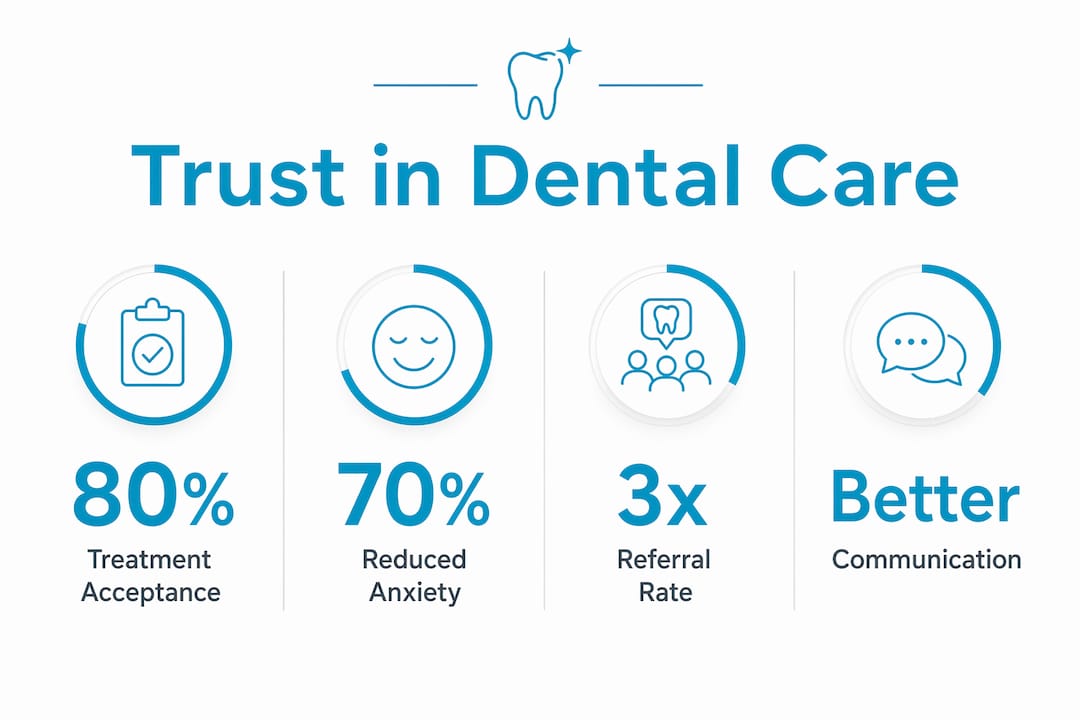
The impact of patient trust on dental treatment acceptance and long-term oral health is well documented. Patients who trust their dental provider are 2–3 times more likely to accept treatment, refer new patients 4–5 times more often, and show 15–20 percentage points higher retention over five years. Those numbers represent real clinical outcomes, not just patient satisfaction scores.
| Benefit | What it means for your oral health |
|---|---|
| Higher treatment acceptance | Patients say yes to necessary care instead of delaying it |
| More referrals | Trusted practices grow through word of mouth from satisfied families |
| Better retention | Patients return consistently, supporting preventive care over time |
| Fewer errors | Open communication reduces misdiagnoses and missed symptoms |
| Stronger outcomes | Compliance with treatment plans produces measurably healthier teeth and gums |
Consider a common scenario. A patient needs a crown on a cracked molar. Without trust, they hesitate, delay, and eventually lose the tooth. With a trusted dentist who explains the risk clearly and answers every question, that same patient books the appointment within a week. The tooth is saved. That is the direct impact of trust on dental health.
Referrals are another underappreciated benefit. Families who trust their dentist do not keep that to themselves. They recommend the practice to neighbors, colleagues, and relatives. In communities like Woodbridge and Maple, word of mouth remains one of the most powerful ways families find a dentist they feel confident about.
Effective communication also reduces the risk of avoidable errors. When patients feel comfortable correcting a misunderstanding or asking a follow-up question, the dentist gets more accurate information. That accuracy protects both the patient and the practice.
How can patients and families build trust with their dentist?
Building trust is a two-way process. Patients who come prepared, ask good questions, and engage honestly get better care. Here is how to evaluate and strengthen trust with your dental provider.
-
Assess communication from the first contact. Patients evaluate trustworthiness within the first moments of contact, including phone interactions. Notice whether the receptionist is patient and clear. A warm, organized front desk reflects a well-run practice.
-
Ask direct questions during your consultation. Ask your dentist to explain your diagnosis in plain language. Ask what happens if you delay treatment. Ask whether there are alternative options. A trustworthy dentist welcomes these questions and answers them without impatience.
-
Check online reviews with a critical eye. Look for patterns, not just star ratings. Notice whether the dentist responds to reviews personally. 81% of patients trust a dental practice more when dentists personally engage with and respond to online reviews. That engagement signals accountability.
-
Observe how the whole team behaves. Trust is not just about the dentist. Watch how the hygienist explains the cleaning, how the assistant prepares the room, and how billing questions are handled. Consistent warmth across the team is a strong indicator of a trustworthy practice.
-
Be honest about your anxiety or past experiences. Telling your dentist that you had a painful experience elsewhere, or that you feel nervous, gives them the information they need to adjust their approach. Transparency works in both directions.
Pro Tip: Before your first appointment at a new practice, review their dental appointment preparation guide if they have one. Practices that invest in patient education before the visit are showing you their values upfront.
Patients who engage actively in their care, ask questions, and share concerns get more from every appointment. That partnership is what good dental care looks like in practice.
Key Takeaways
Trust in dental care directly determines whether patients accept treatment, return consistently, and achieve lasting oral health outcomes.
| Point | Details |
|---|---|
| Trust reduces dental anxiety | Transparent communication and consistent warmth help patients feel safe enough to attend and engage. |
| Digital trust matters | 73% of patients check online reviews before booking, and dentist responses build pre-visit confidence. |
| Treatment acceptance rises with trust | Trusted dentists see patients accept care 2–3 times more often than those with low-trust relationships. |
| The whole team builds trust | Warmth from dental nurses, receptionists, and hygienists shapes patient confidence as much as the dentist does. |
| Patients can actively build trust | Asking questions, sharing concerns, and evaluating communication style all strengthen the patient-dentist relationship. |
What 25 years of practice taught me about trust
In my experience, the patients who struggle most are not those with the most complex dental problems. They are the ones who never felt safe enough to come back after a difficult appointment years ago. I have seen patients arrive with advanced gum disease or a tooth that should have been treated a decade earlier, not because they lacked access to care, but because they lost trust in a provider and never found one they felt comfortable with again.
Many patients are surprised to learn that trust is something we work at every single day, not just during the clinical exam. It starts when the phone is answered. It continues when we explain an X-ray finding without rushing. It deepens when we follow up after a procedure to ask how they are feeling. The good news is that trust, once established, tends to hold. Families who feel genuinely cared for come back year after year, and they bring their children and parents with them.
What patients often misunderstand is that asking questions is not a sign of distrust. It is the opposite. The patients who ask the most questions are usually the ones who care most about their health and who end up with the best outcomes. I encourage every patient, whether new to our practice or a long-time visitor, to speak up, push back, and ask us to explain anything that is not clear. That kind of open partnership is what makes dental care work the way it should.
— Felix
Trusted family dental care in Woodbridge
At Woodbridgedentalcentre, Dr. Michael Rouhi, Dr. Sandra Farber, and their team have built their practice around exactly the kind of trust this article describes. Every appointment, from a child’s first cleaning to a complex restorative case, is approached with clear communication, genuine warmth, and full transparency about your options.
Families across Woodbridge, Vaughan, and Maple choose Woodbridgedentalcentre because they feel heard, respected, and cared for at every visit. If you are looking for family dental care that puts your comfort and long-term health first, we would be glad to welcome you. Flexible appointment options and a welcoming team are ready when you are. Explore our family oral health resources to learn more about keeping every member of your family healthy for the long term.
FAQ
Why does trust matter so much in dental care?
Trust determines whether patients attend appointments, accept treatment, and communicate openly with their dentist. Without it, patients delay care and experience worse oral health outcomes over time.
How do I know if I can trust a new dentist?
Observe how the whole team communicates from your first phone call. A trustworthy practice explains procedures clearly, welcomes questions, and responds personally to online reviews.
Can trust reduce dental anxiety?
Yes. Dental anxiety often stems from past negative experiences, and transparent, empathetic communication from the dental team is the most effective way to rebuild that sense of safety.
How does trust affect treatment acceptance?
Patients who trust their dental provider are 2–3 times more likely to accept recommended treatment. That higher acceptance rate leads directly to better oral health outcomes over time.
What role do online reviews play in building trust?
Online reviews are a primary trust signal before a first visit. Practices where dentists personally respond to reviews earn measurably higher patient confidence, with 81% of patients reporting greater trust in those practices.