

Professional teeth whitening is the most effective method for brightening your smile, capable of improving tooth shade by 6–10 levels in a single in-office session. The results you get depend heavily on what you do before you sit in the chair. Patients who prepare for their teeth whitening appointment with a professional cleaning, sensitivity management, and smart dietary choices consistently see more even, longer-lasting results. This guide walks you through every preparation step, explains what to expect on the day, and gives you realistic advice on keeping that brightness going.
Why professional dental cleaning is essential before teeth whitening
A professional cleaning is the single most important step you can take before whitening. Plaque and tartar block whitening gel from reaching the enamel surface evenly. Without a clean surface, the gel produces patchy or uneven results, which no amount of gel concentration can fix.
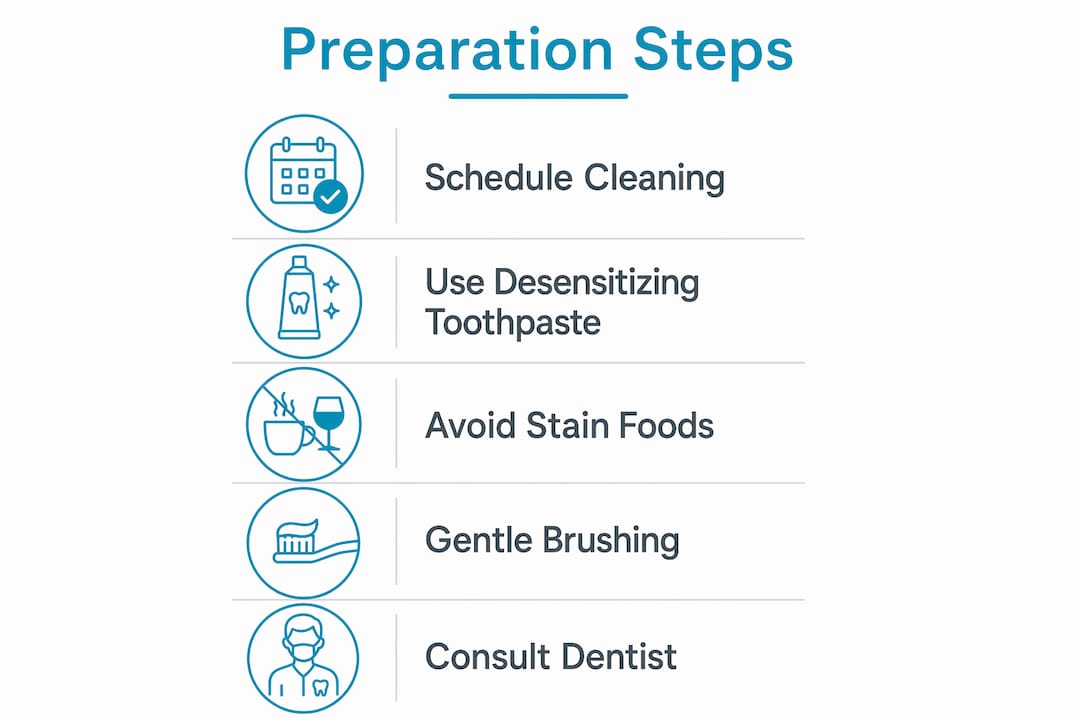
Scheduling your cleaning 1–2 weeks before your whitening appointment is the right approach. Cleaning and whitening on separate days reduces the risk of sensitivity because scaling can temporarily inflame gums and expose enamel. Combining both procedures in one visit stacks two sources of irritation together, which many patients find uncomfortable.
The checkup that comes with your cleaning also serves another purpose. Your dentist will identify any cavities, gum disease, or cracked enamel that must be treated before whitening begins. Applying a high-concentration peroxide gel to a compromised tooth causes sharp, lasting pain. Treating underlying issues first protects you and produces better outcomes.
- Schedule a professional cleaning 1–2 weeks before your whitening date
- Ask your dentist to check for cavities, gum disease, and cracked enamel at the same visit
- Confirm your gums are healthy enough for whitening gel contact
- Discuss any existing crowns, veneers, or bridges, since whitening gel does not change the shade of dental restorations
Pro Tip: If you have crowns or veneers on visible front teeth, ask your dentist about the color-matching plan before whitening. You may need to replace restorations after treatment to achieve a consistent shade.
How to manage tooth sensitivity before your appointment
Tooth sensitivity is the most common concern patients raise before whitening. The good news is that you can reduce it significantly with the right toothpaste and a few simple habits in the weeks leading up to your appointment.
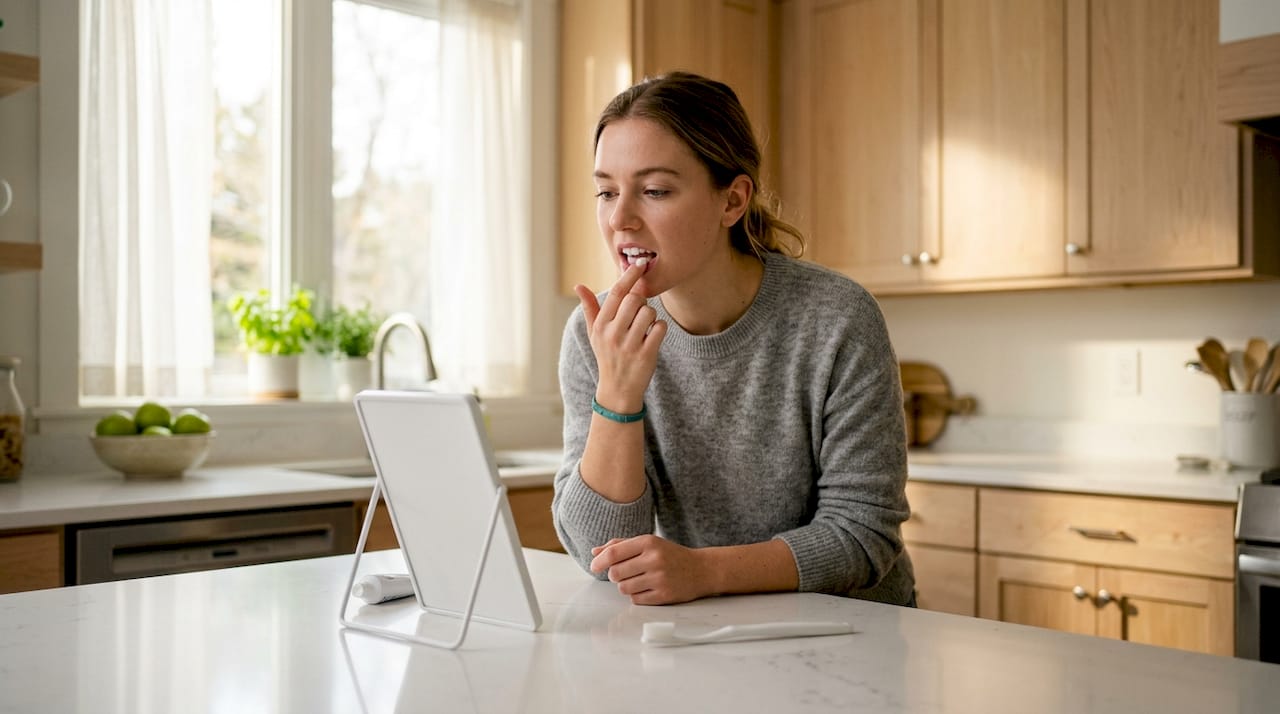
Desensitizing toothpaste containing potassium nitrate builds a protective barrier around nerve endings when used consistently for 1–2 weeks before treatment. Stannous fluoride toothpaste works through a different mechanism, strengthening enamel and reducing fluid movement inside the tooth that triggers sensitivity. Both are available over the counter. Use whichever your dentist recommends, and apply it twice daily without rinsing immediately after brushing.
In the days before your appointment, avoid very hot and very cold foods and drinks. Temperature extremes aggravate already-reactive teeth and can make the whitening session feel more intense than it needs to be. Stick to room-temperature water and mild foods.
- Use potassium nitrate or stannous fluoride toothpaste twice daily for at least 1–2 weeks before your appointment
- Avoid hot coffee, iced drinks, and cold foods in the 48 hours before treatment
- Tell your dentist your current sensitivity level so they can adjust gel concentration and exposure time
- Ask about pain relief options before your appointment
Taking ibuprofen before whitening is something some dentists recommend for sensitive patients, but only after a direct conversation with your provider. Self-medicating without guidance is not appropriate for everyone, particularly patients with certain health conditions or medication interactions.
Pro Tip: Apply your desensitizing toothpaste directly to your teeth with a finger and leave it on for a few minutes before rinsing. This gives the active ingredients more contact time with the enamel.
Foods, drinks, and habits to avoid before your whitening appointment
The enamel on your teeth is porous. Surface pigments from food and drink absorb into those pores and sit on the enamel surface. When those pigments are present at the time of whitening, they compete with the gel and reduce its effectiveness. Clearing them out 24–48 hours before your appointment gives the whitening agent a clean surface to work on.
Avoid coffee, tea, red wine, dark sodas, soy sauce, tomato sauce, and tobacco in the 24–48 hours before treatment. These are the highest-staining substances in most people’s daily routines. Tobacco is particularly problematic because nicotine and tar penetrate enamel deeply and resist whitening gel.
Follow these steps in the days before your appointment:
- Stop drinking coffee, tea, and red wine at least 24 hours before your session.
- Avoid tobacco products for at least 48 hours before treatment.
- Skip dark sauces like soy sauce, balsamic vinegar, and tomato-based condiments.
- Rinse your mouth with water immediately if you accidentally consume a staining food or drink.
- On the morning of your appointment, skip lipstick, lip gloss, and lip balm entirely.
That last point surprises many patients. Lip products contaminate whitening trays and interfere with the protective barriers your dentist places around your gums. Arriving with bare lips keeps the treatment area clean and the barriers intact.
What to expect on the day of your teeth whitening appointment
The day of your appointment calls for a calm, simple routine. Brush your teeth gently with a soft-bristled toothbrush at least 30 minutes before you arrive. Brushing too close to the appointment time or using an abrasive toothpaste increases gum irritation when the whitening gel is applied. Use a plain, non-whitening toothpaste that morning. Floss gently as well, but stop if your gums feel tender.
What happens during the procedure
A standard in-office whitening session lasts 45–60 minutes. Your dentist will place a protective barrier over your gums before applying the whitening gel to your teeth. The gel, which contains a high-concentration peroxide formula, stays on your teeth for timed intervals. Some patients feel a mild tingling or warmth during treatment. That is normal. Sharp or lasting pain is not normal and should be reported to your dentist immediately.
Restorations and realistic expectations
Many patients are surprised to learn that whitening gel does not affect crowns, veneers, or bridges. Patients with existing restorations may see a color mismatch between their natural teeth and their dental work after whitening. Discussing this with your dentist before treatment helps you plan realistically. In some cases, replacing older restorations after whitening achieves the most consistent result.
Post-treatment care on the same day
- Avoid staining foods and drinks for 24–48 hours after treatment
- Stick to white or light-colored foods: chicken, rice, pasta, white fish, and plain yogurt
- Use a straw for any cold beverages to minimize contact with teeth
- Manage any post-treatment sensitivity with your desensitizing toothpaste
The good news is that sensitivity after whitening typically subsides within 24–48 hours. That window passes quickly, and most patients feel comfortable again the following day.
Pro Tip: Pack a small tube of your desensitizing toothpaste in your bag on appointment day. Applying it right after treatment gives your teeth immediate relief during the most reactive window.
Tips for maximizing and maintaining your whitening results
Professional whitening accelerates brightness, but daily oral hygiene and lifestyle choices determine how long those results last. Patients who brush twice daily, floss consistently, and limit staining foods keep their results noticeably longer than those who return to old habits immediately.
The habits that protect your results are the same ones that protect your overall oral health. That alignment makes them easier to maintain.
- Brush twice daily with a fluoride toothpaste; switch to a whitening-maintenance toothpaste after treatment
- Floss once daily to remove plaque that traps staining particles between teeth
- Limit coffee, tea, and red wine; use a straw when you do consume them
- Avoid tobacco entirely, as it is the fastest way to reverse whitening results
- Schedule professional cleanings every six months to remove surface stains before they set
| Habit | Effect on whitening results |
|---|---|
| Twice-daily brushing | Removes surface stains before they penetrate enamel |
| Limiting coffee and tea | Slows re-staining significantly over weeks and months |
| Avoiding tobacco | Prevents deep pigment absorption that resists re-whitening |
| Regular professional cleanings | Removes built-up stains and keeps enamel surface clear |
| Using a whitening maintenance toothpaste | Helps preserve shade between professional touch-up sessions |
Touch-up treatments are a normal part of whitening care. Most patients benefit from a professional touch-up every 12–18 months, depending on diet and habits. Your dentist at Woodbridgedentalcentre can advise on the right interval for your specific situation. You can also learn more about factors affecting whitening results to set realistic expectations from the start.
Key takeaways
Proper preparation for a teeth whitening appointment, starting with a professional cleaning and sensitivity management, directly determines the quality and comfort of your results.
| Point | Details |
|---|---|
| Clean before you whiten | Schedule a professional cleaning 1–2 weeks before your whitening appointment for even gel penetration. |
| Manage sensitivity early | Use potassium nitrate or stannous fluoride toothpaste for at least two weeks before treatment. |
| Avoid staining substances | Skip coffee, tea, red wine, and tobacco for 24–48 hours before and after your appointment. |
| Know your restorations | Whitening gel does not change the color of crowns or veneers; discuss color matching with your dentist first. |
| Maintain daily habits | Brushing twice daily and limiting staining foods extends whitening results far longer than the procedure alone. |
What I’ve learned from years of whitening consultations
In my experience, the patients who get the best whitening results are rarely the ones with the brightest starting shade. They are the ones who came prepared. They had their cleaning done ahead of time, they used their desensitizing toothpaste consistently, and they asked good questions before sitting in the chair.
The most common surprise I see is patients who did not realize their crowns or veneers would stay the same color. That conversation is much easier to have before whitening than after. Setting realistic expectations is not about lowering enthusiasm. It is about making sure the outcome matches what you actually wanted.
I also want to be honest about DIY whitening methods. Abrasive or acidic substances like lemon juice and baking soda can permanently damage enamel and increase sensitivity. Professional treatments use tested, controlled formulas at concentrations that are safe for your enamel. The difference matters.
For families in Woodbridge, Vaughan, and Maple, I always say the same thing: whitening is a complement to good oral care, not a replacement for it. Long-term whitening success is anchored in daily brushing and flossing, not in how strong the gel was. Come in prepared, keep up your home care, and the results will speak for themselves.
— Felix
Professional whitening at Woodbridgedentalcentre
Woodbridgedentalcentre offers professional teeth whitening as part of a full range of cosmetic and family dental care services for patients across Woodbridge, Vaughan, and Maple. Dr. Michael Rouhi, Dr. Sandra Farber, and their team take time to assess your oral health before any whitening treatment, so you get results that are safe, even, and suited to your specific teeth.

Before your appointment, you are welcome to review our dental appointment preparation tips to feel fully ready on the day. Whether this is your first whitening session or a touch-up, the team at Woodbridgedentalcentre is here to make the experience comfortable and the outcome worth your time. Contact us to book a consultation and take the first step toward a brighter, healthier smile.
FAQ
How far in advance should I schedule a cleaning before whitening?
Schedule your professional cleaning 1–2 weeks before your whitening appointment. This gap allows gum inflammation from scaling to settle before the whitening gel is applied.
What toothpaste should I use before a whitening appointment?
Use a desensitizing toothpaste containing potassium nitrate or stannous fluoride for at least two weeks before treatment. Avoid abrasive or whitening toothpastes on the morning of your appointment.
Will whitening work on my crowns or veneers?
Whitening gel does not change the color of crowns, veneers, or bridges. Patients with visible restorations should discuss color-matching options with their dentist before treatment.
How long does tooth sensitivity last after whitening?
Sensitivity after professional whitening typically subsides within 24–48 hours. Applying desensitizing toothpaste immediately after treatment helps reduce discomfort during that window.
What can I eat and drink after my whitening appointment?
Stick to white or light-colored foods for 24–48 hours after treatment, including chicken, rice, plain pasta, and water. Avoid coffee, tea, red wine, and any dark sauces during that period to protect your results.


