Cosmetic dental longevity is defined by the type of procedure you choose, the quality of your daily care, and how consistently you follow up with your dentist. Results range from six months for teeth whitening to a lifetime for dental implants, with most treatments falling somewhere in between. Understanding these timelines before you commit to treatment helps you plan realistically, budget wisely, and avoid disappointment. At Woodbridgedentalcentre, Dr. Michael Rouhi and Dr. Sandra Farber answer these exact questions every day for patients across Woodbridge, Vaughan, and Maple.
How long do cosmetic dental results last by treatment type?
The duration of dental results varies significantly across procedures. Knowing the clinical benchmarks for each treatment gives you a realistic starting point.
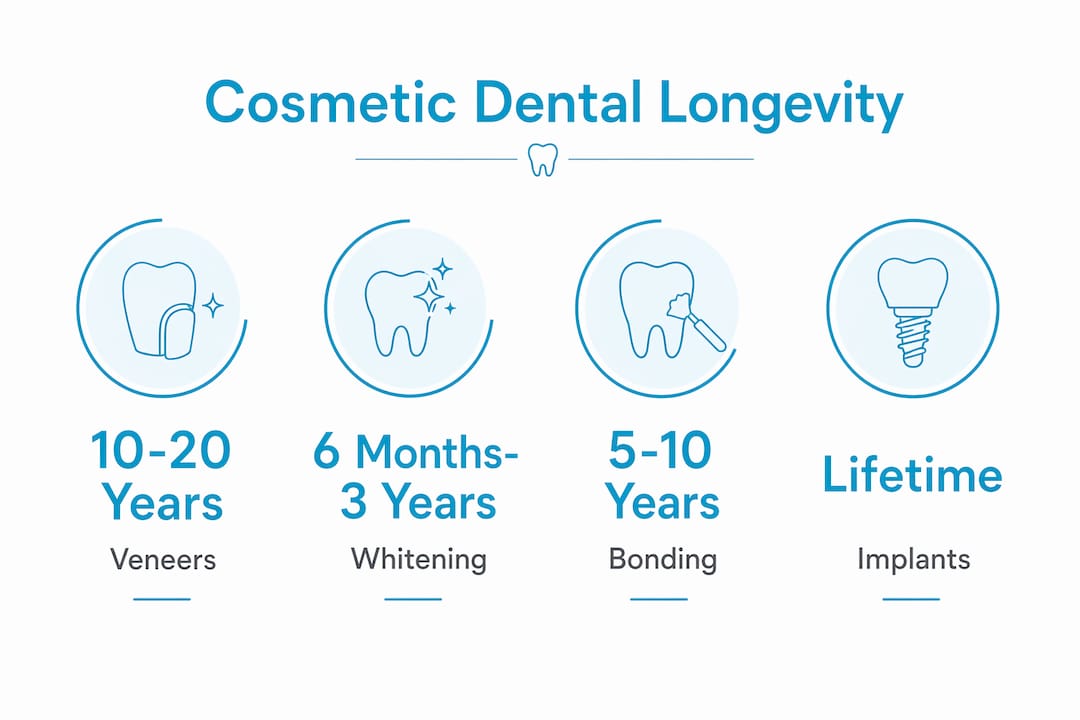
Porcelain veneers are among the most durable cosmetic options. Clinical research published in the Journal of Esthetic and Restorative Dentistry shows veneers reach 95% survival at 10 years and 83% at 20 years with proper care. That means most patients get 10–15 years from their veneers, and many get closer to 20.
Teeth whitening sits at the opposite end of the spectrum. Whitening results last 6 months to 3 years, depending on your diet and habits. Touch-ups every 6–12 months are recommended for patients who regularly drink coffee, tea, or red wine.
Dental bonding offers a middle ground. Bonding shows 85–90% success over the first five years, then gradual wear begins. Most patients need repairs or replacement somewhere between 3 and 10 years.
Dental crowns last 10–15 years on average, with well-maintained porcelain crowns sometimes exceeding 20 years. Porcelain-fused-to-metal crowns can perform well in certain bite situations, and your dentist will recommend the right material based on where the crown sits in your mouth.
Dental implants are the closest thing to a permanent solution. Implants typically last a lifetime because the titanium post fuses directly to your jawbone. The crown placed on top may need replacement after 10–15 years, but the implant itself rarely fails with proper care.
| Treatment | Typical Lifespan | Key Variable |
|---|---|---|
| Teeth whitening | 6 months to 3 years | Diet and staining habits |
| Dental bonding | 3–10 years | Wear and bite forces |
| Porcelain veneers | 10–20 years | Bonding technique and hygiene |
| Porcelain crowns | 10–20 years | Material choice and care |
| Dental implants | Lifetime (crown 10–15 years) | Bone health and maintenance |
What factors influence cosmetic dental longevity?
The lasting power of a smile makeover depends on more than the procedure itself. Several lifestyle and clinical factors determine whether your results hold up for years or fade faster than expected.
- Oral hygiene habits. Brushing twice daily and flossing removes bacteria that weaken bonding agents and stain composite materials. Patients who skip flossing tend to see bonding and veneer margins deteriorate earlier.
- Diet choices. Frequent coffee, tea, or red wine consumption directly shortens whitening results and stains composite restorations faster. Acidic foods also soften enamel around restoration edges.
- Smoking. Tobacco stains veneers and bonding quickly and increases the risk of gum disease, which undermines the foundation of any cosmetic work.
- Bruxism (teeth grinding). Bruxism affects 5–20% of adults and is one of the most common reasons cosmetic restorations fail early. The repeated pressure cracks porcelain, chips bonding, and wears down veneers.
- Bite alignment. Uneven bite forces concentrate stress on specific teeth. A bite assessment before treatment is a key step that many patients overlook.
- Bonding technique. Research shows that veneers bonded to enamel reach 96.7% survival at 15 years, compared to 93.9% when bonded onto dentin. Minimal tooth preparation preserves more enamel and improves long-term outcomes.
Pro Tip: If you wake up with jaw soreness or notice worn edges on your teeth, mention it at your next appointment. Undiagnosed bruxism is the single most preventable cause of early cosmetic restoration failure.
Many patients in Vaughan and Woodbridge lead busy lives with frequent coffee runs and irregular dental visits. Those two habits alone can cut whitening results in half and accelerate wear on bonding and veneers.
How to maintain and extend the lifespan of cosmetic dental treatments
Active maintenance can extend cosmetic dental results by 30–40% compared to irregular care. That is a significant difference, and most of the steps are straightforward.
- Brush with a soft-bristled toothbrush. Hard bristles scratch the surface of porcelain and composite, dulling the finish over time. Use a non-abrasive toothpaste to protect restoration surfaces.
- Floss daily around restoration margins. Bacteria accumulate at the edges of veneers and crowns. Flossing prevents the gum inflammation that loosens bonding and causes margins to fail.
- Avoid biting hard objects. Ice, pen caps, and hard candies crack porcelain and chip bonding. This is especially relevant for patients with veneers or bonding on front teeth.
- Wear a nightguard if you grind. For patients with bruxism, occlusal guards improve survival rates for zirconia crowns from 80% to 92% over five years. A custom guard from your dentist fits better and protects more effectively than an over-the-counter option.
- Schedule professional cleanings every six months. Regular checkups allow your dentist to catch early wear, re-polish restoration surfaces, and address small issues before they become costly repairs.
- Plan whitening touch-ups proactively. If you drink staining beverages regularly, schedule a touch-up every 6–12 months rather than waiting until the results are noticeably faded. Your dentist can recommend safe at-home whitening methods to maintain brightness between visits.
Pro Tip: After any whitening treatment, follow the “white diet” for 48 hours. Avoid dark-colored foods and drinks while your enamel pores are still open. This single step protects your results during the most vulnerable window.
For patients who have had Invisalign or clear aligner treatment, retainer compliance is non-negotiable. Without consistent retainer use, natural tooth drift reverses alignment over time, undoing the cosmetic improvement entirely.
Veneers vs. bonding vs. implants: which option suits your lifestyle?
Choosing the right treatment depends on how much maintenance you are willing to commit to and how long you want results to last. Each option suits a different patient profile.
Veneers suit patients who want long-term results and are willing to protect their investment with good hygiene and a nightguard if needed. They are not ideal for patients with severe bruxism unless bite forces are managed first. Explore the full range of cosmetic treatment options to compare what fits your situation.
Bonding suits patients who want a lower-cost, reversible option and accept that touch-ups will be needed every few years. It works well for minor chips and gaps but wears faster under heavy bite forces.
Implants suit patients who want the most durable tooth replacement available. The dental implant lifespan is unmatched among cosmetic procedures, but the upfront commitment in time and cost is higher.
| Procedure | Maintenance Level | Best For |
|---|---|---|
| Teeth whitening | Low to moderate | Patients wanting quick, affordable results |
| Dental bonding | Moderate | Minor corrections with budget flexibility |
| Porcelain veneers | Moderate | Long-term aesthetic improvement |
| Dental crowns | Moderate | Damaged or heavily restored teeth |
| Dental implants | Low (long-term) | Permanent tooth replacement |
Most cosmetic procedures are long-lasting rather than permanent. Implants are the exception, capable of lasting several decades with consistent care. For every other treatment, planning for eventual maintenance or replacement is part of realistic expectations.
Key Takeaways
Cosmetic dental longevity depends on treatment type, daily oral hygiene, and consistent professional maintenance, with results ranging from months to a lifetime.
| Point | Details |
|---|---|
| Whitening is temporary | Results last 6 months to 3 years; touch-ups every 6–12 months maintain brightness. |
| Veneers are long-lasting | Clinical data shows 95% survival at 10 years and 83% at 20 years with proper care. |
| Implants last the longest | The titanium post lasts a lifetime; the crown above may need replacement after 10–15 years. |
| Maintenance extends results | Active care and regular checkups can extend cosmetic results by 30–40%. |
| Bruxism is a hidden risk | Occlusal guards protect restorations and improve survival rates significantly for grinding patients. |
What 25 years of practice has taught me about cosmetic dental expectations
In my experience, the patients who are most satisfied with their cosmetic dental results are not always the ones who chose the most expensive procedure. They are the ones who came in with realistic expectations and followed through on maintenance.
Many patients are surprised to learn that a veneer placed 15 years ago can still look excellent if the patient has been diligent about hygiene and worn a nightguard. I have seen the opposite too: veneers that needed replacement in under seven years because bruxism was never addressed. The procedure itself is only half the equation.
The honest truth is that most cosmetic treatments require some level of ongoing commitment. Whitening fades. Bonding chips. Even implant crowns eventually need attention. What I tell every patient at Woodbridgedentalcentre is this: think of cosmetic dentistry the way you think of a good car. With regular maintenance, it runs well for a very long time. Ignore it, and problems compound.
One thing I wish more patients asked about during consultations is bite assessment. Occlusal forces are invisible but powerful. A bite that places uneven stress on a veneer or crown will shorten its life regardless of how well it was placed. We always evaluate bite alignment before recommending any cosmetic treatment, and I encourage patients elsewhere to ask the same question.
The good news is that with the right treatment choice, honest guidance, and a simple maintenance routine, most patients in Woodbridge and Vaughan can enjoy their cosmetic results for well over a decade.
— Felix
Cosmetic dentistry at Woodbridgedentalcentre: built for the long term
At Woodbridgedentalcentre, Dr. Michael Rouhi, Dr. Sandra Farber, and their team work with patients across Woodbridge, Vaughan, and Maple to match each person with the right cosmetic treatment for their lifestyle and goals.
Every cosmetic consultation includes a full bite assessment, a review of your oral hygiene habits, and an honest conversation about what each treatment realistically delivers over time. We also build personalized maintenance plans so your results last as long as possible. Whether you are considering veneers, whitening, bonding, or implants, our cosmetic dentistry services cover the full range of options with a focus on durability and long-term oral health. Use our consultation checklist to prepare the right questions before your visit.
FAQ
How long do veneers last on average?
Porcelain veneers last 10–20 years with proper care. Clinical data shows 95% survival at 10 years and 83% at 20 years when bonded correctly to enamel.
How often do teeth whitening results need to be refreshed?
Whitening results typically last 6 months to 3 years. Patients who regularly consume coffee, tea, or red wine benefit from touch-ups every 6–12 months to maintain brightness.
Do dental implants ever need to be replaced?
The titanium implant post itself is designed to last a lifetime by fusing to the jawbone. The crown placed on top may need replacement after 10–15 years due to normal wear.
Does teeth grinding affect how long cosmetic results last?
Yes. Bruxism is one of the most common causes of early cosmetic restoration failure. A custom nightguard can improve crown survival rates from 80% to 92% over five years for patients who grind.
What is the single best thing I can do to extend my cosmetic dental results?
Attend professional cleanings every six months. Regular checkups allow your dentist to catch early wear, re-polish surfaces, and address small issues before they require costly repairs.