

Family oral health best practices are defined as the daily habits, professional care routines, and nutritional choices that protect teeth and gums across every age in your household. Tooth decay is one of the most common chronic diseases in childhood, yet it is almost entirely preventable with the right approach. The good news is that most of what works is simple, consistent, and something your whole family can do together. This guide covers the core strategies that Dr. Michael Rouhi, Dr. Sandra Farber, and the team at Woodbridgedentalcentre recommend to families across Woodbridge, Vaughan, and Maple every single day.
1. Family oral health best practices start with brushing and flossing
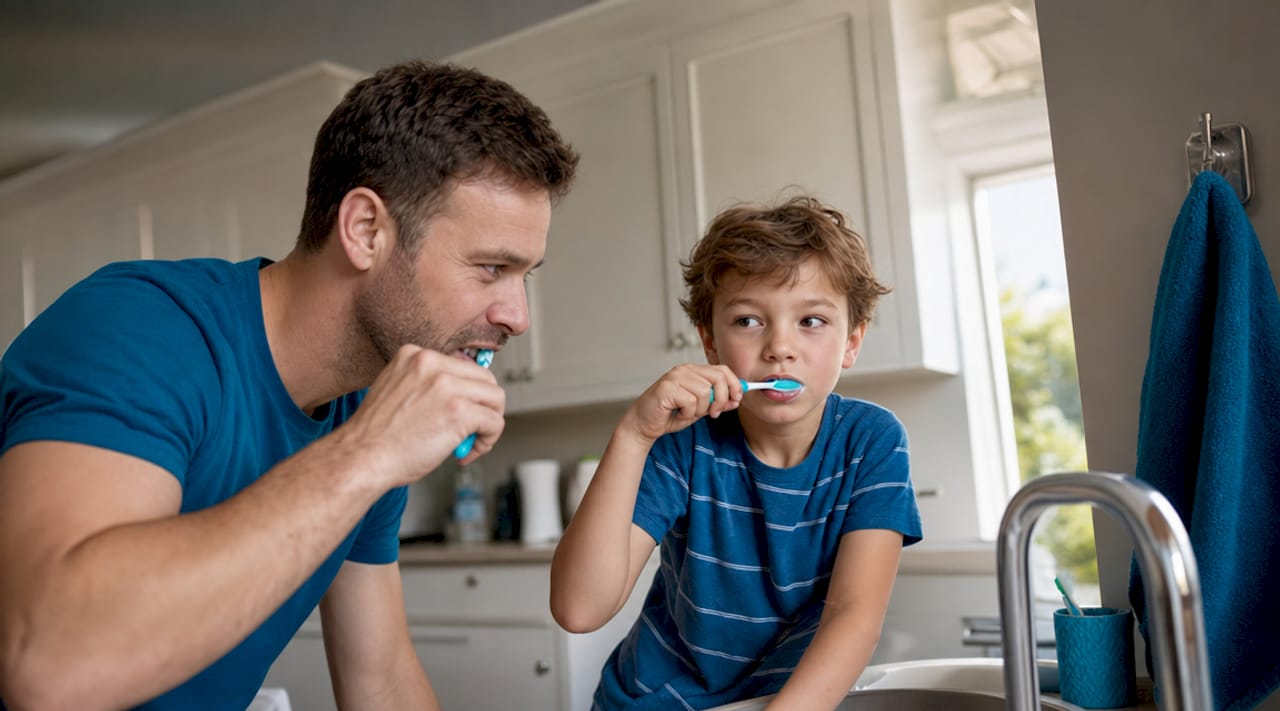
Brushing twice daily with fluoride toothpaste is the single most reliable habit for preventing cavities in both children and adults. The technique matters as much as the frequency. Aim the brush at a 45-degree angle to the gumline, use gentle circular strokes, and spend at least two minutes covering all surfaces.
Toothpaste amount is age-specific and often misunderstood by parents:
- Under 3 years: Use a smear of fluoride toothpaste, no larger than a grain of rice.
- Ages 3 to 6: Use a pea-sized amount.
- Ages 6 and up: A standard pea-sized amount is appropriate, and children can begin rinsing and spitting reliably.
Supervision is generally needed until around age 10, when most children develop the fine motor control to brush effectively on their own. Until then, follow up after your child brushes to check coverage, especially along the back molars and the gumline. Flossing should begin as soon as two teeth touch, which can happen as early as age 2 or 3.
Pro Tip: Keep a spare toothbrush at the kitchen sink or in a visible spot near your child’s bedtime routine area. Accessibility removes friction and makes it far easier to stay consistent on rushed mornings or late nights.
2. The role of fluoride and professional preventive care
Fluoride strengthens tooth enamel by repairing early microscopic damage and forming a protective barrier against acid attacks throughout the day. It is not just active during brushing. Think of it as a shield that stays on the tooth surface long after you put the brush down.
Professional fluoride applications go beyond what toothpaste alone can deliver. The American Academy of Pediatrics recommends that fluoride varnish be applied every six months starting at six months of age, and every three months for children considered high risk. This is a quick, painless application done right in the dental chair, and it makes a measurable difference in cavity prevention.
“The first dental visit should happen by your child’s first birthday, or within six months of the first tooth coming in. That early visit is not just about checking teeth. It is about establishing a dental home, assessing risk, and giving parents the guidance they need before problems start.” — Dr. Sandra Farber, Woodbridge Dental Centre
Dental sealants are another preventive tool worth knowing about. Applied to the chewing surfaces of back molars, sealants physically block food and bacteria from settling into the grooves where cavities most often form. For families wondering when to bring their child to the dentist for the first time, the answer is earlier than most people expect.
3. How nutrition and snacking habits affect the whole family
Diet is one of the most underestimated factors in dental health, and the timing of eating matters as much as what you eat. Nibbling five snack pieces over time exposes teeth to acid for up to 100 minutes, compared to just 20 minutes when the same snacks are eaten all at once. That difference in acid exposure time is a major driver of cavity risk in children and adults alike.
Here are practical nutrition habits that support oral health for families:
- Limit sticky, sugary foods like gummy candies, dried fruit, and fruit leather, which cling to teeth and extend acid exposure.
- Swap sugary drinks for water, especially fluoridated tap water, which actively supports enamel strength.
- Serve cheese, plain yogurt, raw vegetables, and nuts as snacks. These foods are low in sugar and some, like cheese, help neutralize mouth acid.
- Plan snack times rather than allowing continuous grazing throughout the day.
Pro Tip: After a sugary treat, have your child drink a glass of water rather than brushing immediately. Brushing right after acidic food can actually spread the acid across enamel. Wait 30 minutes, then brush.
| Food or drink | Effect on teeth | Better alternative |
|---|---|---|
| Gummy candy | Sticks to enamel, prolonged acid exposure | Fresh fruit or plain yogurt |
| Juice or soda | High sugar, erodes enamel over time | Fluoridated water or plain milk |
| Dried fruit | Sticky, high sugar concentration | Fresh grapes or apple slices |
| Crackers and chips | Break down into sugars, lodge in grooves | Cheese or raw vegetables |
For a deeper look at how food choices shape your child’s dental development, the team at Woodbridgedentalcentre has written a detailed guide on nutrition and kids’ oral health that is worth bookmarking.
4. Building positive oral hygiene routines that stick
Sustainable oral hygiene for families depends on routine, not willpower. The most effective approach is to attach brushing to an existing habit your child already does every night, such as reading a bedtime story. The sequence “brush, book, bed” works because it removes the decision entirely. Brushing becomes part of the ritual rather than a separate task to negotiate.
Reframing brushing as a positive activity rather than a chore is one of the most effective things parents can do. Practical tools that help include:
- A two-minute timer or a favorite song played during brushing.
- Flavored toothpaste in a flavor your child actually likes, such as bubblegum or watermelon.
- A simple reward chart where kids earn stickers for consistent brushing.
- Letting younger children choose their own toothbrush with a character or color they love.
For building lifelong dental habits in children, consistency and positive association are more powerful than any single product or technique. Adults set the tone. When children see parents brushing and flossing without complaint, they absorb the message that this is simply what people do.
As children grow, adapt the routine. A 7-year-old needs supervision and encouragement. A 12-year-old needs reminders and autonomy. A teenager needs to understand the connection between oral health and confidence. Adjust your approach as they develop, but keep the routine anchored.
5. Strategies for managing common family oral health challenges
Even families with the best intentions run into obstacles. Resistance from young children, hectic travel schedules, and knowledge gaps about what is actually harmful are among the most common barriers we hear about from families in Woodbridge and Vaughan.
One issue many parents do not realize is bacterial transmission. Parents can transfer cavity-causing bacteria to infants by sharing utensils, tasting food from the same spoon, or cleaning a pacifier with their own mouth. The bacteria responsible for early childhood cavities, primarily Streptococcus mutans, can colonize an infant’s mouth before the first tooth even appears. Avoiding shared utensils is one of the simplest and most overlooked preventive steps for new parents.
For children who resist brushing, try these approaches:
- Let them brush your teeth first, then take your turn brushing theirs. This gives them a sense of control.
- Use a two-person system where one parent distracts with a song or story while the other brushes.
- Acknowledge that some kids genuinely dislike the sensation. Switching toothpaste texture or brush softness often resolves the issue.
Pro Tip: When traveling, pack a small oral care kit in your carry-on or day bag. A travel toothbrush, a small tube of fluoride toothpaste, and floss picks take up almost no space and remove every excuse for skipping the routine on the road.
Regular family dental check-ups do more than clean teeth. They give your dentist the chance to catch early decay, monitor jaw development in children, and reinforce the habits you are working on at home. For families who feel uncertain about what to expect, Woodbridgedentalcentre has a helpful resource on preparing for your family checkup that takes the guesswork out of the visit.
Key takeaways
Consistent daily habits combined with professional preventive care are the foundation of strong oral health for every member of your family.
| Point | Details |
|---|---|
| Start dental visits early | A child’s first visit should happen by age one or within six months of the first tooth. |
| Supervise brushing until age 10 | Children typically need adult help to brush effectively until around their tenth birthday. |
| Limit snack frequency | Eating snacks all at once reduces acid exposure time significantly compared to continuous nibbling. |
| Use fluoride at every age | Fluoride toothpaste, varnish, and fluoridated water all work together to protect enamel daily. |
| Make routines positive | Attaching brushing to bedtime rituals and using rewards builds habits that last into adulthood. |
What 25 years of family dentistry has taught me
In my experience, the families who maintain the best oral health over time are not the ones who use the most expensive products. They are the ones who make dental care feel normal. Not a chore, not a punishment, just part of the day.
Many patients are surprised to learn how early the habits need to start. By the time a child has a mouth full of teeth, the window for the easiest habit formation has already passed. The families who come in before the first birthday, who ask questions about fluoride and snacking and brushing technique, those are the families whose children rarely need fillings.
I also want to be honest about something. Even with the best home care, some children are more cavity-prone due to the shape of their teeth, the composition of their saliva, or the bacteria they were exposed to early in life. That is not a failure of parenting. It is biology. The right response is not guilt. It is more frequent monitoring and a tailored prevention plan, which is exactly what professional dental care is designed to provide.
The goal at Woodbridgedentalcentre has always been to be a dental home for families across Woodbridge, Vaughan, and Maple. That means being the place you call when something feels off, the place your child grows up trusting, and the place that helps you make informed decisions without pressure or fear. Oral health is a lifelong project, and you do not have to figure it out alone.
— Felix
Caring for your family’s smiles at Woodbridge Dental Centre
At Woodbridgedentalcentre, we provide family dental care for patients of all ages, from a child’s very first visit to adult preventive care, restorations, and beyond. Dr. Michael Rouhi, Dr. Sandra Farber, and our team take the time to understand each family member’s needs and build a care plan that fits your life.

We offer flexible scheduling, a welcoming environment designed to put kids at ease, and honest guidance on everything from brushing technique to when sealants make sense. Whether you are due for a routine cleaning or have questions about your child’s dental development, we are here to help. Families across Woodbridge, Vaughan, and Maple trust us with their oral health, and we would be glad to welcome yours.
FAQ
When should my child have their first dental visit?
A child’s first dental visit should happen by their first birthday or within six months of the first tooth coming in. Early visits allow the dentist to assess cavity risk and establish a dental home before problems develop.
How much toothpaste should I use for my toddler?
Use a smear of fluoride toothpaste, about the size of a grain of rice, for children under three. From ages three to six, a pea-sized amount is appropriate and safe even if a small amount is swallowed.
How often should my family see the dentist?
Most family members benefit from dental check-ups at least twice a year. Children at higher cavity risk may need visits every three to four months, based on their dentist’s recommendation.
Can I spread cavities to my baby?
Yes. Cavity-causing bacteria can transfer from parent to infant through shared utensils, tasting food from the same spoon, or cleaning a pacifier in your own mouth. Avoiding these habits reduces your baby’s early cavity risk.
What is the best way to get kids to brush consistently?
Making brushing enjoyable with timers, music, flavored toothpaste, and reward charts significantly improves consistency. Attaching brushing to a fixed bedtime routine removes the daily negotiation and builds the habit naturally over time.
Recommended
- How Often Should Kids Visit the Dentist? | Expert Guide to Checkup Frequency – Woodbridge Dental Centre | Cosmetic, Implant & Family Dentistry
- What Kind of Toothpaste Should Kids Use? | Choosing the Right One for Each Age – Woodbridge Dental Centre | Cosmetic, Implant & Family Dentistry
- Should My Child Get Dental Cleanings Twice a Year? | Why Frequency Matters – Woodbridge Dental Centre | Cosmetic, Implant & Family Dentistry
- What Role Does Nutrition Play in Kids’ Oral Health? | Feed Their Smile Right – Woodbridge Dental Centre | Cosmetic, Implant & Family Dentistry


