

Teeth whitening is a cosmetic dental process that lightens natural tooth color by removing external stains and bleaching internal discoloration using peroxide-based agents. The two core mechanisms are abrasion, which clears surface stains, and oxidation, which chemically alters pigment molecules deep inside the tooth structure. Understanding how teeth whitening works explained in clinical terms helps you choose the right method, set realistic expectations, and protect your oral health throughout the process. At Woodbridge Dental Centre, Dr. Michael Rouhi and Dr. Sandra Farber guide patients through these options every week, and the science behind each approach is worth knowing before you start.
How does surface stain removal differ from intrinsic bleaching?
Teeth whitening mechanisms include two distinct processes: extrinsic stain removal by abrasion and intrinsic bleaching through oxidation. These are not the same thing, and confusing them is one of the most common reasons people feel disappointed with over-the-counter products.
Extrinsic stains sit on the outer enamel surface. They come from coffee, tea, red wine, tobacco, and certain foods that deposit colored compounds called chromogens onto the tooth. Abrasive agents in whitening toothpastes physically scrub these deposits away, much like fine sandpaper on a painted surface. This approach typically improves tooth color by one to two shades.
Intrinsic stains are a different matter. These pigments are embedded inside the dentin layer beneath the enamel, and no amount of brushing will reach them. Chemical bleaching with hydrogen peroxide or carbamide peroxide is the only way to change this deeper color. Peroxide-based treatments can achieve two to ten shade improvements depending on the concentration used and the nature of the staining.
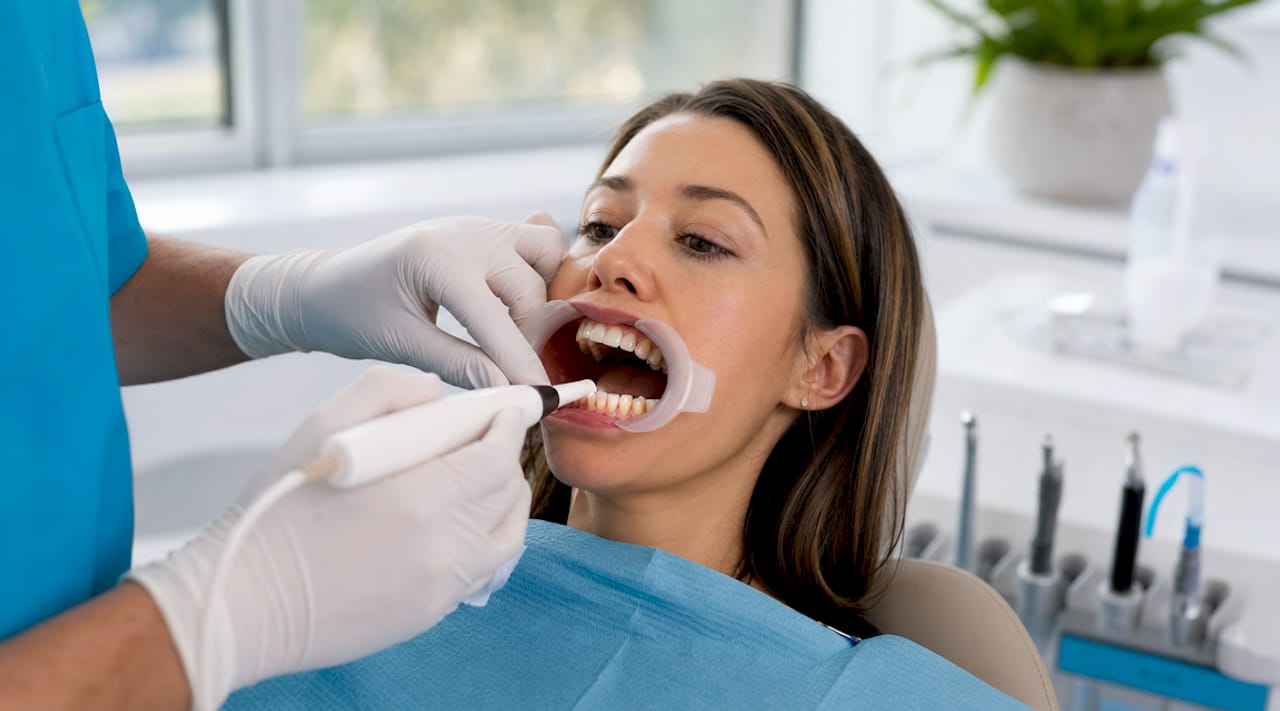
| Method | Target | Shade improvement | Examples |
|---|---|---|---|
| Abrasion | Surface enamel stains | 1 to 2 shades | Whitening toothpaste, baking soda |
| Chemical bleaching | Dentin pigment molecules | 2 to 10 shades | Peroxide gels, professional trays, in-office treatment |
Baking soda removes surface stains by abrasion only and cannot change intrinsic tooth color. Its relative dentin abrasivity is approximately 7, which is quite low, but combining it with acidic ingredients raises that abrasiveness considerably. Many patients in Vaughan ask about baking soda as a home remedy. It is safe in moderation, but it will not brighten a smile that has yellowed from the inside.
Pro Tip: If your teeth look yellow even after consistent brushing, the discoloration is almost certainly intrinsic. A peroxide-based treatment, not a whitening toothpaste, is what you need.
What happens chemically during the teeth whitening process?
The chemistry behind bleaching is more straightforward than most people expect. Peroxide penetrates enamel and dentin because its molecules are small enough to pass through the mineralized tooth structure. Once inside, it releases unstable oxygen molecules called free radicals.
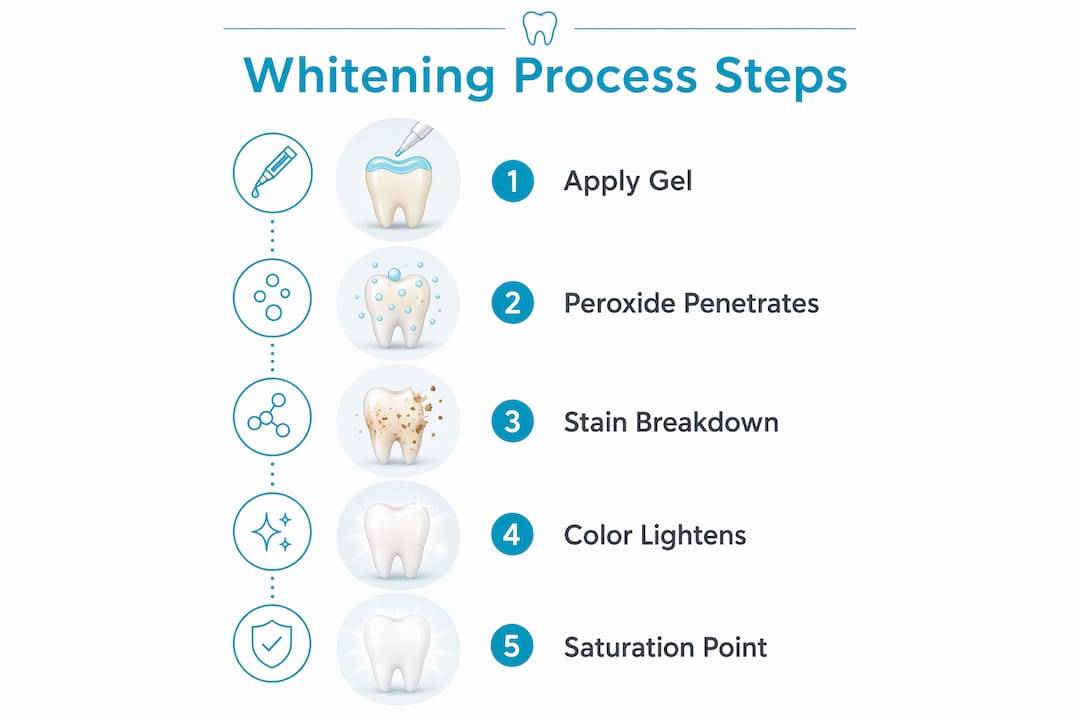
These free radicals attack the large, complex organic molecules responsible for tooth color. Those molecules are called chromogens, and their size and structure determine how much light they absorb and reflect. The more light a molecule absorbs, the darker it appears.
The oxidation reaction breaks these large chromogen molecules into smaller fragments:
- Large pigmented chromogens absorb significant light, making teeth appear yellow or brown
- Free radicals from peroxide sever the chemical bonds holding these molecules together
- The resulting smaller fragments absorb far less light
- The tooth reflects more light back, creating a visibly brighter appearance
- This change in the tooth’s optical properties is what you actually see as whitening
“The optical property change from peroxide oxidation causes a brighter appearance by fragmenting chromogen molecules, altering how the tooth surface interacts with light.” — Tooth whitening in dentistry
One detail many patients find surprising: carbamide peroxide, commonly used in take-home trays, decomposes into hydrogen peroxide and urea. The urea component buffers the pH of the treatment, which helps protect enamel from acid damage during the bleaching process. This is one reason carbamide peroxide formulas are considered gentler for extended wear.
Teeth also have a saturation point. Beyond a certain level of bleaching, additional treatment offers no further aesthetic benefit and may begin to degrade tooth proteins. More treatment is not always better, and a dentist can help you identify when you have reached an optimal result.
How do professional in-office and at-home whitening compare?
The teeth whitening treatment explained in most advertising focuses on results, but the real differences between professional and at-home methods come down to concentration, speed, and safety controls.
In-office whitening uses 25 to 35% peroxide applied directly to the teeth in a controlled clinical setting, with the full process completed in 60 to 90 minutes. At-home custom tray systems use 10 to 16% carbamide peroxide worn daily over two to four weeks. Both approaches work through the same oxidation chemistry, but the timelines and intensity differ significantly.
| Treatment type | Peroxide concentration | Duration | Shade change |
|---|---|---|---|
| In-office professional | 25 to 35% hydrogen peroxide | 60 to 90 minutes | Significant, immediate |
| Custom take-home trays | 10 to 16% carbamide peroxide | 2 to 4 weeks daily | Gradual, comparable final result |
| Over-the-counter strips | Lower concentration | Several weeks | Modest, surface-focused |
Professional whitening includes gum protection barriers and monitored peroxide application, which meaningfully reduces the risk of soft tissue irritation compared to unsupervised over-the-counter products. This is not a minor detail. Gum tissue is sensitive to peroxide, and without a proper barrier, even moderate concentrations can cause chemical burns that take days to heal.
Over-the-counter whitening strips and paint-on gels are widely available, but their lower peroxide concentrations mean they primarily address surface stains rather than deep intrinsic discoloration. They can be a reasonable maintenance option after professional treatment, but they are rarely sufficient as a standalone solution for significant yellowing. You can read more about comparing whitening treatment options to understand which approach fits your situation.
Pro Tip: Custom-fitted trays from your dentist distribute gel evenly across every tooth surface. Generic one-size strips often miss the edges and back surfaces of front teeth, leaving uneven results.
What are the common side effects and safety considerations?
Teeth whitening is safe for most healthy adults when used correctly, but side effects do occur. Knowing what to expect helps you manage them without alarm.
- Tooth sensitivity is the most common side effect. Sensitivity after whitening is caused by peroxide temporarily opening dentinal tubules, the microscopic channels that run through dentin toward the nerve. This creates brief thermal sensitivity to hot and cold. It typically resolves within a few days after treatment ends.
- Gum irritation occurs when peroxide contacts soft tissue without adequate protection. Professional treatments use custom barriers to prevent this. At-home users should follow tray instructions carefully and avoid overfilling trays with gel.
- Color mismatch with restorations is a real concern. Whitening agents do not change the color of crowns, veneers, porcelain fillings, or composite bonding. If you have visible restorations on front teeth, whitening your natural teeth can create a noticeable mismatch. A dentist should assess this before you begin.
- Enamel damage from overuse is possible with highly abrasive products used too frequently. Whitening toothpastes used twice daily are generally safe, but aggressive scrubbing with abrasive powders can wear enamel over time.
For a thorough look at whitening safety considerations, including who should avoid whitening, the Woodbridgedentalcentre resource covers the key clinical factors in plain language.
How can you maintain whitening results over time?
Whitening results are not permanent. Results last from months to years depending on lifestyle habits and oral hygiene, but the good news is that maintenance is straightforward once you understand what causes re-staining.
- Avoid staining foods and beverages for 48 hours after treatment. The enamel is temporarily more porous right after whitening, making it more susceptible to re-staining from coffee, tea, red wine, and tomato-based sauces. This window matters more than most people realize.
- Brush twice daily and floss once daily. Consistent oral hygiene removes surface chromogens before they have time to penetrate or bond to enamel. A post-whitening care routine makes a measurable difference in how long results last.
- Use a fluoride or whitening toothpaste as your dentist recommends. Fluoride strengthens enamel, which helps resist staining. Whitening toothpastes maintain surface brightness between professional treatments.
- Schedule regular professional cleanings. Hygiene appointments remove tartar and surface deposits that dull the appearance of teeth over time. Patients at Woodbridge Dental Centre who maintain their cleaning schedule consistently report longer-lasting whitening results.
- Use touch-up trays when brightness fades. Custom take-home trays are ideal for periodic maintenance. A short course of lower-concentration gel every few months can extend professional results significantly.
Genetics also plays a role. Natural tooth color varies from person to person, and some individuals have naturally darker dentin that limits how bright their teeth can become regardless of treatment. Setting honest expectations from the start prevents frustration.
Key takeaways
Teeth whitening works through two mechanisms: abrasion removes surface stains by one to two shades, while peroxide-based bleaching breaks down internal chromogen molecules to achieve two to ten shade improvements.
| Point | Details |
|---|---|
| Two distinct mechanisms | Abrasion clears surface stains; peroxide oxidation changes internal tooth color. |
| Chemical process | Free radicals fragment large chromogen molecules, altering how teeth reflect light. |
| Professional vs. at-home | In-office treatments use 25 to 35% peroxide; custom trays use 10 to 16% over weeks. |
| Safety considerations | Sensitivity and gum irritation are common but temporary; restorations do not whiten. |
| Maintaining results | Avoid staining foods post-treatment, maintain oral hygiene, and use touch-up trays as needed. |
What I’ve learned after 25 years of whitening consultations
In my experience, the patients who get the best results from whitening are the ones who understand what they are actually treating before they start. Many patients come in having already spent money on strips or whitening toothpastes for months, frustrated that nothing changed. In most of those cases, the staining was intrinsic, and no surface abrasive was ever going to reach it.
The other thing I see regularly is anxiety about sensitivity. Many patients avoid whitening altogether because they heard it would hurt. The reality is that sensitivity from professional treatment is almost always mild and short-lived. Managing it is straightforward, and we discuss sensitivity management with every patient before we begin.
What I would caution against is chasing the brightest possible result. Teeth have a natural saturation point, and pushing past it does not improve the outcome. It can actually weaken the tooth structure. The goal should be a healthy, natural-looking improvement that suits your face and your baseline tooth color, not an extreme shade that looks artificial.
For patients in Woodbridge, Vaughan, and Maple, my honest advice is this: get a proper assessment first. The cause of your discoloration determines the right treatment. A quick consultation saves you time, money, and the disappointment of choosing the wrong approach.
— Felix
Brighten your smile with professional care at Woodbridge Dental Centre
Woodbridge Dental Centre offers both in-office whitening and custom take-home tray kits, designed and supervised by Dr. Michael Rouhi and Dr. Sandra Farber. Every whitening plan starts with a clinical assessment to identify the type of staining, check for restorations that could cause color mismatch, and confirm your teeth and gums are healthy enough to proceed safely. We serve families across Woodbridge, Vaughan, and Maple with flexible appointment options and a warm, no-pressure environment. Visit our teeth whitening clinic page to learn about available treatments, or explore our full range of cosmetic dentistry services to see how we can help you feel confident in your smile.
FAQ
How does teeth whitening actually work?
Teeth whitening works through two processes: physical abrasion removes surface stains from enamel, while peroxide-based bleaching agents penetrate the tooth and use oxidation to break down internal pigment molecules called chromogens. The result is a tooth that reflects more light and appears visibly brighter.
Is teeth whitening safe for your enamel?
Professional teeth whitening is safe for enamel when used as directed and supervised by a dentist. Overuse of abrasive products can wear enamel over time, and exceeding the recommended bleaching frequency can degrade tooth proteins, which is why professional guidance matters.
Why do my teeth feel sensitive after whitening?
Sensitivity after whitening occurs because peroxide temporarily opens dentinal tubules, the microscopic channels in dentin that connect to the nerve. This causes brief thermal sensitivity that typically resolves within a few days after treatment ends.
Will whitening work on crowns or veneers?
Whitening agents do not change the color of dental restorations including crowns, veneers, or composite fillings. If you have visible restorations on front teeth, whitening your natural teeth may create a color mismatch, so a dentist should assess your situation before treatment begins.
How long do teeth whitening results last?
Whitening results typically last from several months to a few years depending on diet, oral hygiene, and lifestyle habits. Avoiding staining foods and beverages, maintaining regular cleanings, and using touch-up trays periodically are the most effective ways to extend results.
Recommended
- How to Whiten Teeth Safely at Home: What Works
- Factors Affecting Teeth Whitening Results: What to Know
- What Should I Avoid After Teeth Whitening? The “White Diet” Explained Simply – Woodbridge Dental Centre | Cosmetic, Implant & Family Dentistry
- What’s the Best Teeth Whitening Treatment? In-Office vs Take-Home vs OTC – Woodbridge Dental Centre | Cosmetic, Implant & Family Dentistry


