

You followed the instructions. You wore the trays every night. You avoided coffee for a week. And still, your teeth barely changed. Sound familiar? Understanding the factors affecting teeth whitening results is one of the most common conversations we have with patients at Woodbridge Dental Centre. The truth is, whitening is not a one-size-fits-all treatment. Your results depend on a combination of biological, lifestyle, and clinical variables that interact in ways most people never hear about. This article walks through each one clearly, so you know what to expect and how to get the most from your treatment.
Key Takeaways
| Point | Details |
|---|---|
| Stain type drives outcomes | Extrinsic stains respond well to whitening; intrinsic stains from tetracycline or fluorosis require specialized approaches. |
| Formulation matters beyond concentration | pH and stabilizer levels in whitening agents affect both speed and how long results last. |
| Sensitivity is a treatment factor | Managing discomfort proactively allows you to complete the full course and achieve better whitening. |
| Restorations do not change color | Crowns, veneers, and composites will not lighten, which affects shade-matching after treatment. |
| Maintenance determines longevity | Diet, oral hygiene, and periodic touch-ups strongly influence how long your whitening results hold. |
1. The main factors affecting teeth whitening results start with stain type
Not all tooth discoloration responds to whitening the same way. Clinically, we classify stains into two categories: extrinsic and intrinsic. Knowing the difference shapes every treatment decision.
Extrinsic stains sit on the outer surface of the enamel. These come from coffee, tea, red wine, tobacco, and certain foods. They respond well to peroxide-based whitening agents because the stain is accessible. Yellow-toned teeth lighten more readily than gray-toned ones, even when both have surface staining.
Intrinsic stains are embedded within the dentin or enamel structure. Causes include tetracycline antibiotics taken during childhood, fluorosis from excess fluoride exposure during tooth development, or trauma that caused internal bleeding within the tooth. These stains need higher peroxide concentrations and longer treatment periods. Some intrinsic stains respond only partially, and a few do not respond at all.
Enamel thickness also plays a role. Thinner or more translucent enamel allows the darker dentin beneath to show through, which limits how bright the final result appears. This is a biological reality, not a treatment failure.
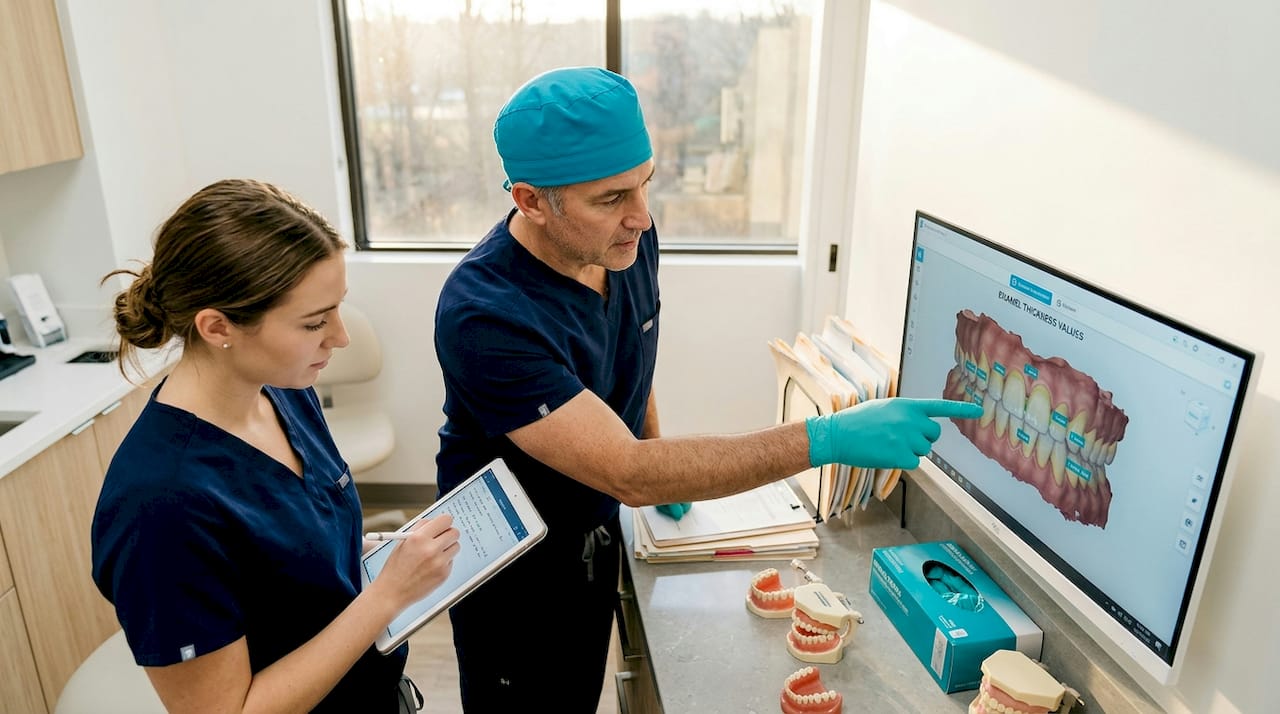
Many patients come in expecting whitening to erase all discoloration. When we explain that certain stains have limits, the reaction is often relief rather than disappointment. Having an honest conversation upfront leads to better outcomes and far less frustration.
2. How peroxide concentration, formulation, and activation affect whitening
The whitening method you choose and how the agent is formulated are major whitening results variables that most people overlook.
Comparing whitening approaches:
| Method | Peroxide Concentration | Supervision | Speed | Cost |
|---|---|---|---|---|
| In-office professional | 25–40% hydrogen peroxide | Dentist-supervised | Fastest (1–2 visits) | Highest |
| Take-home trays (professional) | 10–22% carbamide peroxide | Dentist-guided | Moderate (2–4 weeks) | Moderate |
| Over-the-counter strips | 3–10% hydrogen peroxide | None | Slowest | Lowest |
Here is what most people get wrong: a higher peroxide percentage does not always mean better or longer-lasting results. Formulation pH affects both the initial whitening speed and how stable your results are over time. Two products with the same hydrogen peroxide strength can perform very differently because of differences in pH, stabilizers, and how quickly the peroxide breaks down on contact with your enamel.
Light or laser activation is sometimes used in-office to speed up peroxide activity. Evidence on its additional benefit is mixed. The main advantage of professional treatment is the controlled environment and the custom fit of delivery trays, not necessarily the light itself.
Low-concentration whitening strips at 3% hydrogen peroxide can produce meaningful results over two weeks with minimal side effects. They are a reasonable option for mild extrinsic staining, but they will not match professional treatment for moderate or significant discoloration.
High peroxide concentrations are linked to transient sensitivity and gum irritation, with contact time and pH also contributing to these side effects. Longer exposure does not always improve results and can increase the risk of discomfort.
Pro Tip: If you are comparing whitening products at the pharmacy, look beyond the percentage on the label. Check how long each product stays in contact with your teeth and whether the pH is listed. A lower-pH agent may whiten faster but cause more sensitivity.
3. Patient-specific factors that influence whitening success
Some of the most significant variables influencing teeth brightening outcomes are built into your biology or daily habits.
-
Age. As we get older, enamel thins naturally and dentin darkens. Enamel abrasion and dentin visibility increase with age, which means older teeth may require longer treatment times and often do not reach the same brightness as younger teeth.
-
Dental restorations. Crowns, porcelain veneers, and tooth-colored composite fillings do not respond to bleaching agents. If you whiten your natural teeth and have visible restorations on front teeth, restorations may cause shade mismatch after treatment. This needs to be planned for before you begin.
-
Tooth sensitivity. This is not just a side effect to tolerate. Up to 75% of patients experience transient sensitivity during whitening. When sensitivity is severe, people shorten their treatment sessions or stop early, which directly reduces results. Managing sensitivity proactively, rather than pushing through discomfort, is what allows you to complete the full course. Learn more about managing whitening sensitivity to understand practical strategies that work.
-
Genetics and saliva composition. Saliva contains enzymes that can accelerate or slow peroxide breakdown. Some patients genetically have denser enamel or more protective saliva, which affects how quickly the whitening agent penetrates and works.
-
Smoking and diet. Tobacco stains deeply and recolors teeth faster than almost any other lifestyle factor. Frequent consumption of coffee, tea, and red wine does the same. Coffee chromogens penetrate enamel micro-pores, which is why brushing alone cannot fully restore whiteness after regular coffee drinking. These habits do not prevent whitening, but they significantly shorten how long your results last.
Pro Tip: If you have older composite fillings on your front teeth, have your dentist evaluate their shade before whitening. You may need to plan for replacement fillings after treatment to match your new tooth color.
4. Oral hygiene, timing, and maintenance practices
Good whitening outcomes depend heavily on what happens before, during, and after treatment. This is where teeth whitening effectiveness is either supported or undermined.
- Start with a clean mouth. A professional cleaning before whitening removes surface tartar and plaque that would otherwise block the whitening agent from reaching your enamel evenly. Many patients are surprised to learn that whitening over buildup produces patchy results.
- Follow timing instructions precisely. Treatment adherence over time strongly influences final outcomes. Wearing trays for shorter periods than prescribed or skipping days can make the treatment appear to fail when the real issue is incomplete exposure.
- Watch your diet after whitening. The 24 to 48 hours after a whitening session are when your enamel is most porous and most vulnerable to restaining. Avoiding dark-colored foods and beverages during this window matters more than most people realize. Our guide on what to avoid after whitening explains this in practical terms.
- Use bleaching agents for maintenance, not just initial treatment. Bleaching agents penetrate deeper than brushing alone, restoring shade more effectively. Periodic touch-ups at home with a dentist-supplied low-concentration tray can extend your results significantly without stressing your enamel.
- Schedule regular check-ups. Professional monitoring lets your dentist identify early recoloring and adjust your maintenance plan before significant fading occurs.
5. Comparing factors and choosing the right whitening approach
Every patient brings a different combination of stain type, sensitivity level, restoration history, and lifestyle habits to the table. Understanding how these factors interact helps you choose a method that fits your situation and set realistic expectations.
| Factor | Mild Impact on Results | High Impact on Results |
|---|---|---|
| Stain type | Extrinsic only | Intrinsic or mixed |
| Baseline tooth shade | Light yellow | Dark gray or brown |
| Sensitivity | Low | Moderate to high |
| Restorations on front teeth | None | Multiple or prominent |
| Lifestyle habits | Minimal staining foods | Daily coffee, smoking |
The trade-off between speed and safety is real. In-office whitening delivers faster visible change but costs more and may produce more short-term sensitivity. Take-home professional trays are gentler and allow your enamel to recover between sessions. Over-the-counter options are fine for very mild discoloration but are unlikely to satisfy anyone with moderate staining or higher expectations.
The most important step before choosing a method is having a proper assessment. Diagnostic evaluation of stain type and baseline shade is the foundation for setting realistic expectations and choosing a treatment that will actually work for your teeth. Many patients come to us after spending money on products that were never suited to their stain type. We help you avoid that. For a detailed comparison of your options, our overview of in-office vs. take-home vs. OTC whitening explains the differences honestly.
What 25 years of whitening cases has taught me
In my experience, the single biggest source of disappointment with whitening is not the product or the treatment. It is the gap between what patients expect and what their specific teeth can actually achieve.
I have seen patients with beautiful yellow-toned enamel achieve dramatic results with a simple take-home kit, while others with similar habits saw almost no change because their discoloration was intrinsic. I have seen crowns that were matched perfectly to natural teeth before whitening become visibly mismatched afterward because no one discussed the plan beforehand.
What I have found actually works is slowing down before treatment begins. A thorough assessment, an honest conversation about sensitivity, a review of any restorations, and a realistic shade goal. That 15-minute conversation prevents most of the frustration I see patients carry in from experiences elsewhere.
Patience and maintenance outperform any single whitening session. The patients in my practice who maintain their results the longest are not the ones who went for the strongest product. They are the ones who follow up regularly, protect their enamel, and treat maintenance as part of their routine rather than a one-time fix.
If whitening has not worked for you before, do not assume it never will. The right approach depends on understanding your specific situation, and that is exactly what a professional assessment is for.
— Felix
Ready to see what whitening can do for your smile?
At Woodbridgedentalcentre, we assess every patient individually before recommending any whitening treatment. That means looking at your stain type, enamel health, sensitivity history, and any existing restorations before we suggest a single product. Patients across Woodbridge, Vaughan, and Maple have trusted our team for honest treatment planning and comfortable care.
Whether you are interested in an in-office session or a take-home professional kit, our cosmetic dentistry services are designed around what your teeth actually need. You can also explore our full range of family dental care for everyone at home. Call us or book online to schedule a whitening consultation. We will give you a clear picture of what to expect and a plan that fits your goals.
FAQ
What affects teeth whitening outcomes the most?
Stain type and baseline tooth color are the most significant variables. Extrinsic stains respond well, while intrinsic stains from tetracycline or fluorosis are much harder to treat and may only partially lighten.
Does a higher peroxide percentage mean better results?
Not necessarily. Formulation pH and stability affect results as much as concentration does, and higher percentages increase the risk of sensitivity and gum irritation without guaranteeing faster whitening.
Can I whiten if I have crowns or fillings?
Yes, but dental restorations will not change color along with your natural teeth. You may need replacement restorations after whitening to match the new shade of your natural enamel.
How does sensitivity affect my whitening results?
Sensitivity is a results factor, not just a side effect. Shortened treatment from discomfort directly reduces the final outcome. Managing it with potassium nitrate toothpaste or reduced wear time allows you to complete the full course.
How long do whitening results last?
Results typically last six months to two years, depending heavily on diet, tobacco use, and maintenance habits. Regular touch-ups and good oral hygiene extend results significantly.
Recommended
- How to Whiten Teeth Safely at Home: What Works
- What Should I Avoid After Teeth Whitening? The “White Diet” Explained Simply – Woodbridge Dental Centre | Cosmetic, Implant & Family Dentistry
- Is Teeth Whitening Safe? Dentist-Backed Facts (And Who Shouldn’t Whiten) – Woodbridge Dental Centre | Cosmetic, Implant & Family Dentistry
- How Long Does Teeth Whitening Last? The Real Timeline (And How to Make It Stick) – Woodbridge Dental Centre | Cosmetic, Implant & Family Dentistry


