

A kid-friendly dental office is defined as a clinical environment specifically designed to make children feel safe, comfortable, and engaged during dental visits, with every element from the waiting room to the treatment chair shaped around a child’s emotional and physical needs. In the dental profession, this concept overlaps closely with what is formally called pediatric dentistry, though a kid-friendly approach can exist in family dental practices as well. The distinction matters for parents in Woodbridge, Vaughan, and Maple who want more than just a dentist who sees children. They want a practice where their child actually wants to come back.
What is a kid-friendly dental office, and how is it different from a regular practice?
A kid-friendly dental office is not simply a general dental practice that accepts young patients. It is a practice where the physical environment, staff training, communication style, and clinical protocols are all adapted to reduce fear and build trust with children. The industry term for this specialized focus is pediatric dentistry, though many family practices like Woodbridge Dental Centre integrate the same child-centered principles without limiting their care to children exclusively.
The core goal is a positive first experience. First dental visits focus on gentle exams, comfort, and parent guidance rather than aggressive treatment, with appointments typically lasting 30 to 45 minutes. That structure is intentional. When a child leaves the office feeling calm rather than frightened, they are far more likely to maintain regular dental care throughout their life. That long-term outcome is the real measure of a kid-friendly practice.
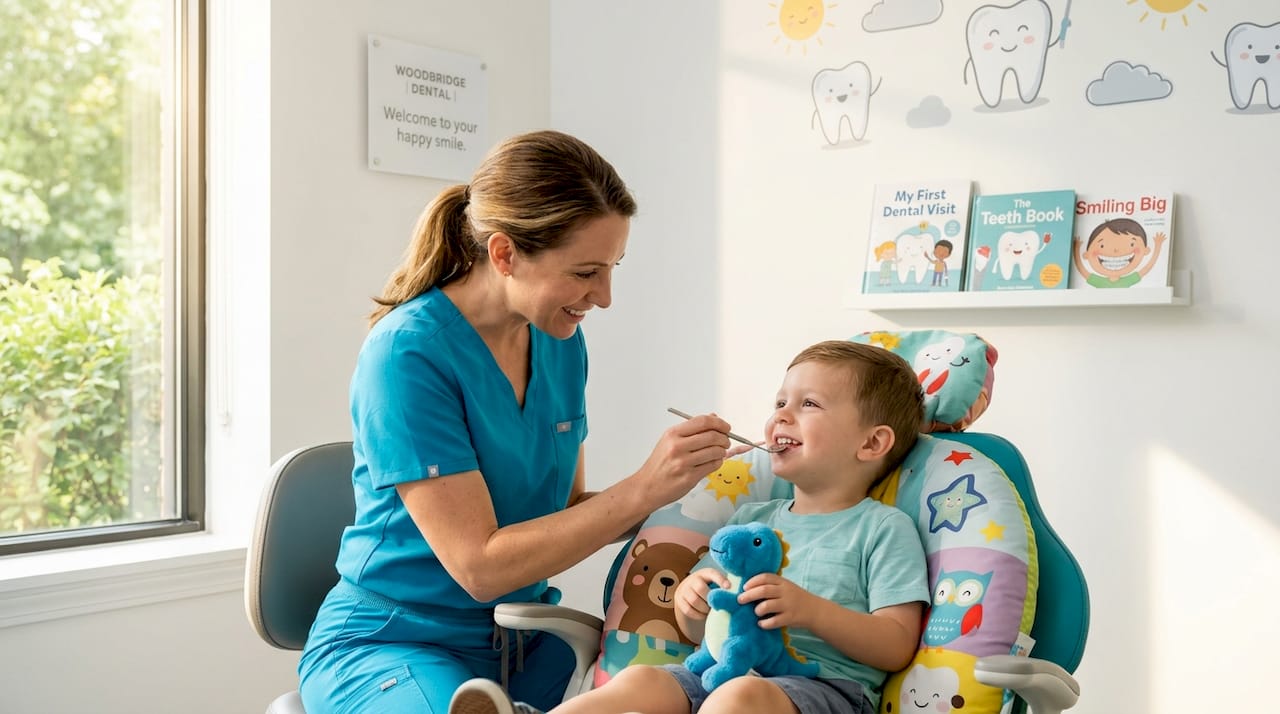
Many parents are surprised to learn that the clinical approach at a child-centered office looks quite different from adult dentistry. Dentists use softer language, slower pacing, and more frequent check-ins during treatment. The goal is not just to complete a procedure. It is to teach the child that the dental chair is a safe place.
What features and environment make a dental office kid-friendly?
The physical environment is the first signal a child receives when they walk through the door. Bright colors, playful decorations, and interactive waiting areas reduce anxiety and build trust before a child even meets the dentist. Games, books, and age-appropriate toys give children something to focus on while they wait, which lowers the anticipatory stress that often makes appointments harder.
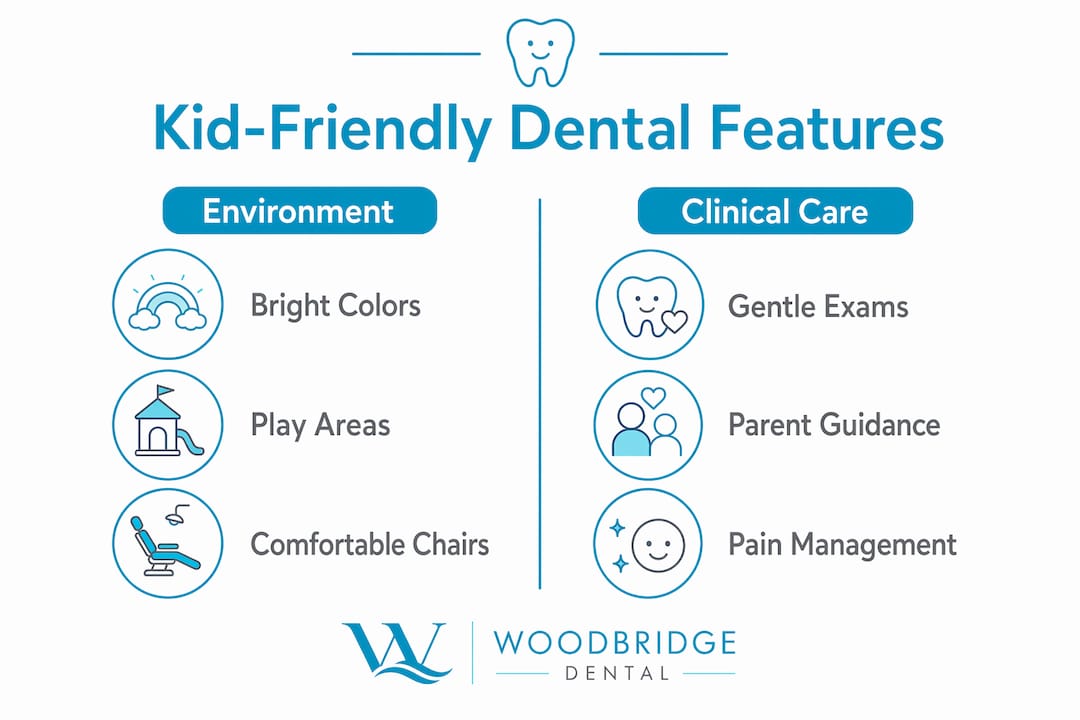
Beyond decor, the staff attitude carries the most weight. Dentists and hygienists trained to work with children speak at eye level, explain each step before doing it, and never rush. They use what the profession calls “tell-show-do,” describing a tool, demonstrating it, and then using it gently. This technique removes the element of surprise, which is one of the biggest drivers of dental fear in young patients.
Child-friendly language is another defining feature. Using words like “pictures” instead of “X-rays” and avoiding clinical terminology that sounds threatening makes a measurable difference in how children respond during treatment. Dentists who work well with kids have a whole vocabulary built around making procedures sound manageable and even interesting.
Key features to look for in a kid-friendly dental office include:
- A waiting area with toys, books, or a small play area designed for children
- Staff who greet children by name and speak directly to them, not just to the parent
- Sensory-friendly design, including softer lighting in treatment rooms where possible
- A reward system at the end of the visit, such as a small prize or oral care kit, which motivates children and reinforces positive associations with dental care
- Clear, calm communication between staff and parents throughout the appointment
Pro Tip: Before booking, ask the receptionist whether the office uses a prize box or take-home kit for kids. Offices that invest in these small details almost always invest equally in their clinical approach to children.
How do kid-friendly dental offices adapt clinical care for children?
The clinical side of child-friendly dental care is where the real expertise shows. A dentist who is skilled with children does not simply scale down adult techniques. They use specific protocols designed around a child’s developing anatomy, shorter attention span, and heightened sensitivity to discomfort.
Here is how a well-structured pediatric appointment typically unfolds:
- Gentle exam first. The dentist examines teeth and soft tissues with slow, deliberate movements, narrating each step to keep the child informed and calm.
- Age-appropriate X-ray decisions. X-rays are avoided unless clinically necessary, and when taken, the process is explained in simple terms. Calling them “tooth pictures” is a common and effective approach.
- Modern pain management. Computer-assisted anesthesia delivers local anesthetic at a controlled, slow rate, significantly reducing the pain and anxiety associated with injections compared to conventional techniques. A 2026 randomized controlled trial with 69 children confirmed lower pain scores and reduced stress markers with this method.
- Cleaning and fluoride. Routine cleanings are adapted to the child’s tolerance, and fluoride treatments are offered in flavors children enjoy.
- Home care coaching. The dentist or hygienist gives parents specific, practical brushing and flossing guidance tailored to the child’s age and development.
Scheduling also matters more than most parents realize. Morning appointments are recommended for young children because they tend to be more alert, cooperative, and less fatigued early in the day. An overtired child at a 4 p.m. appointment is a much harder experience for everyone involved.
The good news is that modern pain management technology has genuinely changed what a dental visit feels like for children. Computer-assisted delivery systems make the injection process far less noticeable, which removes one of the most common sources of dental fear before it can take hold.
What are the top kid-friendly dental treatments and preventive care options?
Preventive care is the foundation of child-friendly dentistry. The goal is to protect teeth before problems develop, which means fewer interventions, less discomfort, and a much easier relationship with dental care over time.
| Treatment | What it does | When it’s recommended |
|---|---|---|
| Dental sealants | Protective coating applied to molar pits and fissures | Soon after permanent molars erupt |
| Fluoride treatment | Strengthens enamel and reduces cavity risk | Every 6 months at routine visits |
| Routine cleaning | Removes plaque and tartar, checks development | Every 6 months for most children |
| Dental X-rays | Detects cavities between teeth and monitors growth | Only when clinically indicated |
| Sedation dentistry | Reduces anxiety for longer or more complex procedures | When standard techniques are insufficient |
Dental sealants act as a protective barrier in the pits and fissures of back teeth, reducing cavity incidence for up to four years after application. They are one of the most effective and underused preventive tools in children’s dentistry. Many parents have never heard of them until their child already has a cavity in a molar that a sealant could have prevented.
Fluoride treatments and twice-yearly cleanings form the backbone of most children’s preventive plans. Parents play a critical role between visits by reinforcing brushing habits at home. If you want practical strategies for making that easier, building brushing habits at home is a topic worth exploring in detail.
Pro Tip: Ask your child’s dentist specifically about sealants when the first permanent molars come in, usually around age six. That window is the most effective time to apply them, and many parents miss it simply because no one mentioned it.
When sedation is considered, it is always a last resort and never a routine recommendation. For children with significant anxiety or those requiring longer procedures, sedation options for children are available and safe when administered by trained professionals. The decision is always made in close conversation with parents.
How can parents identify and choose the right dental office for their child?
Choosing the right dental office for your child is one of the most practical things you can do for their long-term oral health. The right fit reduces fear, builds trust, and makes regular dental visits every six months feel routine rather than stressful.
The first visit should happen by 12 months of age or within six months of the first tooth appearing. Many parents wait until a problem develops, which means the first dental experience involves discomfort rather than a calm introduction. Starting early sets a completely different tone.
When evaluating a dental office, look for these signs:
- The staff greet your child warmly and speak directly to them during the visit
- The dentist explains their approach to anxiety and behavior management before you book
- The waiting room is genuinely designed for children, not just tolerant of them
- The office provides a full health history intake and asks about your child’s specific fears or sensitivities
- Local families in Woodbridge, Vaughan, or Maple recommend the practice based on their own children’s experiences
Interviewing the dentist before the first appointment is completely appropriate and encouraged. Ask how they handle a child who becomes upset during treatment. Ask what behavior management techniques they use. A dentist confident in their approach to children will answer those questions clearly and without defensiveness.
A guide to choosing a pediatric dentist can help you prepare the right questions before you call. The goal is to find a practice where your child feels known, not just seen.
Key takeaways
A kid-friendly dental office succeeds when its environment, staff approach, and clinical protocols work together to make children feel safe and willing to return.
| Point | Details |
|---|---|
| Environment matters first | Bright, engaging spaces with toys and friendly staff reduce anxiety before treatment begins. |
| Clinical care is adapted | Techniques like computer-assisted anesthesia and child-friendly language make procedures less frightening. |
| Prevention is the priority | Sealants, fluoride, and twice-yearly cleanings prevent most childhood dental problems before they start. |
| Start visits early | The first dental visit should happen by 12 months to build comfort before any problem develops. |
| Ask the right questions | Interview the dentist about anxiety management and observe how staff interact with your child. |
Why the first dental experience shapes everything that follows
In my experience, the single biggest predictor of a child’s long-term dental health is not their diet or their genetics. It is whether their first few dental visits were calm. Children who leave the office feeling proud and comfortable come back without a fight. Children who leave frightened often avoid the dentist for years, sometimes decades.
Many parents assume that dental fear is just part of childhood, something kids grow out of. That is not what I see clinically. Dental anxiety in adults almost always traces back to a difficult early experience. The good news is that a genuinely kid-friendly practice can interrupt that pattern entirely.
I also want to be honest about something most articles skip: not every office that markets itself as “kid-friendly” actually is. The decor might be cheerful, but if the staff rush through appointments or use adult-paced communication, the experience still falls short. When you visit a practice for the first time, watch how the dentist and hygienist talk to your child. That interaction tells you more than any website description.
A welcoming family atmosphere benefits parents too, not just children. When you feel confident in the practice, your child picks up on that calm. Parents who are visibly anxious in the dental office often transfer that anxiety directly to their kids, even without saying a word. Choosing a practice where you feel comfortable is part of choosing the right place for your child.
— Felix
Gentle dental care for kids at Woodbridge Dental Centre
At Woodbridge Dental Centre, Dr. Michael Rouhi, Dr. Sandra Farber, and our team provide children’s dental care in a warm, welcoming environment designed with young patients in mind. We serve families across Woodbridge, Vaughan, and Maple with gentle exams, preventive treatments, and honest guidance tailored to each child’s needs and comfort level.

Whether your child is coming in for their very first visit or needs a routine cleaning and sealant assessment, we take the time to make the experience positive. Our family dental services cover every age, from toddlers to teens to parents, all under one roof. We would love to meet your family. Call us or book online to schedule your child’s next appointment.
FAQ
What is a kid-friendly dental office?
A kid-friendly dental office is a practice designed to make children feel safe and comfortable during dental visits, using child-adapted environments, gentle clinical techniques, and staff trained to communicate with young patients. It prioritizes positive experiences over aggressive treatment.
At what age should my child first visit the dentist?
The first dental visit should happen by 12 months of age or within six months of the first tooth appearing. Early visits build familiarity and allow the dentist to catch developmental issues before they become problems.
How do kid-friendly offices manage pain and anxiety?
Many child-centered practices now use computer-assisted anesthesia, which delivers local anesthetic at a slow, controlled rate to reduce injection discomfort. Combined with child-friendly language and a calm environment, this approach significantly lowers pain and anxiety during treatment.
Are dental sealants recommended for children?
Dental sealants are a proven preventive treatment that reduces cavity risk in the pits and fissures of back teeth for up to four years. They are most effective when applied shortly after permanent molars erupt, typically around age six.
How often should children visit the dentist?
Most children benefit from dental checkups every six months to monitor development, clean teeth, and apply preventive treatments like fluoride. Some children with higher cavity risk may need more frequent visits based on their dentist’s recommendation.
Recommended
- How to Find the Best Kids Dentist Near You | Parent’s Guide to Pediatric Dental Clinics – Woodbridge Dental Centre | Cosmetic, Implant & Family Dentistry
- How to Choose a Pediatric Dentist | 7 Questions to Ask Before You Book – Woodbridge Dental Centre | Cosmetic, Implant & Family Dentistry
- What to Expect from a Pediatric Dental Cleaning | A Step-by-Step Look Inside – Woodbridge Dental Centre | Cosmetic, Implant & Family Dentistry
- What Should I Pack for My Kid’s Dental Visit? | Pro Tips for Stress-Free Appointments – Woodbridge Dental Centre | Cosmetic, Implant & Family Dentistry


