

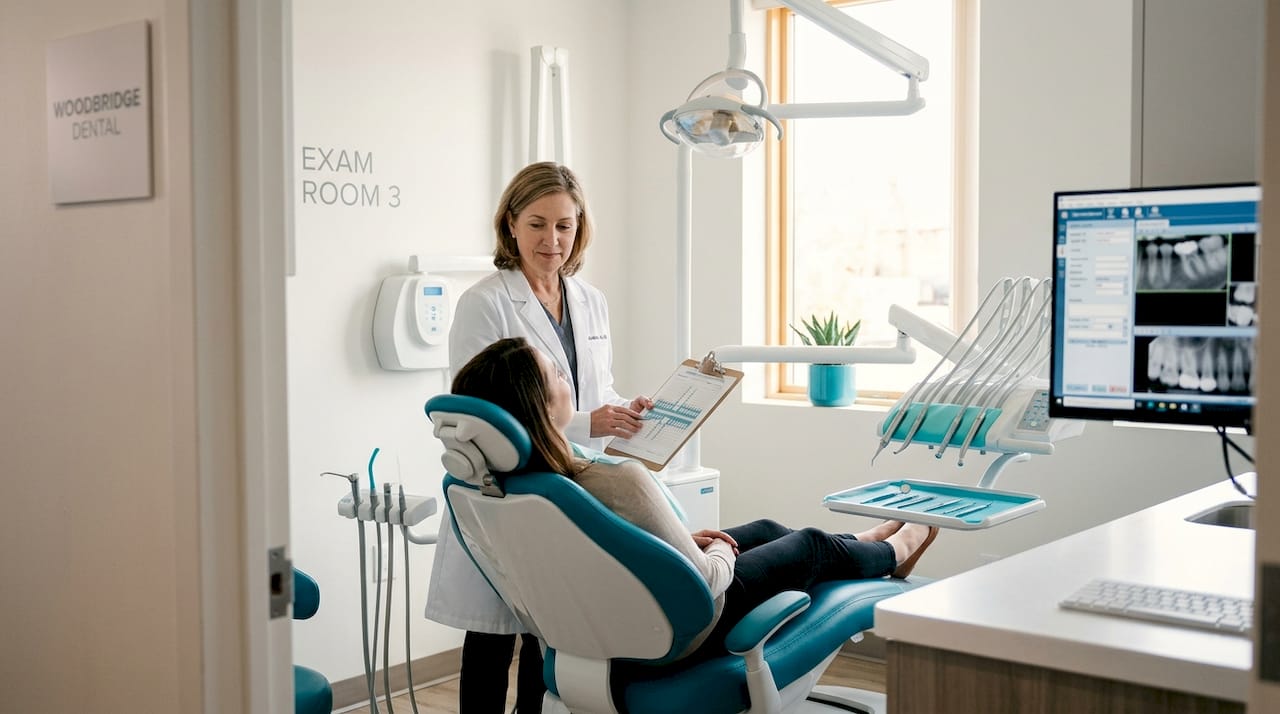
A dental consultation visit is a structured, personalized appointment where a dentist evaluates your oral health, reviews your medical history, and works with you to build a care plan suited to your needs. Known clinically as a comprehensive oral examination, this visit goes well beyond a quick look at your teeth. Consultations include oral cancer screening, bite assessment, and personalized education on oral hygiene. Many patients are surprised to learn that the dental consultation process is as much about prevention and planning as it is about treatment. Whether you are scheduling your own visit or bringing your child for the first time, understanding what to expect makes the experience far more comfortable and productive.
What is a dental consultation visit and what happens during one?
A dental consultation visit follows a clear, step-by-step process designed to give your dentist a complete picture of your oral health. Here is what you can expect from start to finish.
-
Medical and dental history review. Your dentist or hygienist will ask about current medications, allergies, past dental work, and any health conditions. This step matters because conditions like diabetes and heart disease are directly connected to oral health, and your dentist needs the full picture before examining you.
-
Oral examination. Your dentist checks each tooth for decay, cracks, and wear. The gums are probed for signs of periodontal disease. The bite is assessed for alignment issues. Routine dental exams also include an oral cancer screening, where the dentist examines the tongue, cheeks, throat, and jaw. Many patients have never had this explained to them, and it is one of the most valuable parts of the visit.
-
Diagnostic imaging. X-rays or digital scans reveal what the naked eye cannot see: decay between teeth, bone loss, impacted teeth, and root problems. Modern digital X-rays use significantly less radiation than older film-based systems and produce instant results.
-
Discussion of findings. Your dentist walks you through what was found, what it means, and what your options are. This is not a one-way presentation. You are encouraged to ask questions and share concerns.
-
Care planning. Based on the examination, your dentist recommends a schedule for cleanings, preventive treatments, or follow-up procedures. The goal is a plan that fits your actual risk level and lifestyle, not a generic protocol.
Pro Tip: Write down any tooth sensitivity, pain, or changes you have noticed before your appointment. Patients who arrive with a short list of concerns get more out of the consultation than those who try to remember everything on the spot.
Why is a dental consultation visit important for adults and children?

The purpose of a dental visit extends well beyond fixing problems. The most significant value is catching issues before they become serious. Untreated cavities and gum disease are linked to diabetes and heart disease, which means your oral health is a window into your overall health. This connection is still underappreciated by many patients.
Despite this, only 65% of adults in the U.S. had a dental exam or cleaning in the past year. That means roughly one in three adults is skipping preventive care that could detect serious conditions early. Regular consultations close that gap.
For children, the dental check-up importance is even more pronounced. The American Dental Association recommends a child’s first dental consultation within six months of the first tooth or by their first birthday. Starting early does two things: it catches developmental issues before they worsen, and it builds a positive relationship with dental care that children carry into adulthood. In my experience, children who visit the dentist early are far less anxious as teenagers and adults.
Here are the core benefits that apply to both adults and children:
- Early detection of cavities, gum disease, and oral cancer before symptoms appear
- Personalized risk assessment so your care frequency matches your actual needs, not a one-size-fits-all schedule
- Connection to systemic health through monitoring of conditions tied to oral infections
- Professional guidance that home brushing and flossing alone cannot replace
- Trust building for children, creating a foundation for lifelong dental comfort
“Many patients come in thinking we are just going to clean their teeth. The consultation is really the foundation of everything. It tells us where you are today and where we need to go together.” — Dr. Michael Rouhi, Woodbridge Dental Centre
Children at higher risk of tooth decay, such as those with deeper grooves in their teeth or lower fluoride exposure, may need more frequent visits for monitoring and preventive treatments. The right frequency depends on the individual, not a calendar.
How to prepare for your dental consultation and what questions to ask
Knowing how to prepare for a dental consultation makes the appointment more efficient and far more useful. Preparation is not complicated, but most patients skip it entirely.
Before your visit, gather the following:
- A list of all current medications and supplements, including dosages
- Any known allergies, especially to medications or latex
- Your dental insurance information and photo ID
- Records from your previous dentist if you are visiting a new practice
- A written list of symptoms, concerns, or questions you want to address
Dental anxiety is real and common. If you feel nervous, tell the front desk when you book and remind the team when you arrive. At Woodbridge Dental Centre, we adjust our approach for anxious patients, including pacing the exam, explaining each step before we do it, and offering breaks when needed. Honest communication with your dental team is the single most effective way to reduce anxiety.
When it comes to questions to ask your dentist, the best ones are specific to your situation. That said, these questions work well for almost any consultation:
- What is the current state of my gum health?
- Are there any areas I should watch between now and my next visit?
- How often do you recommend I come in based on my risk level?
- What preventive treatments would benefit me most right now?
- Are there any signs of grinding or clenching I should know about?
Pro Tip: If you are bringing a child, read about what to expect at your child’s first dentist appointment beforehand. Knowing the process helps you answer your child’s questions calmly, which directly affects how relaxed they feel in the chair.
Common types of follow-up after a dental consultation visit
The consultation is the starting point. What comes next depends entirely on what the examination reveals. Here is a clear breakdown of the most common follow-up paths.
| Follow-up type | What it involves |
|---|---|
| Routine cleaning and exam | Professional scaling, polishing, and a scheduled recall visit every 6 or 12 months based on risk |
| Preventive treatments | Fluoride application or dental sealants, especially recommended for children and high-risk adults |
| Restorative work | Fillings for cavities, crowns for damaged teeth, or root canal therapy for infected pulp |
| Orthodontic referral | Assessment for Invisalign or traditional braces when bite or alignment issues are identified |
| Specialist referral | Periodontist for advanced gum disease, oral surgeon for extractions or implants, endodontist for complex root issues |
| Diagnostic follow-up | Additional X-rays, digital impressions, or a cone beam CT scan when more detail is needed |
The good news is that most patients leave a consultation with nothing more than a cleaning scheduled. Consultations focus on long-term planning, not just immediate treatment, so even when follow-up care is needed, you have time to ask questions and make informed decisions. No reputable dentist rushes you into a procedure the same day without your full understanding and consent.
For families in Woodbridge and Vaughan, having a single practice that handles general care, children’s dentistry, Invisalign, and implants means fewer referrals outside the clinic and more continuity of care. That consistency matters more than most patients realize.
Key takeaways
A dental consultation visit is the foundation of long-term oral health, combining examination, diagnosis, and personalized planning into a single appointment that benefits patients of every age.
| Point | Details |
|---|---|
| Definition and scope | A dental consultation is a comprehensive oral exam covering history, teeth, gums, bite, cancer screening, and care planning. |
| Frequency and prevention | Only 65% of U.S. adults visited a dentist last year; regular consultations catch problems before they become costly or painful. |
| Children start early | The American Dental Association recommends a child’s first visit by age 1 or within 6 months of the first tooth. |
| Preparation matters | Bringing a medication list, written concerns, and insurance info helps you get more from every consultation. |
| Follow-up is personalized | Next steps range from a routine cleaning to specialist referrals, always based on individual findings, not a standard protocol. |
Why I think most patients underestimate the consultation
In my experience, the consultation is the most undervalued appointment in dentistry. Patients often treat it as a formality before the “real” work begins. That thinking gets it backwards.
The examination is where we find the cavity that has no symptoms yet, the early gum recession that responds well to a simple change in brushing technique, or the worn edges on the back teeth that point to nighttime grinding. None of those findings announce themselves. You feel fine, and then one day you do not. The consultation is what stands between those two moments.
I have also seen how much the team dynamic matters. A brief coordinated conversation among staff before the dentist enters the room builds patient trust more effectively than a longer solo presentation from the dentist alone. At Woodbridge Dental Centre, our hygienists and assistants are not just preparing the room. They are beginning the care process. Consistent team messaging improves treatment acceptance and reduces anxiety, and that is something we take seriously.
If you have been putting off a visit because you are not sure what to expect or because you are worried about what might be found, I would encourage you to reframe it. Finding something early is always better than finding it late. The consultation gives us the information we need to help you, and it gives you the clarity to make good decisions about your health.
— Felix
Schedule your consultation at Woodbridge Dental Centre

Woodbridge Dental Centre provides family dental care for patients of all ages across Woodbridge, Vaughan, and Maple. Dr. Michael Rouhi, Dr. Sandra Farber, and our team offer general, preventive, children’s, cosmetic, and restorative dentistry in a warm, welcoming environment designed to put every patient at ease. Whether you are booking your own first consultation, bringing a child in for their initial visit, or returning after a long gap, we meet you where you are without judgment. We offer flexible appointment options and take the time to explain every finding clearly. To learn more about early dental care for kids or to schedule your consultation, contact our office today.
FAQ
What is included in a dental consultation visit?
A dental consultation visit includes a review of your medical and dental history, a full oral examination covering teeth, gums, bite, and soft tissues, an oral cancer screening, diagnostic X-rays when needed, and a discussion of findings with a personalized care plan.
How long does a dental consultation take?
A standard dental consultation typically takes between 45 and 90 minutes, depending on whether X-rays are taken and how much discussion is needed. New patients generally require more time than returning patients.
How often should I schedule a dental consultation?
Most adults benefit from a dental consultation and cleaning every six months, though your dentist may recommend a different frequency based on your individual risk for cavities, gum disease, or other conditions.
When should my child have their first dental consultation?
The American Dental Association recommends scheduling a child’s first dental visit within six months of the first tooth appearing or by their first birthday, whichever comes first.
Do I need a referral to book a dental consultation?
No referral is needed to book a dental consultation at most general dental practices. You can contact the clinic directly to schedule an appointment for yourself or your child.
Recommended
- Your Cosmetic Dentistry Consultation Checklist
- The Step-by-Step Guide to Getting Dental Implants – Woodbridge Dental Centre | Cosmetic, Implant & Family Dentistry
- Dental Implant Maintenance: Daily Care and Regular Check-Ups – Woodbridge Dental Centre | Cosmetic, Implant & Family Dentistry
- How Often Should Kids Visit the Dentist? | Expert Guide to Checkup Frequency – Woodbridge Dental Centre | Cosmetic, Implant & Family Dentistry


