

A routine dental cleaning is a professional preventive procedure performed by a registered dental hygienist to remove plaque and tartar that daily brushing and flossing cannot reach. Known clinically as prophylaxis, this appointment does more than polish your teeth. It includes a health assessment, diagnostic imaging when due, and a structured review of your gum and bone health. Most adults benefit from twice-yearly cleanings to catch problems early and keep their mouths healthy between visits. For families in Woodbridge, Vaughan, and Maple, understanding what happens during this appointment makes the experience far less intimidating and far more useful.
What happens during each step of a routine dental cleaning?
A standard cleaning appointment follows seven consistent steps, and knowing them in advance removes most of the uncertainty patients feel in the chair. The appointment typically runs between 30 and 60 minutes, depending on how much buildup is present and whether X-rays are taken that day.
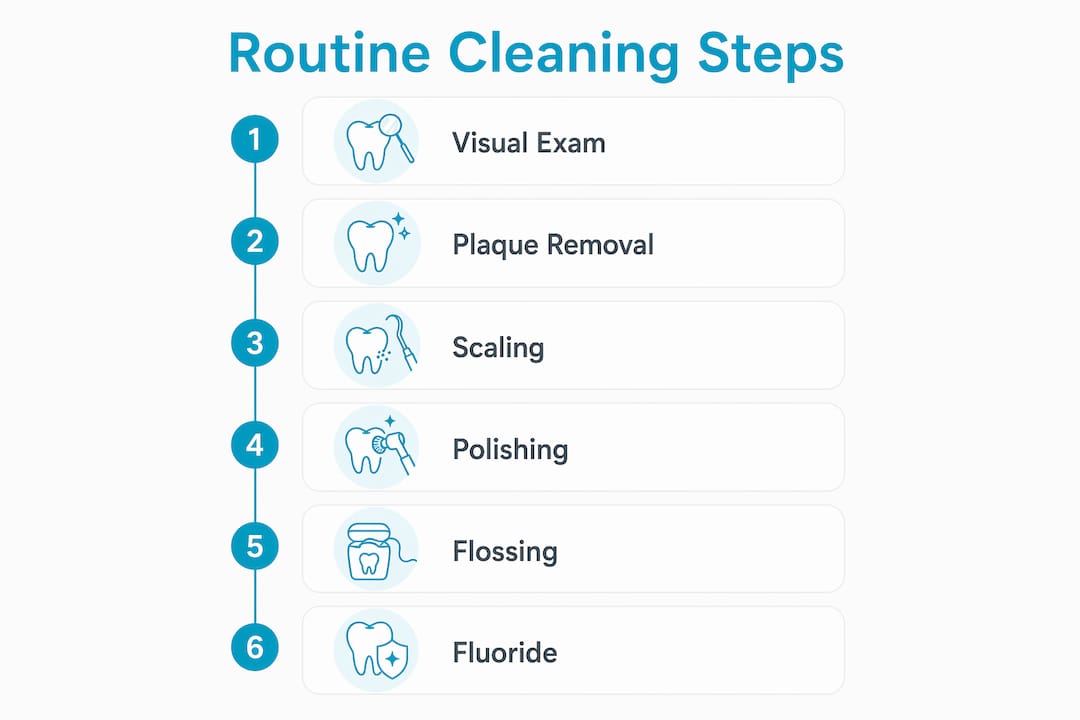
Here is what you can expect, in order:
-
Visual exam. Your hygienist examines your teeth, gums, tongue, and soft tissues before any instruments are used. This quick scan identifies obvious concerns like swelling, discoloration, or lesions that need attention.
-
X-rays (if due). Dental X-rays are taken roughly once a year for most adults. They reveal decay between teeth, bone loss, and issues invisible to the naked eye. Many patients are surprised to learn that X-rays detect early issues that would otherwise go unnoticed until they become painful and expensive.
-
Periodontal pocket assessment. Using a thin periodontal probe, your hygienist measures the depth of the space between each tooth and its surrounding gum. Healthy pockets measure 1 to 3 mm. Readings above that signal inflammation or early gum disease.
-
Scaling. This is the core of the dental cleaning process. Your hygienist uses both an ultrasonic scaler and manual hand scalers to remove hardened tartar (calculus) from tooth surfaces and just below the gumline. The ultrasonic scaler vibrates at high frequency and uses a fine water mist to flush debris away. Many patients notice a scraping sensation and hear a high-pitched hum. That sound is louder than you might expect because ultrasonic vibration travels through bone directly to your inner ear, a detail that surprises most first-time patients. Knowing this in advance prevents unnecessary alarm.
-
Polishing. A rotary handpiece with a soft rubber cup and gritty prophylaxis paste buffs each tooth surface. The paste smooths microscopic enamel scratches, which makes it harder for plaque to re-adhere after the appointment. The texture feels like fine sand and the taste varies by flavor.
-
Flossing. Professional flossing at the end of the appointment is both a cleaning and a diagnostic step. Your hygienist checks for gum bleeding and debris between teeth that the scaler may have missed, and notes any tight contacts or gum sensitivity.
-
Fluoride treatment. A fluoride gel or varnish is applied to strengthen enamel and provide short-term cavity protection. This step takes about one minute and is especially beneficial for children and adults prone to decay.
Pro Tip: If you feel discomfort during scaling, raise your hand. Your hygienist can adjust pressure, offer a short break, or apply a topical numbing gel. You are always in control of the pace.
How does a routine cleaning compare to a deep cleaning?
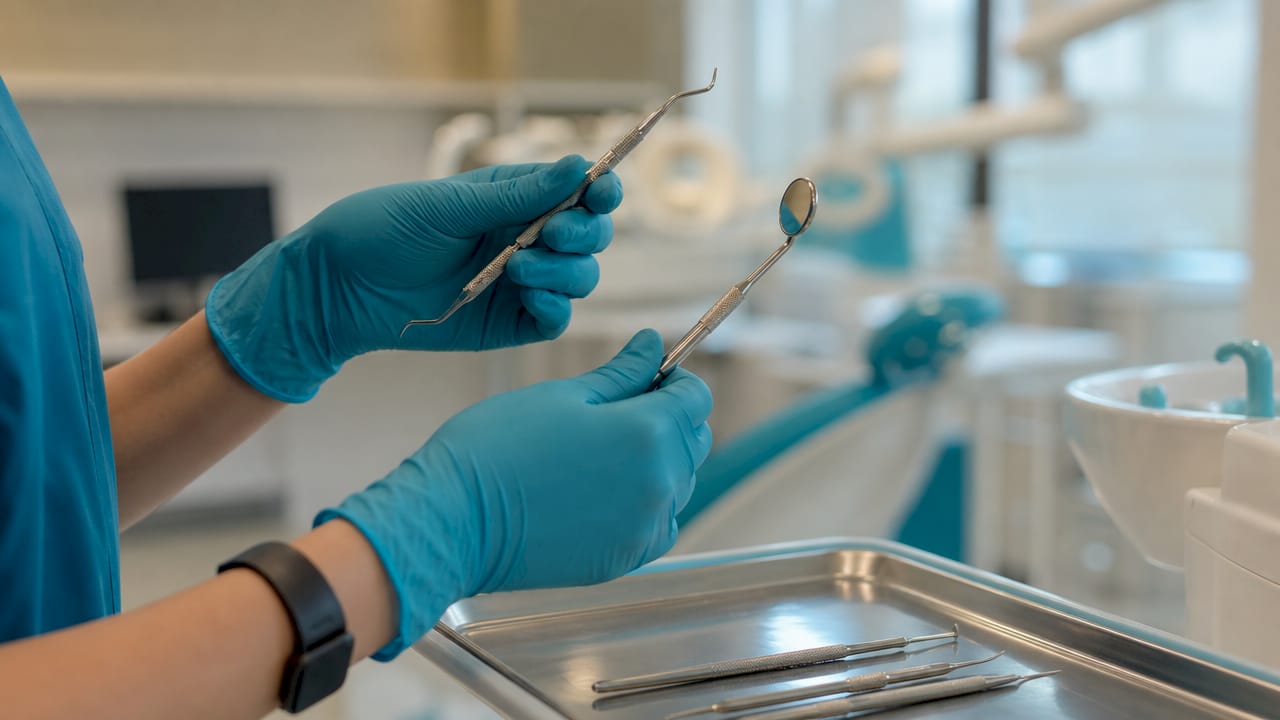
Many patients hear the phrase “deep cleaning” and assume it simply means a more thorough version of their regular visit. It is not. A deep cleaning, clinically called scaling and root planing, is a separate therapeutic procedure used to treat active gum disease, not prevent it.
The table below outlines the key differences:
| Feature | Routine cleaning (prophylaxis) | Deep cleaning (scaling and root planing) |
|---|---|---|
| Purpose | Prevention and maintenance | Treatment of periodontal disease |
| Pocket depth trigger | 1 to 3 mm (healthy range) | 5 mm or more indicates disease |
| Anesthesia | Not typically needed | Local anesthetic usually required |
| Number of visits | One appointment | Often split into two or four visits by quadrant |
| Cost (without insurance) | $80 to $150 | $200 to $400 per quadrant |
| Recovery | None | Mild soreness for 1 to 2 days |
The distinction matters because some patients avoid routine cleanings out of fear they will be told they need a deep cleaning. In reality, consistent six-month prophylaxis appointments are the most reliable way to avoid ever needing one. Tartar that accumulates over years causes the gum inflammation that deepens those pockets in the first place.
What are the real benefits of routine dental cleanings?
The benefits of routine teeth cleaning extend well beyond a brighter smile. Here is what a twice-yearly appointment actually protects:
- Prevention of gum disease. Hardened calculus cannot be removed by brushing or flossing at home. Once tartar forms below the gumline, it triggers chronic inflammation that, left untreated, destroys the bone supporting your teeth.
- Early cavity detection. Your hygienist and dentist review X-rays and probe findings to catch decay when it is small. A small filling costs a fraction of a root canal or crown.
- Oral cancer screening. Every visual exam includes a soft tissue check for unusual patches, lumps, or lesions. Oral cancer caught early has a significantly better prognosis than cancer found in later stages.
- Fresher breath. Persistent bad breath is most often caused by bacteria living in tartar deposits and below the gumline. Removing that buildup addresses the source, not just the symptom.
- Systemic health connections. Research links chronic gum disease to increased risk of heart disease, stroke, and cognitive decline. Treating and preventing periodontal inflammation is not just a dental issue. It is a whole-body health decision.
The good news is that all of these benefits come from a single 30 to 60 minute appointment, twice a year. The return on that time investment is significant.
How to prepare for and get the most from your appointment
Preparation for a dental hygiene appointment is straightforward, but a few steps make a real difference in the quality of care you receive.
Bring a current list of your medications, including supplements. Some medications cause dry mouth, gum overgrowth, or increased bleeding, and your hygienist needs that information to adjust technique and interpret findings accurately. Following these preparation steps before your visit helps the whole appointment run more smoothly.
Tell your hygienist about any sensitivity, anxiety, or areas that have been bothering you. This is not complaining. It is clinical information. A hygienist who knows you have sensitivity on your lower left molars will approach that area differently and check for recession or exposed root surfaces that explain the discomfort.
A good dental office presents treatment plans as a conversation, not a list of procedures to accept or decline under pressure. You have the right to ask why a treatment is recommended, what happens if you wait, and what the alternatives are. Asking to review your periodontal pocket chart or X-rays before any recommendations are made is completely reasonable, and any experienced hygienist will walk you through them without hesitation.
Pro Tip: If dental anxiety is a concern, schedule your appointment for a morning slot when you are less likely to have built up stress from the day. Let the front desk know when you book so the team can prepare accordingly.
Key takeaways
Routine dental cleanings are the most cost-effective preventive tool in dentistry, combining plaque removal, gum assessment, and early disease detection in a single 30 to 60 minute appointment.
| Point | Details |
|---|---|
| Seven-step process | Every cleaning follows a standard sequence from visual exam through fluoride treatment. |
| Prophylaxis vs. deep cleaning | Routine cleanings prevent disease; deep cleanings treat it when pockets reach 5 mm or more. |
| Twice-yearly frequency | Six-month intervals remove tartar before it causes gum inflammation or bone loss. |
| Diagnostic value | X-rays and pocket measurements detect cavities, bone loss, and oral cancer early. |
| Patient preparation | Sharing medications and concerns with your hygienist improves both safety and comfort. |
Why I think routine cleanings are the most underestimated appointment in dentistry
In my experience, the patients who are most anxious about dental visits are often the ones who have gone the longest without one. They expect to be judged or told they need extensive work. What they actually find is that a straightforward cleaning resolves the sensitivity, bad breath, or gum tenderness they have been quietly managing for months.
Many patients are surprised to learn that the cleaning itself is diagnostic. The pocket measurements, the X-rays, the soft tissue check — these are not formalities. They are the reason we catch a small cavity before it becomes a root canal, or spot a gum lesion before it becomes something serious. I have seen patients in Woodbridge and Vaughan avoid thousands of dollars in restorative work simply because they stayed consistent with their six-month visits.
The other misconception I hear regularly is that cleanings are only for people with “bad teeth.” The opposite is true. Patients with healthy mouths benefit most from consistent prophylaxis because they are maintaining a baseline that is easy to protect. Waiting until something hurts means the problem has already progressed.
My honest advice: treat your cleaning appointment the way you treat an oil change. You do not wait for the engine to fail. You maintain it on schedule because prevention is always simpler than repair.
— Felix
Schedule your routine cleaning at Woodbridge Dental Centre

At Woodbridge Dental Centre, Dr. Michael Rouhi, Dr. Sandra Farber, and our hygiene team provide routine cleanings for patients of all ages across Woodbridge, Vaughan, and Maple. We take time to explain every step, review your X-rays and pocket measurements with you, and make sure you leave with a clear picture of your oral health. Whether you are booking for yourself, your partner, or your children, our family dental care services are designed to keep every member of your household healthy and comfortable. Flexible appointment times are available. Contact us today to schedule your next dental hygiene appointment.
FAQ
How long does a routine dental cleaning take?
A routine dental cleaning typically takes between 30 and 60 minutes. The exact time depends on the amount of tartar present and whether X-rays are taken during the visit.
Is a routine dental cleaning painful?
For most patients with healthy gums, a routine cleaning causes little to no discomfort. Mild sensitivity during scaling is normal, and your hygienist can adjust pressure or use a topical numbing gel if needed.
How often should I get a routine dental cleaning?
Most adults should have a professional cleaning every six months. Your dentist may recommend more frequent visits if you have a history of gum disease or rapid tartar buildup.
What is the difference between a cleaning and a checkup?
A dental hygiene appointment includes both the cleaning and a checkup. The hygienist performs the scaling and polishing, while the dentist reviews X-rays and conducts a clinical exam to assess overall oral health.
Can children get the same routine cleaning as adults?
Yes. The steps in a routine teeth cleaning are the same for children and adults, though the tools and technique are adapted for smaller mouths. Starting cleanings early builds healthy habits and catches developmental issues before they become problems.
Recommended
- Should My Child Get Dental Cleanings Twice a Year? | Why Frequency Matters – Woodbridge Dental Centre | Cosmetic, Implant & Family Dentistry
- What to Expect from a Pediatric Dental Cleaning | A Step-by-Step Look Inside – Woodbridge Dental Centre | Cosmetic, Implant & Family Dentistry
- How Often Should Kids Visit the Dentist? | Expert Guide to Checkup Frequency – Woodbridge Dental Centre | Cosmetic, Implant & Family Dentistry
- How to Prepare Your Family Dental Checkup Smoothly


