

Take your child to a dentist by their first birthday, or within six months after their first tooth appears. That is the clear recommendation from the Canadian Dental Association (CDA), and provincial health authorities across Canada echo this guidance. The timing is not arbitrary. Teeth that appear early can develop decay quickly, and the first visit gives you a concrete plan to prevent that.
Two things to do right now:
- Book the appointment for around your child’s first birthday, or sooner if a tooth has already come in.
- Call a dental office promptly if you notice any white spots, bleeding gums, or signs of mouth pain before that date.
Why an early dental visit matters for your infant or toddler
Many parents are surprised to learn that tooth decay can begin as soon as the first tooth erupts. Early Childhood Caries (ECC) is the clinical term for decay in children under six, and it can progress faster in baby teeth than most people expect. The CDA’s position on ECC is clear: prevention requires early assessment, tailored interventions, and parental guidance working together.
The benefits of early dental care go well beyond checking for cavities:
- ECC risk assessment: The dentist evaluates feeding patterns, home hygiene, fluoride exposure, and enamel quality to identify risk before decay starts.
- Establishing a dental home: Connecting your child to a consistent practice by 12 months supports continuity of care and means you always have someone to call.
- Anticipatory guidance: You leave with specific advice on cleaning technique, diet, fluoride, and what to watch for as more teeth come in.
- Positive relationship-building: A child who visits the dentist before anything hurts tends to be far less anxious about future appointments.
That last point matters more than parents often realize. Early visits are as much about building a comfortable relationship with the dental team as they are about clinical checks.
What age for the first dental visit, and when should you go sooner?
The standard guidance is straightforward: schedule the first appointment within six months of the first tooth erupting, and no later than the child’s first birthday. Canada.ca’s oral health guidance echoes this exactly, noting that baby teeth typically begin appearing around six months of age. For most families, the first dental visit is recommended by 12 months of age, or within six months of the first tooth appearing.
In practice, clinicians use this window to catch any early concerns before they become problems. But some children need to be seen sooner:
- Visible white or brown spots on any tooth surface (early signs of decay)
- Enamel anomalies present at birth or noticed shortly after eruption
- Feeding difficulties that may involve mouth pain or tongue-tie
- Medical conditions such as congenital heart conditions or certain syndromes that affect oral development
- Trauma to the mouth or teeth at any age
The CDA also notes that infants at special risk based on medical or social history may need earlier or more frequent assessments. If your child falls into any of these categories, do not wait for the birthday milestone. Call a dental office and describe what you are seeing.
Whether you see a pediatric dentist or a family dentist depends largely on your access and comfort. Both can handle infant oral assessments. What matters most is that the visit happens on time and that the practice is willing to work with young children.
What happens at your child’s first dental appointment
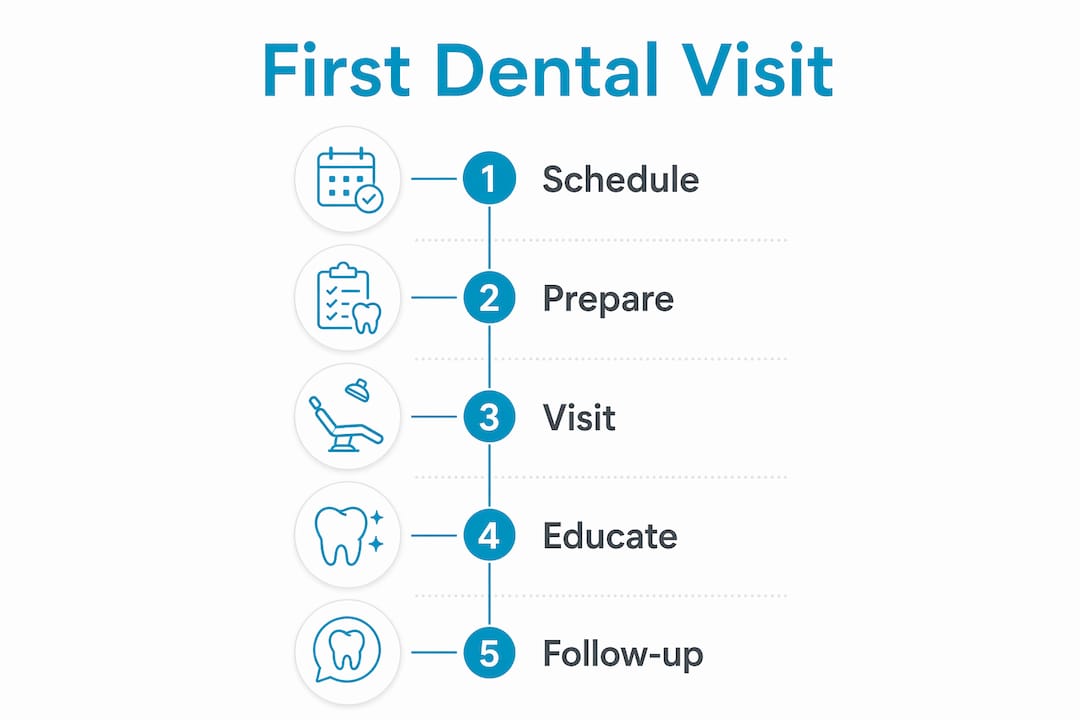
The first visit is shorter and gentler than most parents expect. A typical appointment runs a short time, and much of that time is spent talking with you rather than examining the child.
Here is the general flow:
- Medical and dental history: The dentist or hygienist asks about your child’s birth history, feeding habits, medications, and any concerns you have noticed.
- Gentle oral exam: The dentist checks the teeth, gums, jaw, and soft tissues. For very young infants, this is often done with the child sitting in your lap facing you, then leaning back toward the dentist.
- ECC risk assessment: Based on what they see and what you share, the clinician identifies risk factors and explains them to you in plain language.
- Anticipatory guidance: You receive specific, practical advice on cleaning your child’s teeth, what to feed them, fluoride options, and habits to avoid (like putting a baby to bed with a bottle of juice or milk).
- Cleaning and fluoride: Depending on the child’s age and cooperation, a quick cleaning or fluoride varnish application may be done. This is not always performed at the very first visit.
Pro Tip: A first visit is largely a coaching session for the parent. Come prepared with questions about diet, cleaning tools, and what to watch for as more teeth arrive.
The Dental Hygienists of Canada describe the first visit as an opportunity to demonstrate home-care techniques and give parents a clear picture of what healthy development looks like. You should leave feeling informed, not overwhelmed.
How to prepare your toddler — and yourself — for the first visit
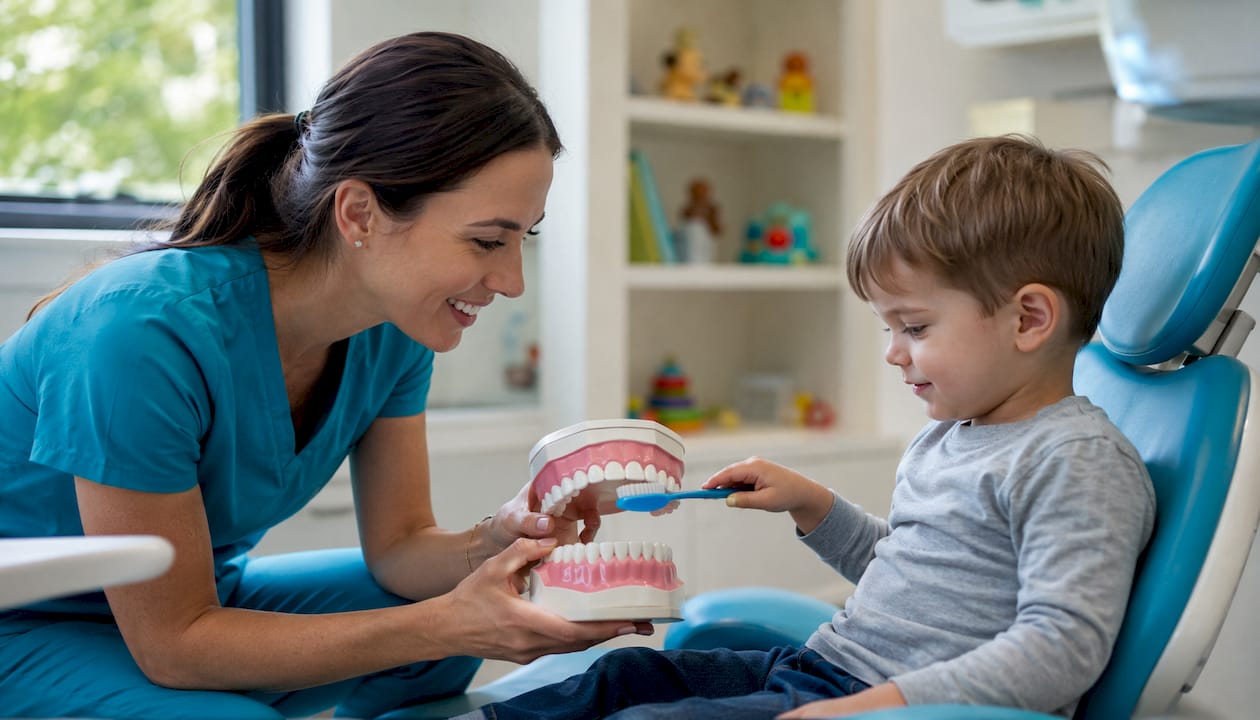
Preparation makes a real difference, especially for children who are old enough to sense your mood. Language matters: say “we’re going to count your teeth” rather than “it won’t hurt.” Children pick up on parental anxiety, so if you are nervous, consider bringing a calm second caregiver. The CDA advises using simple, positive wording and allowing the child to observe an adult’s checkup first when possible.
Practical steps before the appointment:
- Bring your child’s health card, insurance information, and a list of any medications.
- Note feeding details: how often, what type of milk or formula, and whether your child uses a bottle at bedtime.
- Pack a favorite comfort item, such as a small toy or blanket.
- If your child has had any mouth injuries or you have noticed anything unusual, write it down so you do not forget to mention it.
Pro Tip: Schedule the appointment at a time when your child is typically rested and calm, not during nap time or right before a meal.
Alberta Health’s guidance also suggests short “practice” visits to the clinic environment before the first clinical exam. Some practices offer a brief meet-and-greet so the office feels familiar. Ask about this when you call to book.
How often should young children return after the first visit?
For low-risk children, the standard recall interval is every six months. That cadence gives the dentist a chance to monitor tooth eruption, catch any early decay, and update the prevention plan as your child grows.
High-risk children may need to return more frequently:
- A history of ECC or active decay in baby teeth
- Enamel defects or developmental anomalies
- Ongoing feeding concerns or high sugar intake
- Medical conditions that affect saliva production or oral immunity
The dental home model is built around this kind of individualized monitoring. Rather than a one-size-fits-all schedule, the dentist adjusts recall frequency based on what they observe at each visit. For some children, that means every three to four months during a high-risk period, then returning to six-month intervals once the risk decreases.
Costs and coverage for Canadian families
Dental fees for infant and toddler visits vary by province and by what is done at the appointment. A basic exam with anticipatory guidance typically costs less than a full adult checkup, since no X-rays or extensive cleaning are usually performed at the first visit.
Steps to take before you book:
- Check provincial programs: Several provinces offer subsidized or free dental care for young children. Programs and eligibility criteria differ by province, so contact your provincial health authority or check their website directly.
- Review your private benefits: Many employer dental plans cover preventive visits for dependents, including infants. Confirm the age of eligibility and whether a first visit is classified as a preventive or diagnostic appointment.
- Call the clinic: Ask the front desk to walk you through the expected fees before the appointment. A good dental office will give you a clear estimate.
- Ask about community resources: If cost is a barrier, community health centers and dental school clinics in many Canadian cities offer reduced-fee care for young children.
Red flags that mean you should not wait for the scheduled visit
Some signs require prompt attention, regardless of where your child is in the recommended timeline. Contact a dental office right away if you notice:
- Tooth pain or sensitivity, even in an infant who cannot yet describe it (watch for fussiness during feeding)
- Trauma to the mouth, a chipped or knocked-out tooth, or injury to the gums or jaw
- White or brown spots on any tooth surface
- Persistent bleeding or swelling in the gums
- Feeding difficulties that seem connected to mouth discomfort
Children with certain medical conditions, including congenital heart conditions, cleft palate, or syndromes affecting facial development, may need a dental assessment earlier than the standard 12-month guideline. The child’s physician can advise on timing, and the dental office can coordinate with the medical team when needed.
The CDA’s guidance on special-risk infants is clear: when risk factors are present, earlier and more frequent visits are appropriate. Do not wait for a scheduled appointment if something looks or feels wrong.
How Woodbridge Dental Centre supports early visits for local families
Woodbridgedentalcentre serves families across Vaughan, Woodbridge, and Maple with a child-friendly approach to early dental care. The practice is set up to make infant and toddler visits calm and productive, with parents welcome in the exam room throughout.
At a first visit, the team at Woodbridgedentalcentre focuses on:
- A gentle oral exam with the parent present and involved
- A clear ECC risk assessment and plain-language explanation of findings
- Practical home-care coaching: how to clean emerging teeth, what to avoid, and which products to use
- A risk-based follow-up plan so you know exactly when to return
Booking is straightforward. Families can call the clinic directly or use the online booking options to find a time that works. The front desk team is happy to answer questions about what to bring and what to expect before you arrive.
Key Takeaways
The single most important step is to book your child’s first dental visit by their first birthday, or within six months of the first tooth appearing.
| Point | Details |
|---|---|
| Recommended timing | Book by the first birthday or within 6 months of the first tooth, per the Canadian Dental Association. |
| First visit focus | The appointment is largely a parent coaching session: cleaning technique, diet, fluoride, and ECC risk. |
| Recall frequency | Low-risk children return every 6 months; high-risk children may need visits every 3–4 months. |
| Red flags | White spots, mouth trauma, feeding pain, or swelling require prompt care, not a wait for the next scheduled visit. |
| Woodbridgedentalcentre | Families in Vaughan, Woodbridge, and Maple can book a child’s first visit with a team experienced in early preventive care. |
A note from a Vaughan dentist
In my experience, the parents who benefit most from the first dental visit are the ones who come in with questions. Many parents are surprised to learn that the appointment is mostly about them: what they are feeding their child, how they are cleaning those first teeth, and what small changes can prevent a lot of problems down the road. The good news is that when we catch things early, the solutions are almost always simple. I have seen children in Woodbridge, Vaughan, and Maple grow up with healthy teeth because their parents came in at twelve months and left with a clear plan. That early visit is one of the most practical things you can do for your child’s long-term health, and it is far less stressful than most parents expect.
Woodbridge Dental Centre welcomes your child’s first visit
Gentle, experienced care for babies and toddlers is at the heart of what Woodbridgedentalcentre does for families in Vaughan, Woodbridge, and Maple. The first visit is kept short, calm, and focused on giving you the information you need to protect your child’s teeth from day one.

Ready to book? Visit the family dental care page to schedule online, or call the clinic directly. The team is happy to answer any questions before you arrive, including what to bring and how to prepare your little one.
Useful sources for parents
These are the primary sources behind the guidance in this article. Each one is worth bookmarking if you want to read further.
- Canadian Dental Association — A Child’s First Dental Visit: The CDA’s official position statement on timing, risk assessment, and the dental home model. The most authoritative Canadian source on this topic.
- Canadian Dental Association — Early Childhood Caries: Detailed guidance on ECC prevention, risk factors, and the role of early intervention.
- Canada.ca — Oral Health for Children: Federal public health guidance on tooth development, timing of first visits, and general preventive care.
- Alberta Health — Basic Dental Care from Birth to 16 Years: Provincial guidance that mirrors the CDA recommendation and includes practical preparation tips for parents.
- Dental Hygienists of Canada — Your Child’s First Visit: Practical overview of what the first visit covers and how to prepare your child.
- Children Dental Care Best Practices: 2026 Parent Guide: A useful supplementary resource covering timing and practical tips for parents navigating early dental care.
FAQ
Should a 2-year-old be going to the dentist?
Yes. The Canadian Dental Association recommends the first appointment by 12 months of age, or within six months after the first tooth erupts. After the initial visit, a child is due for a follow-up checkup, typically every six months.
Should a 4-year-old see a dentist?
Absolutely. A 4-year-old should be attending regular dental checkups every six months, and the dentist will monitor tooth development, hygiene habits, and any early signs of decay or bite concerns.
Can a 3-month-old go to the dentist?
A 3-month-old does not yet need a dental exam, since teeth have not erupted. The first visit is recommended within six months after the first tooth erupts, and should be done by the child’s first birthday.
What is the 3-3-3 dental rule?
The “3-3-3 rule” is not a standardized clinical guideline in Canadian dentistry. For children, the guidance that matters is the CDA’s recommendation: first visit by 12 months, then checkups based on the child’s individual risk level, typically every six months.
Recommended
- What’s the Best Age to Take Your Child to the Dentist? | Expert Advice for Parents – Woodbridge Dental Centre | Cosmetic, Implant & Family Dentistry
- What Dentists Look for in Children: A Parent’s Guide
- What to Expect at Your Child’s First Dentist Appointment | No Tears, Just Smiles – Woodbridge Dental Centre | Cosmetic, Implant & Family Dentistry
- What to Expect from a Pediatric Dental Cleaning | A Step-by-Step Look Inside – Woodbridge Dental Centre | Cosmetic, Implant & Family Dentistry


