

Types of cosmetic dental treatments fall into three biological categories: procedures that add material to teeth, procedures that remove tooth structure, and procedures that change appearance without physically altering the tooth at all. Understanding this distinction, drawn from cosmetic dentistry classification, gives you a clearer framework than any marketing brochure. Whether you are considering veneers, teeth whitening, or a full smile makeover at Woodbridge Dental Centre, knowing how each treatment works at the structural level helps you ask better questions and set realistic expectations. This guide covers the most popular cosmetic procedures available in 2026, organized by how they actually affect your teeth.
1. Cosmetic dental treatments that add material to teeth
The largest category of cosmetic dentistry options involves placing new material onto or over your existing teeth. These treatments address chips, discoloration, gaps, missing teeth, and shape concerns by building up rather than taking away.
- Composite bonding: Tooth-colored resin is applied directly to the tooth surface, sculpted, and hardened with a curing light. Composite bonding is less expensive than veneers and requires minimal tooth alteration, making it ideal for minor chips or small gaps. The trade-off is durability. Bonding typically lasts five to seven years before it needs touching up, compared to ten to fifteen years for porcelain.
- Porcelain veneers: Ultra-thin porcelain laminates bonded to the front surface of teeth to correct color, shape, and spacing. Veneers require removing a thin layer of enamel (roughly 0.3 to 0.5 mm) for proper fit, which we cover in more detail in the next section.
- Dental crowns: Caps placed over the entire visible tooth, used when a tooth needs both cosmetic improvement and structural reinforcement. Crowns require more tooth reduction than veneers but deliver excellent long-term results for damaged or heavily restored teeth.
- Dental implants: Titanium posts surgically placed into the jawbone to replace missing tooth roots, topped with a porcelain crown. Implants are the closest thing to a natural tooth replacement available today.
- Bridges: Fixed false teeth anchored to adjacent teeth on either side of a gap. Bridges are a reliable option when implants are not suitable, though they do require preparing the neighboring teeth.
| Treatment | Best for | Invasiveness | Typical longevity |
|---|---|---|---|
| Composite bonding | Minor chips, small gaps | Minimal | 5–7 years |
| Porcelain veneers | Color, shape, spacing | Low to moderate | 10–15 years |
| Dental crowns | Damaged or weakened teeth | Moderate | 15+ years |
| Dental implants | Missing teeth | Surgical | Lifetime with care |
| Bridges | Missing teeth (no implant) | Moderate | 10–15 years |
Pro Tip: If you are deciding between bonding and veneers, think about the scale of the concern. Bonding works well for one or two minor issues. Veneers make more sense when you want consistent color and shape across multiple front teeth.
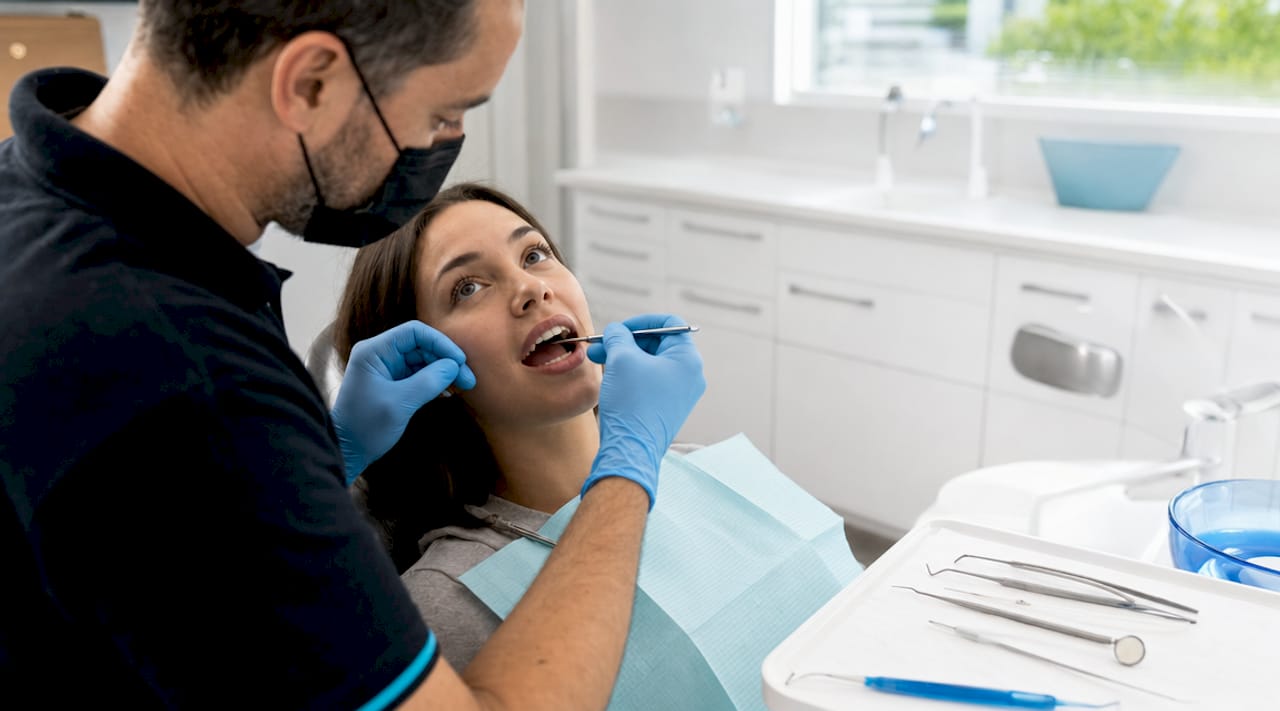
2. Cosmetic dental treatments that involve removing tooth structure
Some cosmetic procedures work by carefully removing a small amount of enamel or gum tissue to reshape what is already there. Many patients are surprised to learn that even some “additive” treatments like veneers and crowns require this step first.
Enameloplasty, sometimes called tooth reshaping or odontoplasty, involves removing tiny amounts of enamel to correct minor chips, smooth rough edges, or adjust the length of a tooth. The procedure is quick, painless, and permanent. It works best when the changes needed are subtle, because enamel does not grow back.
Gum contouring, or gingivectomy, removes or reshapes excess gum tissue to improve a “gummy” smile or uneven gum line. A laser or scalpel is used to sculpt the gum margin, exposing more of the tooth crown. Many patients in Vaughan and Woodbridge who feel their teeth look short are actually dealing with excess gum coverage rather than small teeth. Gum contouring alone can dramatically change the appearance of a smile without touching the teeth themselves.
Veneers require enamel removal of approximately 0.3 to 0.5 mm, while crowns require 1.5 to 2 mm of reduction around the entire tooth. This difference matters when choosing between the two. Veneers are more conservative. Crowns are more appropriate when the tooth is already compromised. Both decisions are permanent, which is why a thorough consultation before any enamel removal is non-negotiable.
Pro Tip: Ask your dentist to show you a digital preview or wax-up model before any enamel is removed. Seeing the expected result first helps you feel confident about a permanent decision.
3. Cosmetic dental treatments that change appearance without altering tooth structure
The good news for patients who want results without any drilling or removal is that teeth whitening, the most widely used cosmetic dental procedure, fits this category entirely.
- In-office bleaching: High-concentration hydrogen peroxide gel is applied to the teeth and activated, often with a light source. In-office bleaching produces effective whitening with stable color outcomes over 18 months, with only minor rebound effects. This means results hold well beyond the appointment itself.
- At-home whitening trays: Custom-fitted trays made from impressions of your teeth, used with a lower-concentration peroxide gel over one to two weeks. Results are comparable to in-office treatment for many patients, though the process takes longer.
- Single-application protocols: Research shows that single-application bleaching is as effective as multiple applications and causes less tooth sensitivity. Modern in-office gels with neutral pH have made this possible without sacrificing results.
- Gum depigmentation: A laser treatment that removes dark pigmentation from the gum tissue for patients who feel self-conscious about the color of their gums. No tooth structure is involved. The gums heal within a week or two with a more uniform pink appearance.
Whitening effectiveness depends on formulation and clinical protocol, not peroxide concentration alone. This is worth knowing because many over-the-counter products advertise high peroxide percentages without the delivery system to make them work properly. Professional whitening controls both variables.
4. How combined cosmetic dental treatments work together
The most satisfying smile transformations almost always involve more than one procedure. Knowing how to sequence treatments correctly is what separates a good outcome from a great one.
- Orthodontics first. If teeth are crowded or misaligned, Invisalign or traditional braces should come before any veneers or bonding. Combining orthodontics with veneers is the gold standard for comprehensive smile makeovers. Moving teeth into the right position first means veneers can be made thinner and more conservative.
- Whitening before veneers. Whitening your natural teeth before veneer placement allows the lab to match the veneer shade to your brightened natural teeth. Doing it afterward means the veneers and your natural teeth may not match.
- Gum contouring before veneers. For patients with a gummy smile, reshaping the gum line first reveals the full tooth surface. Veneers placed afterward are sized correctly and look proportional.
- Bonding combined with whitening. For patients who want a cost-effective refresh, whitening followed by composite bonding on one or two problem teeth delivers noticeable results without the investment of full veneers.
- Implants and crowns together. When a missing tooth is replaced with an implant, the crown placed on top is matched to the surrounding teeth in color and shape. If whitening is planned, it should happen before the crown is fabricated so the crown color can be matched to the final shade.
A typical smile makeover follows a structured timeline. Smile makeover sequencing generally runs from whitening in weeks one and two, through tooth preparation and lab fabrication, to final placement and adjustments by week eight. Knowing this timeline helps you plan around life events like weddings or graduations.
5. How to choose the right cosmetic dental treatment for your goals
Choosing between whitening, bonding, and veneers starts with identifying the specific problem you want to solve. Color issues, structural concerns, and missing teeth each point toward different solutions.
Match the treatment to the concern:
- Discoloration only: Start with professional whitening. It is non-invasive, affordable, and often delivers more than patients expect.
- Chips, minor gaps, or small shape issues: Composite bonding is the least invasive fix and can often be completed in a single appointment.
- Multiple front teeth with color, shape, and spacing concerns: Porcelain veneers offer the most consistent and durable result across several teeth.
- Missing teeth: Dental implants are the first choice for long-term function and appearance. Bridges are a solid alternative when implants are not appropriate.
- Gummy smile or uneven gum line: Gum contouring addresses the root cause directly, often without any work on the teeth themselves.
Consider treatment depth honestly. Non-invasive options like whitening carry no permanent changes. Bonding is minimally invasive and reversible in most cases. Veneers and crowns involve permanent enamel removal and should be chosen with a long-term perspective. Budget matters too. Bonding costs less upfront but may need replacement sooner. Veneers and implants cost more but last significantly longer, making them better value over a decade.
Pro Tip: Before your consultation, write down the three things about your smile that bother you most. This gives your dentist a clear starting point and helps avoid treatments that address the wrong concern.
A cosmetic dentistry consultation checklist can help you prepare the right questions before your appointment.
Key takeaways
The right cosmetic dental treatment depends on whether your concern involves color, structure, or missing teeth, and how much tooth alteration you are willing to accept.
| Point | Details |
|---|---|
| Three biological categories | Cosmetic treatments add material, remove structure, or change appearance without alteration. |
| Whitening is non-invasive | Professional bleaching delivers stable results over 18 months with no permanent tooth changes. |
| Veneers vs. crowns | Veneers remove 0.3 to 0.5 mm of enamel; crowns require 1.5 to 2 mm of reduction. |
| Sequence matters | Orthodontics and whitening should come before veneers for the best cosmetic outcome. |
| Match treatment to concern | Color, chips, gaps, and missing teeth each call for a different procedure. |
What 25 years of cosmetic dentistry has taught me
In my experience, the patients who are happiest with their results are the ones who came in with a specific concern rather than a specific treatment in mind. Someone who says “I want veneers” before we have even looked at their teeth is sometimes surprised to learn that whitening and a small amount of bonding would give them the same result at a fraction of the cost and with no enamel removal.
The other thing I have learned is that sequencing is everything. I have seen cases where veneers were placed before orthodontic work was done, and the result looked fine at first but created bite problems within two years. Getting the order right protects both your investment and your oral health.
Many patients from Woodbridge and Maple come in nervous about pain or about making a permanent decision. The good news is that most cosmetic procedures are far more comfortable than people expect, and a good dentist will always show you what the result will look like before anything irreversible happens. Wax-ups, digital previews, and trial bonding are all tools we use to make sure you are confident before we proceed.
My honest advice: be wary of any practice that pushes you toward the most expensive option at the first appointment. The right treatment is the one that solves your actual concern with the least intervention necessary. Start there, and build from it if needed.
— Felix
See what cosmetic dentistry can do for your smile

At Woodbridge Dental Centre, Dr. Michael Rouhi, Dr. Sandra Farber, and our team offer the full range of cosmetic dental services, including teeth whitening, porcelain veneers, composite bonding, Invisalign, and dental implants. We serve families across Woodbridge, Vaughan, and Maple in a welcoming, modern clinic where you will always feel heard. Whether you are curious about a single treatment or considering a full smile makeover, we start with a conversation, not a sales pitch. Book a consultation with us and we will help you figure out which options make the most sense for your smile, your health, and your budget. Visit our dental restorations page to learn more about what we offer.
FAQ
What are the main types of cosmetic dental treatments?
Cosmetic dental treatments fall into three categories: those that add material (veneers, bonding, crowns, implants), those that remove tooth or gum structure (enameloplasty, gum contouring), and those that change appearance without physical alteration (teeth whitening, gum depigmentation).
Is teeth whitening the safest cosmetic dental option?
Teeth whitening is the most common cosmetic procedure and the least invasive, requiring no changes to tooth structure. Professional in-office bleaching produces stable color results over 18 months with minimal sensitivity when a neutral-pH gel is used.
How do I choose between veneers and composite bonding?
Composite bonding works best for minor chips or one or two small concerns and costs less upfront, while porcelain veneers are better suited for multiple front teeth with color, shape, and spacing issues and offer greater durability over time.
Do cosmetic dental treatments last a long time?
Longevity varies by treatment. Dental implants can last a lifetime with proper care, porcelain veneers and crowns typically last 10 to 15 years, and composite bonding usually needs refreshing after five to seven years.
Should I whiten my teeth before getting veneers?
Whitening before veneers is the recommended sequence because it allows the dental lab to match the veneer shade to your brightened natural teeth, producing a consistent color result across all visible teeth.


