

An emergency dental visit is a focused, same-day appointment designed to relieve acute pain, control infection, and stabilize a damaged tooth before definitive treatment is scheduled. Understanding how emergency dental visit works removes the fear of the unknown and helps you act quickly when every minute matters. At Woodbridge Dental Centre, Dr. Michael Rouhi and Dr. Sandra Farber see patients from Woodbridge, Vaughan, and Maple who arrive anxious and in pain. The goal of this guide is to walk you through the entire process, from your first phone call to your post-treatment instructions, so you feel prepared rather than panicked.
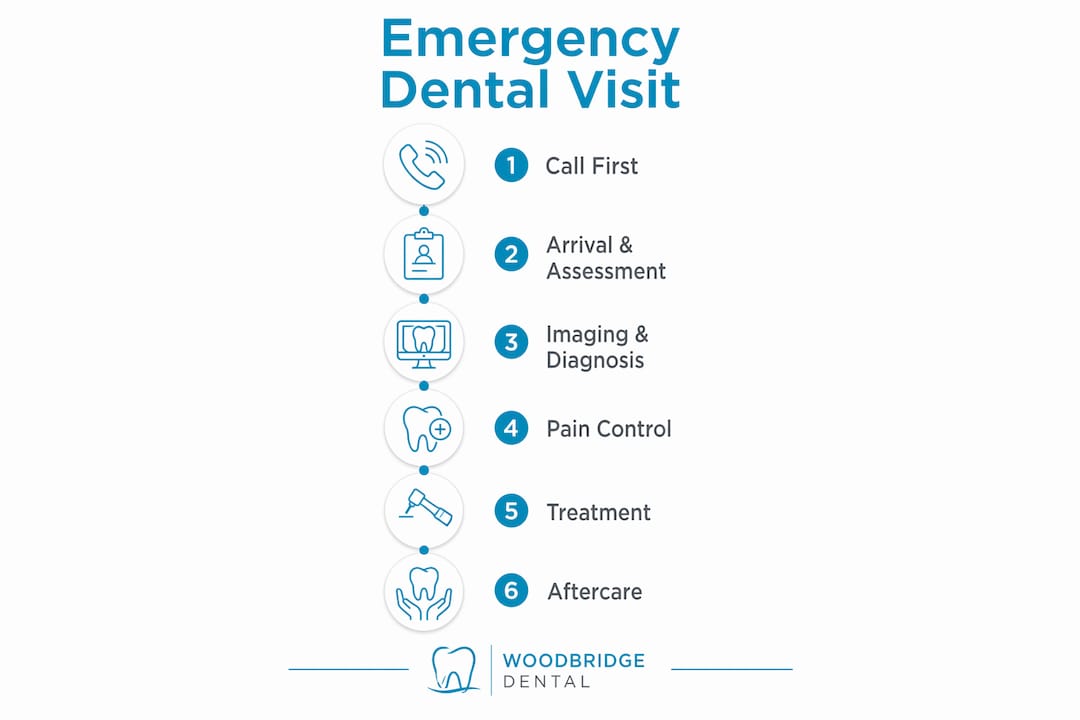
How an emergency dental visit works: the step-by-step process
The process follows a predictable sequence, and knowing it in advance makes the experience far less stressful.
Step 1: Call first, even if you are unsure. Cigna advises calling your dentist first, even outside business hours, because triage over the phone determines whether you need same-day care, urgent care, or an emergency room. Many dental offices, including Woodbridge Dental Centre, have after-hours lines for exactly this reason. That single call can save you hours in an ER waiting room.
Step 2: Arrival and assessment. When you arrive, the dental team reviews your symptoms, takes your medical history, and notes any medications you are currently taking. This intake is not a formality. Certain medications, like blood thinners or bisphosphonates, directly affect which treatments are safe to perform that day.
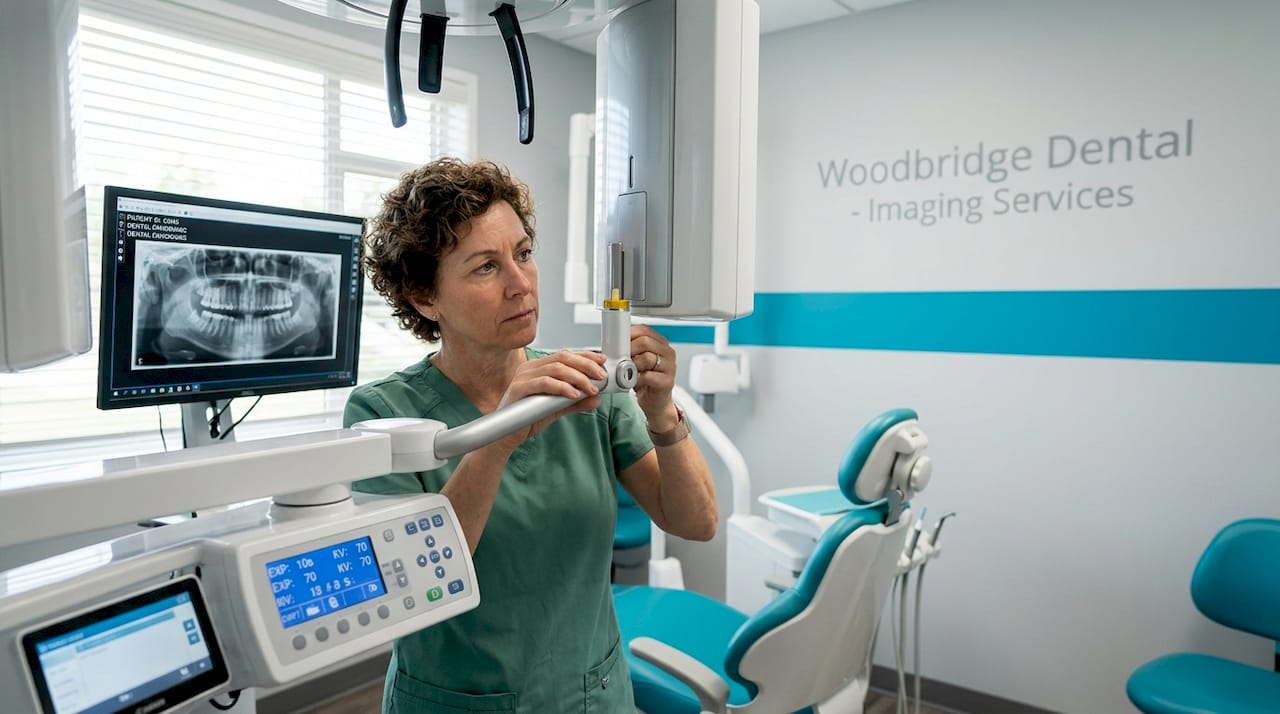
Step 3: Imaging and diagnosis. Emergency visits use exam and imaging, typically periapical or panoramic X-rays, before any definitive treatment begins. X-rays reveal the true extent of infection, fracture depth, or bone involvement that is invisible to the naked eye. This step takes roughly 10 to 15 minutes and shapes every decision that follows.
Step 4: Pain control. Once the dentist understands what is happening, pain management comes next. Local anesthesia or sedation allows the dentist to perform immediate procedures like abscess drainage or temporary crown placement without discomfort. Many patients are surprised to learn that the injection itself is the worst part, and modern topical numbing agents make even that manageable.
Step 5: Immediate treatment and stabilization. The dentist addresses the urgent threat. This might mean draining an abscess, placing a temporary filling over an exposed nerve, splinting a loosened tooth, or prescribing antibiotics. Emergency care prioritizes immediate threat management, not long-term aesthetics or routine cleaning.
Step 6: Aftercare instructions and follow-up scheduling. Before you leave, the team gives you written home care instructions and books your follow-up appointment. Aftercare for an emergency dental visit typically includes dietary restrictions, prescribed medications, and guidance on what symptoms warrant a return call.
Pro Tip: Write down the time your symptoms started before you call the office. Dentists use symptom duration to gauge infection progression and decide how aggressively to treat on the same visit.
Common dental emergencies and how treatments address them
Not every dental emergency looks the same, and the treatment approach varies significantly depending on the cause.
| Emergency | Immediate treatment | Follow-up care |
|---|---|---|
| Severe toothache or infection | Pain control, antibiotics if spreading | Root canal or extraction |
| Knocked-out permanent tooth | Reimplantation within 60 minutes | Splinting, monitoring |
| Dental abscess | Drainage, antibiotics if systemic | Root canal or extraction |
| Cracked or fractured tooth | Temporary crown or bonding | Permanent crown or root canal |
| Lost filling or crown | Temporary filling or recementation | Permanent restoration |
Toothaches and infections are the most common reason patients call us after hours. Pain control comes first, followed by diagnosis. If the infection has spread beyond the tooth into surrounding tissue, antibiotics are prescribed alongside the dental procedure, not instead of it.
Knocked-out teeth carry the most urgent time pressure of any dental emergency. A permanent tooth has a 30 to 60 minute window for the best chance of successful reimplantation. Beyond 60 minutes, periodontal ligament cells on the root surface begin to die, making reattachment far less predictable. Handle the tooth by the crown only, rinse it gently without scrubbing, and store it in milk or saline until you reach the office. The American Association of Endodontists updated its 2026 guidelines to reinforce that prompt treatment of dental trauma significantly increases the chances of saving the injured tooth. If your child has experienced this, our guide on knocked-out tooth response covers the specific steps for primary versus permanent teeth.
Abscesses require drainage as the primary treatment. Drainage rapidly relieves pressure and pain; antibiotics are added only when the infection shows signs of spreading systemically, such as fever, swelling of the jaw, or difficulty swallowing. This targeted approach reflects current clinical practice, which aims to reduce unnecessary antibiotic use. Definitive treatment, either a root canal or extraction, is scheduled after the acute inflammation settles.
Fractured teeth are stabilized with temporary bonding material or a temporary crown on the same visit. The dentist assesses whether the fracture extends into the pulp or root before deciding on the final treatment path.
Where to go for urgent dental care: dentist, urgent care, or ER?
Choosing the right care setting saves time and gets you the right treatment faster.
- Call your dentist first. Most dental offices can triage your situation by phone and either see you same-day or direct you appropriately. Calling your dentist first reduces unnecessary ER visits and connects you with someone who can actually treat the problem.
- Urgent care centers can prescribe antibiotics and pain medications, but they cannot perform tooth extractions, root canals, or reimplantation. Urgent care provides symptomatic relief only. Think of it as a bridge, not a solution.
- Emergency rooms are appropriate for life-threatening dental emergencies such as uncontrolled bleeding, airway obstruction, severe jaw trauma, or swelling that is closing your throat. ERs are not equipped to perform dental procedures, but they manage the medical emergency and stabilize you for dental follow-up.
- Dental specialists may be involved when the emergency involves complex fractures, significant bone loss, or failed reimplantation. Your dentist coordinates that referral directly.
The practical rule: if you can breathe and swallow normally, call your dentist. If either is compromised, go to the ER immediately.
How to prepare for your emergency dental visit
Preparation takes less than five minutes and meaningfully improves the quality of care you receive.
- Note your symptoms. Write down when the pain started, what makes it worse, and whether you have fever, swelling, or difficulty swallowing. This history helps the dentist prioritize.
- Gather your medications list. Bring or photograph every medication and supplement you take. Drug interactions affect anesthesia choices and prescribing decisions.
- Bring identification and insurance information. Many offices can verify coverage quickly, which reduces billing surprises. If you have no insurance, ask about payment options before the appointment.
- Bring tooth fragments. If a tooth has broken, collect the pieces and store them in milk or a damp cloth. Bringing fragments and symptom details improves diagnosis and treatment planning.
- Arrange a driver if possible. If sedation is likely, you will not be able to drive yourself home.
While you wait, manage pain with ibuprofen and acetaminophen together if your health permits, apply a cold compress to the outside of your cheek in 20-minute intervals, and rinse gently with warm salt water. Proper pain management lessens discomfort and swelling until professional care is available.
What to avoid is just as important. Do not place aspirin directly on your gum tissue. It causes a chemical burn that complicates treatment. Do not apply heat to a swollen area. Heat increases blood flow and can accelerate infection spread. Never attempt to lance an abscess yourself.
Pro Tip: Take a photo of the affected tooth or area before you leave home. Lighting in a dental office is excellent, but a photo taken at the moment of injury documents the original state and helps the dentist track changes.
Key takeaways
An emergency dental visit follows a defined sequence: triage by phone, assessment and imaging, pain control, stabilization, and follow-up scheduling. Preparation and prompt action determine outcomes.
| Point | Details |
|---|---|
| Call your dentist first | Phone triage determines the right care setting and reduces unnecessary ER visits. |
| Time is critical for avulsed teeth | A knocked-out permanent tooth must reach the dentist within 30 to 60 minutes for the best chance of reimplantation. |
| Stabilization precedes definitive care | Emergency visits use temporary solutions; root canals, crowns, and extractions are scheduled after acute symptoms resolve. |
| Abscesses need drainage, not just antibiotics | Drainage is the primary treatment; antibiotics are reserved for spreading or systemic infection. |
| Preparation improves outcomes | Bringing your medication list, symptom history, and tooth fragments helps the dentist act faster and more accurately. |
What I have learned from years of dental emergencies in Woodbridge
In my experience, the patients who do best in a dental emergency are the ones who call us first rather than waiting to see if the pain goes away. Dental infections do not resolve on their own. They spread. I have seen a straightforward abscess become a hospital admission because someone waited four days hoping it would improve.
Many patients also arrive believing we will fix everything in one visit. The good news is that we will get you out of pain and stabilize the situation completely. The honest reality is that the definitive repair, whether that is a root canal or a permanent crown, happens at a follow-up appointment once the inflammation has settled. This is not a limitation. It is the clinically correct sequence, and it produces better long-term results.
One thing I tell every patient in Vaughan and Woodbridge: keep our after-hours number in your phone before you ever need it. The families who have that number ready are the ones who get seen fastest and have the best outcomes. Anxiety about the cost is real, and we understand that. Ask about payment options when you call. We would rather discuss that upfront than have someone delay care because of financial uncertainty.
— Felix
Emergency dental care at Woodbridge Dental Centre

Woodbridge Dental Centre offers same-day emergency appointments for patients across Woodbridge, Vaughan, and Maple. Dr. Michael Rouhi and Dr. Sandra Farber provide immediate triage, pain control, and stabilization for urgent dental situations, followed by a clear treatment plan for full recovery. Whether you need drainage, a temporary restoration, or guidance on a knocked-out tooth, our team is ready to help. For ongoing care after your emergency, our family dental services cover everything from follow-up restorations to long-term oral health planning. When a dental emergency happens, do not wait. Call us directly so we can get you the right care, fast.
FAQ
What counts as a dental emergency?
A dental emergency includes severe toothache, dental abscess, knocked-out tooth, broken tooth with exposed nerve, lost crown or filling causing pain, and any oral injury with uncontrolled bleeding. If you are unsure, call your dentist and describe your symptoms for phone triage.
How long does an emergency dental visit take?
Most emergency dental visits take between 45 minutes and 90 minutes, depending on the complexity of the problem. The visit covers assessment, imaging, pain control, and stabilization, with follow-up care scheduled separately.
Can I go to urgent care instead of an emergency dentist?
Urgent care can prescribe antibiotics and pain medications but cannot perform dental procedures like extractions, root canals, or reimplantation. For any procedure-based treatment, an emergency dentist is the correct choice.
How much does an emergency dental visit cost?
The cost of an emergency dental visit varies based on the treatment performed, ranging from an exam and X-rays to drainage, temporary fillings, or extractions. Many dental insurance plans cover emergency exams and basic procedures. Ask your office about coverage and payment options when you call.
When should I go to the ER instead of a dentist?
Go to the emergency room if you have uncontrolled bleeding, difficulty breathing or swallowing, severe jaw trauma, or facial swelling that is spreading rapidly. These are life-threatening dental emergencies that require medical stabilization before dental treatment.
Recommended
- What’s a Pediatric Dental Emergency? | Know When to Call the Dentist – Woodbridge Dental Centre | Cosmetic, Implant & Family Dentistry
- What to Do if My Child Knocks Out a Tooth | Emergency Dental Response Guide – Woodbridge Dental Centre | Cosmetic, Implant & Family Dentistry
- Can My Child Go to School After a Dental Visit? | What to Expect Same Day – Woodbridge Dental Centre | Cosmetic, Implant & Family Dentistry
- What to Expect from a Pediatric Dental Cleaning | A Step-by-Step Look Inside – Woodbridge Dental Centre | Cosmetic, Implant & Family Dentistry


