

Dental X-rays are low-radiation imaging tools dentists use to see inside teeth and gums, revealing hidden problems that a regular visual exam simply cannot detect. As a dental x-rays explained for families resource, this guide covers everything parents in Woodbridge, Vaughan, and Maple need to know, from what each type of X-ray shows to how safe they are for children. The American Dental Association and the FDA both guide how and when dental X-rays should be used, with recommendations built around each patient’s individual risk. Understanding these guidelines helps you ask the right questions at your child’s next appointment.
What types of dental X-rays are used in family dentistry?
Dental X-rays, also called dental radiographs in clinical settings, fall into three main types used in family dental care. Each type serves a specific purpose, and knowing the difference helps parents understand why a particular image is being taken.
- Bitewing X-rays show the upper and lower back teeth side by side. They are the most common type for children and detect cavities between teeth, check the height of the bone between teeth, and reveal early signs of gum disease.
- Panoramic X-rays capture the entire mouth in a single wide image, including all teeth, both jaws, and the surrounding bone. They are especially useful for monitoring jaw development, spotting impacted teeth, and planning orthodontic treatment.
- Periapical X-rays focus on one or two specific teeth from crown to root tip. They show infections at the root, bone loss around a tooth, and any abnormalities below the gum line.
Here is a quick comparison of how each type is used in practice:
| X-ray type | What it shows | Most common use in families |
|---|---|---|
| Bitewing | Cavities between teeth, bone levels | Routine cavity checks for children and adults |
| Panoramic | Full jaw, all teeth, development | Growth monitoring, orthodontic planning |
| Periapical | Root tip, surrounding bone | Diagnosing infections, root issues |
Dental X-rays reveal cavities between teeth, bone loss from gum disease, infections, impacted or missing teeth, and developmental issues in children. This means problems caught early on an X-ray are almost always simpler and less costly to treat than those found after symptoms appear.
Are dental X-rays safe for kids?
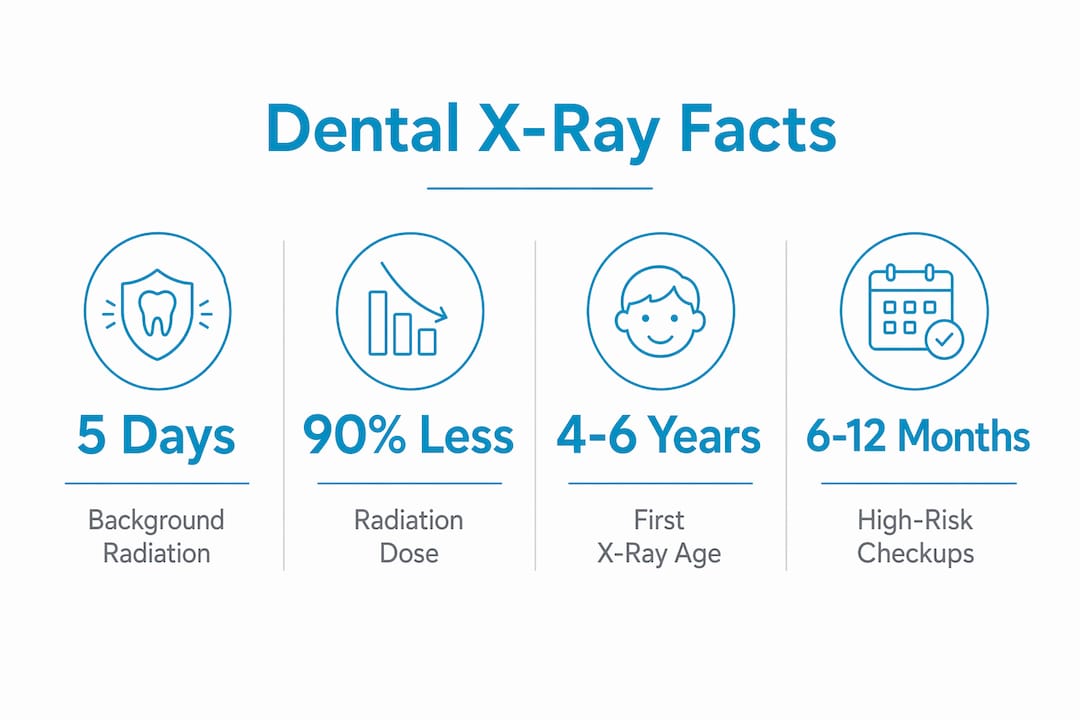
Radiation exposure from dental X-rays is extremely low. Modern digital X-rays expose patients to radiation equivalent to 2–5 days of natural background radiation, far below any harmful level. That is comparable to the radiation you receive on a short airplane flight. Digital technology has also reduced exposure by 80–90% compared to traditional film X-rays, which means the dose your child receives today is a fraction of what it was a generation ago.
The 2026 ADA and FDA guidelines reinforce that X-rays should be prescribed based on individual risk factors, not fixed schedules. This means your child’s dentist considers their cavity history, tooth development, and clinical findings before recommending any imaging.
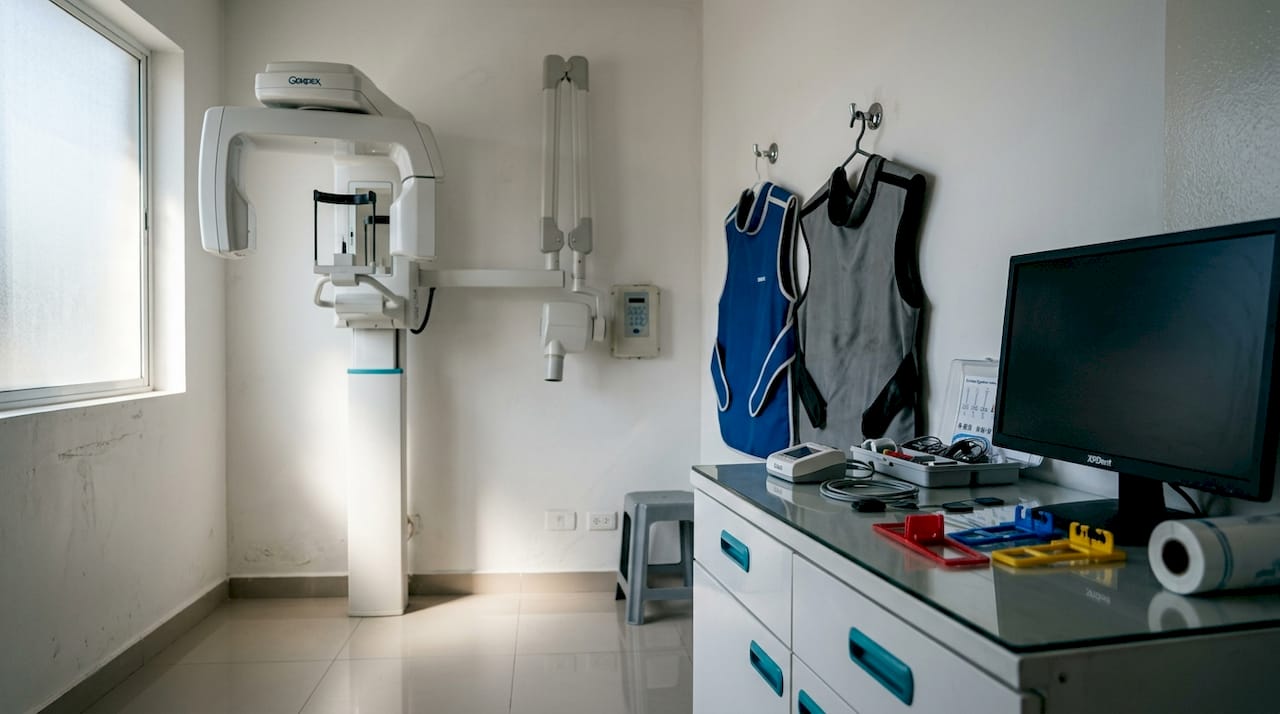
One area where guidance has evolved is protective gear. Lead aprons and thyroid collars may no longer be strictly necessary with modern digital equipment, because improper shielding can actually obscure diagnostic areas. Some clinics have updated their protocols based on 2024 ADA guidance reflecting very low radiation levels with rectangular collimation. If you have questions about what your clinic uses, ask your dentist directly. A good dental team will always explain their current protocol.
Pro Tip: If your family is switching to a new dental clinic, bring copies of your child’s most recent X-rays. Providing recent images can reduce unnecessary repeat exposures and saves time at the first appointment.
When do children typically need their first dental X-rays?
Timing for the first dental X-ray depends on your child’s tooth development, not their age alone. Most children receive their first bitewing X-rays between ages 4 and 6, when the primary back molars begin to touch and hide the surfaces between them. Before the back teeth make contact, a dentist can often see between them visually. Once they touch, X-rays become the only reliable way to check for cavities in those hidden spaces.
After the first set, how often your child needs X-rays depends on their cavity risk. The 2026 ADA and FDA guidelines recommend the following schedule:
| Risk level | Recommended bitewing frequency |
|---|---|
| High risk (active cavities, dry mouth, poor hygiene) | Every 6–12 months |
| Moderate risk | Every 12–18 months |
| Low risk (no cavities, good hygiene) | Every 12–24 months |
X-rays are not automatic at every cleaning. Evidence-based practice dictates that X-rays are only taken with specific clinical justification. If your child’s dentist recommends an X-ray, ask what they are looking for. A good dentist will explain exactly what the image is meant to show. Parents should also know that the best age to bring a child to the dentist is around their first birthday, well before X-rays are typically needed, so the dental team can monitor development from the start.
How can parents prepare children for dental X-rays?
Children cooperate far better when they feel calm and informed before the appointment. The language you use at home makes a real difference. Pediatric dental experts recommend describing X-rays as pictures of “hidden treasures” inside the teeth, rather than using words like “pain,” “shot,” or “radiation.” Children respond to the framing you give them.
Here are practical steps that help:
- Schedule morning appointments. Children are generally more cooperative when they are rested. Afternoon slots after school or activities often lead to more resistance.
- Practice at home. Show your child how to bite down gently on a small object, like a folded piece of paper, to mimic the sensor or film holder used during bitewing X-rays.
- Stay calm yourself. Children pick up on parental anxiety. If you appear relaxed and matter-of-fact, your child is more likely to follow your lead.
- Ask questions at the appointment. Dentists should explain the reason for each X-ray and point out what is being examined on the image. If yours does not offer this, ask.
Regarding parental presence, parents can stay in the room for comfort during the procedure. Standard practice may require them to wear protective gear or stand behind a barrier, since the child is the only one receiving a diagnostic benefit. This is a normal safety protocol, not a cause for concern. For more ideas on making dental visits easier, the guide on handling dental fear offers calming techniques that work well for children of all ages.
Pro Tip: Clinics experienced with pediatric dentistry schedule X-rays carefully to maximize comfort and minimize repeats through proper patient positioning and clear communication. Ask your clinic about their approach before the appointment.
Key Takeaways
Dental X-rays are a safe, evidence-based diagnostic tool that reveal hidden problems in children and adults, and their frequency should always be guided by individual risk, not routine schedules.
| Point | Details |
|---|---|
| X-rays reveal what exams cannot | Cavities between teeth, bone loss, and infections are only visible through dental imaging. |
| Digital X-rays are very low dose | Modern digital imaging reduces radiation by 80–90% compared to traditional film. |
| Frequency depends on risk | High-risk children need X-rays every 6–12 months; low-risk children every 12–24 months. |
| First X-rays around ages 4–6 | Most children get their first bitewing X-rays when back molars begin to touch. |
| Preparation reduces anxiety | Positive language and morning scheduling help children cooperate during the procedure. |
What 25 years of family dentistry has taught me about X-rays
In my experience, the parents who ask the most questions about dental X-rays are also the most engaged in their children’s long-term oral health. That is a good thing. Healthy skepticism leads to better conversations, and better conversations lead to better care.
The concern I hear most often is about radiation. Many patients are surprised to learn just how small the dose actually is with modern digital equipment. When I explain that a bitewing X-ray exposes a child to less radiation than a short flight from Toronto to Montreal, the relief is immediate. The numbers are genuinely reassuring, not just reassuring-sounding.
What I push back on gently is the idea that X-rays should happen at every cleaning as a matter of course. They should not. The right approach is to look at each child individually, consider their cavity history, their diet, their hygiene habits, and their tooth development, and then decide. That is what evidence-based dentistry looks like in practice.
The good news is that the technology keeps improving. Digital sensors, rectangular collimation, and updated ADA guidance have all moved in the same direction: better images with less exposure. Families in Woodbridge and across Vaughan can feel confident that the standard of care here reflects those advances.
My honest advice to any parent: ask your dentist to show you the X-ray and explain what they see. A good clinician will point out the specific area of concern, whether it is an early cavity between two molars or a developing tooth that needs monitoring. That conversation is part of the care, not an add-on.
— Felix
Dental X-ray care for Woodbridge families
At Woodbridgedentalcentre, Dr. Michael Rouhi, Dr. Sandra Farber, and their team take a thoughtful, individualized approach to dental imaging for every patient, from toddlers to grandparents.

We use digital X-ray technology that keeps radiation exposure as low as reasonably achievable, and we follow current ADA and FDA guidelines on frequency and clinical justification. Our team takes the time to explain every image to parents and answer questions clearly. If your family is due for a checkup or you have questions about your child’s dental development, we welcome you to book an appointment through our family dental care page. Families across Woodbridge, Vaughan, and Maple trust us for gentle, honest dental care at every age.
FAQ
What do dental X-rays show that a visual exam cannot?
Dental X-rays reveal cavities between teeth, bone loss from gum disease, infections at tooth roots, impacted teeth, and developmental issues in children. A visual exam alone cannot detect problems hidden beneath the gum line or between teeth.
Are dental X-rays safe for young children?
Yes. Modern digital dental X-rays expose children to radiation equivalent to 2–5 days of natural background radiation, which is far below any harmful level. The ADA and FDA recommend X-rays only when clinically justified, not at every visit.
How often does my child need dental X-rays?
Frequency depends on your child’s cavity risk. High-risk children typically need bitewing X-rays every 6–12 months, while low-risk children need them every 12–24 months, based on current ADA guidelines.
When will my child need their first dental X-ray?
Most children get their first bitewing X-rays between ages 4 and 6, when the back primary molars begin to touch and hide the surfaces between them. X-rays may be taken earlier if a dentist sees visible decay or clinical symptoms.
Can I stay with my child during a dental X-ray?
Yes, parents can stay in the room for comfort. Standard safety practice may require you to wear protective gear or stand behind a barrier, since the diagnostic benefit applies only to the child being imaged.
Recommended
- Are Dental X-Rays Safe for Kids? | What Parents Should Know About Radiation Safety – Woodbridge Dental Centre | Cosmetic, Implant & Family Dentistry
- Types of Family Dental Services: What Every Family Should Know
- Common Family Dental Problems: Prevention and Care Guide
- What Is a Kid-Friendly Dental Office? A Parent’s Guide


