

Proper care for teeth after whitening treatment is defined as a structured set of aftercare steps designed to protect freshly treated enamel, minimize sensitivity, and preserve your brighter smile for as long as possible. Whitening results typically last between 6 months and 3 years, and that wide range comes down almost entirely to what you do in the days and weeks after your appointment. The good news is that the steps are straightforward. At Woodbridgedentalcentre, we walk every patient through these habits before they leave the chair, because the treatment itself is only half the work.
What foods and drinks should you avoid after whitening treatment?
The first 48–72 hours after whitening are the most critical window for post whitening dental care. Enamel temporarily becomes porous right after treatment, which means your teeth absorb pigments and acids far more readily than normal. Think of it like a white cotton shirt fresh out of the wash. Any stain that touches it before it dries sets much faster than it would otherwise.
Dental professionals call this the “White Diet,” and it means avoiding dark-colored foods and drinks for at least two to three days. The most common offenders include:
- Coffee and black tea
- Red wine and dark sodas
- Berries such as blueberries, blackberries, and cherries
- Tomato-based sauces and ketchup
- Soy sauce and balsamic vinegar
- Beets and dark leafy greens like spinach
Acidic foods deserve equal attention. Acidic foods increase enamel sensitivity and staining risk post-whitening, so citrus fruits, vinegar-based dressings, and carbonated drinks should also be limited during this window.
If you cannot avoid a staining beverage entirely, use a straw. Straw use limits pigment exposure on the front teeth, which are the most visible and the most affected by whitening. You can also learn more about the full White Diet approach on the Woodbridgedentalcentre website.

Pro Tip: Rinse your mouth with plain water immediately after consuming any pigmented food or drink. This simple habit prolongs whitening results by flushing away surface pigments before they settle into the enamel.
How can you manage tooth sensitivity after whitening?
Tooth sensitivity after whitening is common, and it is almost always temporary. The peroxide agents used during whitening penetrate the enamel to break up stain molecules, and that process can briefly irritate the nerve endings inside the tooth. Sensitivity typically resolves within a few days, and most patients find it manageable with the right product choices.
The most effective approach combines desensitizing toothpaste with gentle brushing habits. Here is what works best:
- Choose a toothpaste containing potassium nitrate or stannous fluoride. Both ingredients calm nerve activity inside the tooth and reduce the sharp, shooting discomfort that some patients feel.
- Use a soft-bristled toothbrush and apply light pressure. Scrubbing hard does not clean better. It just irritates already-sensitive gum tissue.
- Avoid extremely hot or cold foods and drinks for the first two to three days. Temperature extremes trigger the same nerve pathways that whitening has already sensitized.
- Skip mouthwashes that contain alcohol during the initial recovery period. Alcohol-based rinses can dry out the oral tissues and worsen discomfort.
If sensitivity persists beyond one week or feels severe, contact your dentist. Prolonged sensitivity can occasionally signal an underlying issue that needs attention, and professional supervision reduces the risk of enamel damage from unmanaged post-treatment reactions. For a deeper look at what to expect, the Woodbridgedentalcentre guide on whitening sensitivity covers practical fixes in detail.
Pro Tip: Apply a small amount of desensitizing toothpaste directly to sensitive teeth with your fingertip and leave it on for a few minutes before rinsing. This delivers the active ingredient more directly than brushing alone.
Daily oral hygiene habits that support whitening maintenance
Good daily habits are the single biggest factor in how long whitening results last. Brushing twice daily and flossing reduces plaque and surface stains, which directly extends the life of your whitening results. The routine itself does not need to be complicated. It just needs to be consistent.
Follow these steps every day to protect your results:
- Brush twice daily with a fluoride toothpaste. Fluoride strengthens enamel and helps resist new staining. Use a soft toothbrush and spend at least two minutes each session.
- Floss once daily. Plaque builds up between teeth where your brush cannot reach. That buildup creates surface discoloration over time, even if the front faces of your teeth look clean.
- Rinse with water after every meal. This is especially useful after coffee, tea, or any pigmented food. You do not need a special rinse. Plain water works well.
- Avoid highly abrasive whitening toothpastes. Many over-the-counter whitening toothpastes rely on abrasive particles to scrub surface stains. Used daily, they wear down enamel over time and can increase sensitivity.
- Use a whitening toothpaste occasionally, not daily. A gentle whitening toothpaste used two to three times per week can help control surface stains without the risks that come with daily abrasive use.
Many patients in Woodbridge and Vaughan are surprised to learn that their toothpaste choice matters as much as their brushing frequency. Switching from an abrasive formula to a fluoride-based desensitizing toothpaste after whitening makes a real difference in both comfort and longevity.
How does professional dental care extend whitening results?
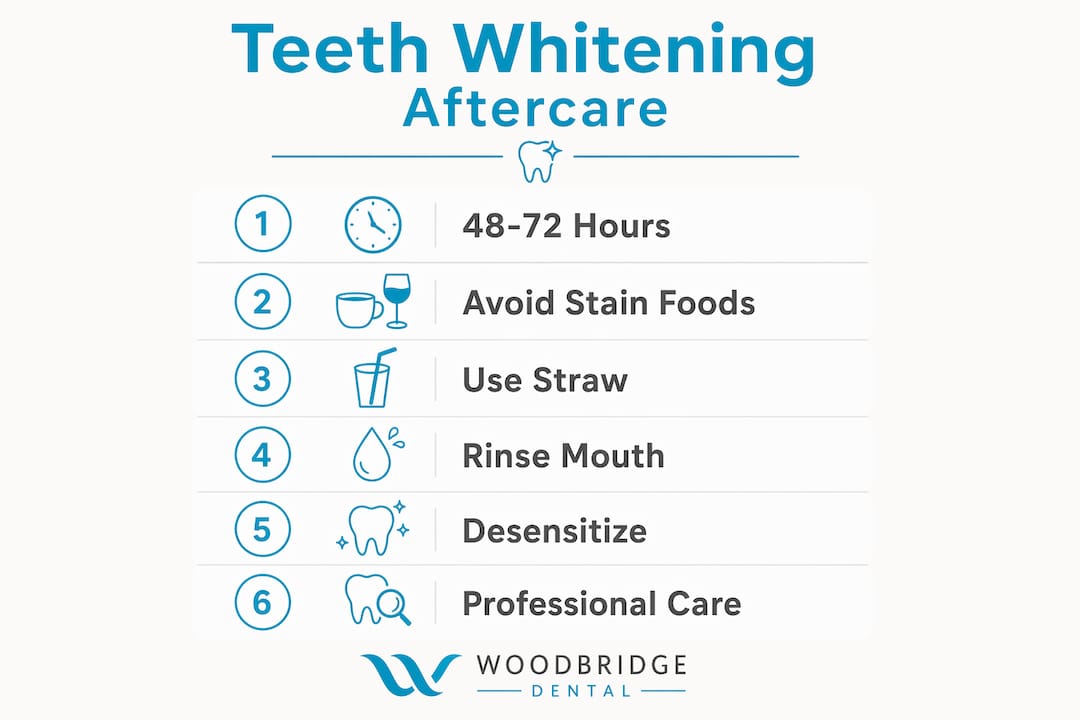
Professional cleanings and supervised touch-ups are the most reliable way to maintain your results over the long term. Professional cleanings every 6–12 months remove surface stains and tartar that daily brushing cannot address. Tartar buildup creates a rough surface that traps pigments, so removing it regularly keeps your teeth looking brighter between whitening sessions.
The table below outlines the key professional care steps and their purpose:
| Professional care step | Purpose | Recommended frequency |
|---|---|---|
| Dental cleaning and polish | Removes tartar, surface stains, and plaque buildup | Every 6–12 months |
| Dentist-supervised touch-up whitening | Refreshes brightness safely without enamel risk | As advised by your dentist |
| Oral health exam | Catches sensitivity issues or enamel concerns early | Every 6–12 months |
| Personalized maintenance plan | Tailors hygiene and diet advice to your lifestyle | At each cleaning visit |
Touch-up whitening sessions are worth discussing with your dentist rather than managing on your own. Over-whitening causes enamel damage and increases sensitivity, and the risk rises sharply when patients use high-concentration products without guidance. A dentist-supervised touch-up uses the right concentration for your enamel condition and spaces treatments far enough apart to prevent harm. You can also find out what happens during a routine dental cleaning to understand how it supports your whitening maintenance.
For patients in Woodbridge, Vaughan, and Maple, Woodbridgedentalcentre recommends scheduling your first post-whitening cleaning within six months of your treatment. That appointment gives us a chance to assess how your enamel has responded and adjust your maintenance plan accordingly.
Key Takeaways
Consistent aftercare, not the whitening treatment itself, determines how long your results last and how comfortable your teeth feel in the weeks that follow.
| Point | Details |
|---|---|
| Critical 48–72 hour window | Avoid pigmented and acidic foods immediately after treatment to prevent re-staining. |
| Sensitivity is manageable | Use potassium nitrate or stannous fluoride toothpaste and a soft brush to reduce discomfort. |
| Daily hygiene extends results | Brush twice daily, floss, and rinse with water after meals to limit surface stain buildup. |
| Professional cleanings matter | Schedule a cleaning every 6–12 months to remove tartar and refresh your whitening results. |
| Avoid over-whitening | Dentist-supervised touch-ups are safer than frequent at-home treatments and protect enamel. |
What I have learned from 25 years of whitening patients in Vaughan
The most common misunderstanding I see is that whitening is a one-time fix. Patients leave the chair thrilled with their results, and then feel disappointed six months later when the brightness has faded. The truth is that whitening is a maintenance relationship, not a single event. Whitening is not permanent, and realistic expectations from the start make all the difference in long-term satisfaction.
The second thing I notice is that patients often focus on what products to buy rather than what habits to build. In my experience, the patients who maintain the best results are not necessarily using the most expensive toothpaste. They are the ones who rinse with water after their morning coffee, floss consistently, and come in for their cleanings. Those habits cost almost nothing and deliver more than any product.
Sensitivity is the concern I hear most often, and I always reassure patients that it passes. The key is not to panic and reach for a stronger whitening product to “fix” the look while your teeth are still recovering. That approach makes sensitivity worse and risks enamel damage. Give your teeth a few days, use a desensitizing toothpaste, and let the enamel settle. For patients managing sensitive teeth, gentle and consistent care always wins over aggressive treatment.
My honest advice: talk to your dentist before every touch-up, not after something goes wrong. A quick conversation about your diet, your current toothpaste, and how your teeth feel gives us everything we need to keep your smile looking its best for years.
— Felix
Woodbridgedentalcentre supports your whitening results long-term
At Woodbridgedentalcentre, we provide the full range of care that keeps your smile bright and your teeth healthy well beyond your whitening appointment. Our team, led by Dr. Michael Rouhi and Dr. Sandra Farber, offers professional cleanings, personalized whitening consultations, and sensitivity management guidance for families across Woodbridge, Vaughan, and Maple.

Whether you need a routine cleaning to protect your results or want to discuss a supervised touch-up, we make it easy to get the right care at the right time. Our family dental care services are designed for every age and every smile goal. Book an appointment with our team and let us help you maintain the results you worked for.
FAQ
How long should I follow the White Diet after whitening?
Follow the White Diet for at least 48–72 hours after treatment. This is the window when enamel is most porous and most vulnerable to re-staining.
What is the best toothpaste after whitening treatment?
A desensitizing toothpaste containing potassium nitrate or stannous fluoride is the best choice. These ingredients reduce nerve sensitivity without abrasive particles that can wear enamel.
How often should I get a professional cleaning after whitening?
Schedule a professional cleaning every 6–12 months. Regular cleanings remove tartar and surface stains that extend the life of your whitening results.
Can I do touch-up whitening at home?
At-home touch-ups are possible, but dentist supervision is strongly recommended. Frequent high-intensity whitening risks enamel damage and increased sensitivity without professional guidance.
When should I call my dentist about sensitivity after whitening?
Contact your dentist if sensitivity lasts longer than one week or feels severe. Temporary sensitivity is normal, but persistent discomfort can signal an issue that needs professional assessment.


