

Preventive dental care is the reason dental health fits naturally into a busy schedule. Most people in Woodbridge, Vaughan, and Maple assume dental visits are time-consuming disruptions, but the opposite is true when care is approached correctly. A routine cleaning takes 45 to 60 minutes, twice a year. A root canal caused by a missed cavity takes multiple appointments, hours in the chair, and days of recovery. The math is straightforward. Dental care for busy people works because it is built around short, predictable visits and daily habits that take less than five minutes combined.
Why dental care fits busy schedules: the preventive advantage
Preventive dentistry avoids emergencies by catching small problems before they become large ones. A tiny cavity spotted at a routine checkup takes one short appointment to fill. Left undetected, that same cavity can progress to an abscess requiring emergency care, antibiotics, and a procedure that consumes most of a workday. Routine visits are shorter, less costly, and far easier to plan around a packed calendar than urgent treatments.
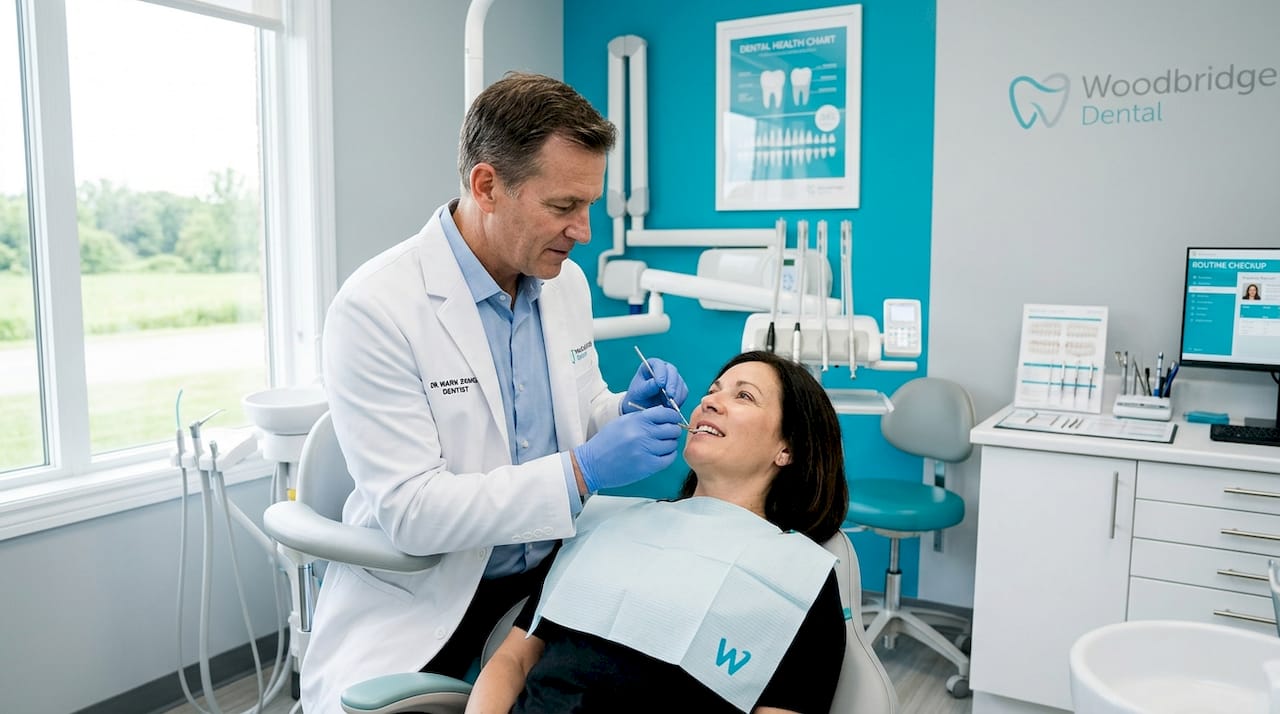
The American Academy of Periodontology and the U.S. Preventive Services Task Force both support regular oral health screenings as a core component of preventive medicine. Routine x-rays and cleanings detect bone loss, early decay, and gum disease at stages that respond quickly to simple treatment. This is the core reason time-efficient dental visits make sense: they compress your total dental time over a year rather than expanding it.
Fluoride treatments add another layer of protection with almost no time cost. Applied in under two minutes during a regular cleaning appointment, fluoride strengthens enamel and reduces the risk of decay between visits. Many patients are surprised to learn that this single step can meaningfully reduce the number of restorative appointments they need over a decade.
| Treatment type | Typical time investment |
|---|---|
| Routine cleaning and checkup | 45 to 60 minutes, twice yearly |
| Single tooth filling (early cavity) | 30 to 60 minutes, one visit |
| Root canal and crown (advanced decay) | 2 to 4 appointments, 3 to 6 hours total |
| Dental emergency visit | Unpredictable, often 2 to 4 hours same day |
Pro Tip: Book your next cleaning before you leave the office. You will spend less than 30 seconds scheduling it, and you will never need to find time later.
Daily habits that fit into any hectic routine
The foundation of oral health maintenance is two minutes of brushing, twice a day, and one minute of flossing. That is five minutes total. Twice-daily brushing and daily flossing prevent tooth decay and gum inflammation, which directly reduces the need for time-consuming restorative treatments. Five minutes a day is a realistic commitment for even the most demanding schedule.
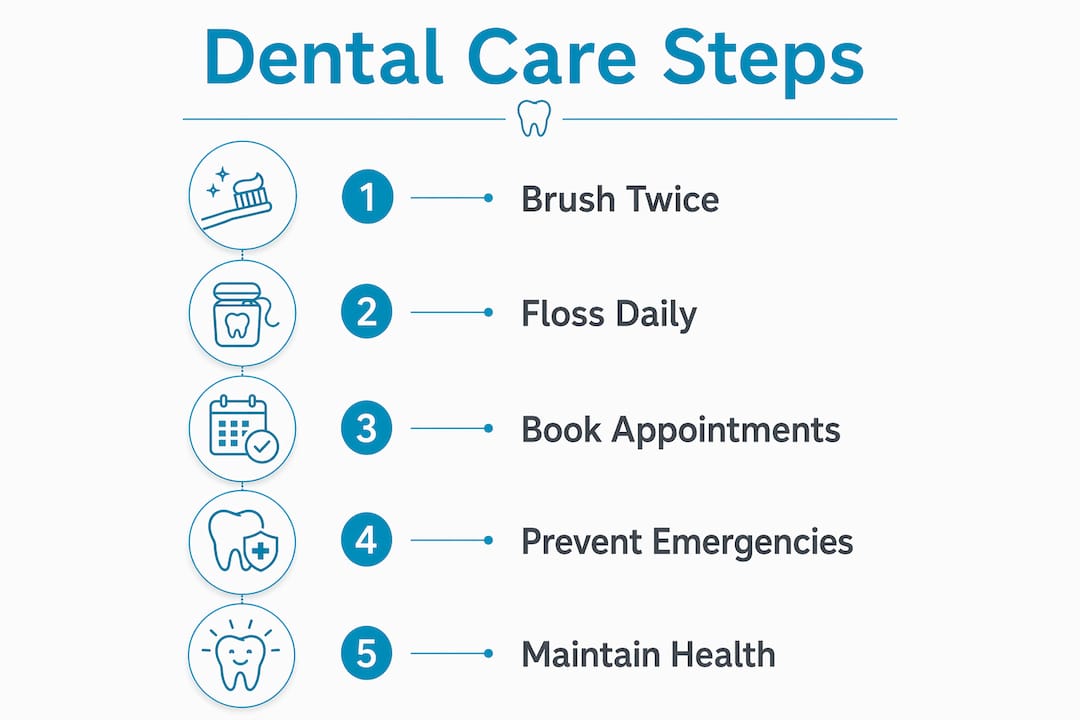
The most effective approach to building these habits is linking them to activities you already do. Brush immediately after breakfast and immediately before bed. Floss while watching the evening news or waiting for a podcast to load. Oral health maintenance works best when it is attached to existing daily behaviors rather than treated as a separate task. This habit-stacking approach is well-supported by behavioral health research and is something we encourage every patient at Woodbridge Dental Centre to try.
Diet choices between meals also affect how much dental work you need over time. Frequent sugar intake between meals keeps acid levels elevated in the mouth, accelerating enamel erosion and cavity formation. Swapping sugary snacks for water, cheese, or raw vegetables between meals reduces that acid exposure without requiring any extra dental care time.
Here are the daily habits that deliver the most protection in the least time:
- Brush for two full minutes with a fluoride toothpaste after breakfast and before bed
- Floss once daily, ideally at night, to remove plaque from between teeth where brushes cannot reach
- Rinse with water after sugary drinks or snacks when brushing is not possible
- Use an electric toothbrush such as an Oral-B or Philips Sonicare model for faster, more thorough plaque removal
- Limit sugary or acidic snacks to mealtimes rather than grazing throughout the day
Pro Tip: A quick dental routine using an electric toothbrush can cut brushing time while improving plaque removal compared to manual brushing, making it a practical upgrade for busy mornings.
How to schedule dental appointments around work and family life
Scheduling is where most busy people get stuck. The good news is that modern dental offices, including Woodbridge Dental Centre, offer early morning, evening, and Saturday appointments specifically because most patients cannot leave work or school mid-week during business hours. Choosing the right appointment window removes the biggest barrier to consistent care.
Here is a practical approach to fitting dental visits into a busy schedule:
- Book early morning or Saturday slots. A 7:30 a.m. or 8:00 a.m. appointment is finished before most workdays begin. Saturday appointments eliminate school and work conflicts entirely.
- Group family appointments back to back. Scheduling two or three family members consecutively on the same day means one trip to the office instead of three separate visits across three weeks.
- Plan around school calendars. March break, summer, and the winter holiday period are low-conflict windows for children’s appointments. Seasonal appointment planning reduces missed school days and parental leave.
- Use digital reminders. Add appointments to Google Calendar or Apple Calendar with a 48-hour reminder. This prevents forgotten visits, which are the most common reason patients fall behind on care.
- Book the next appointment before leaving. This single habit eliminates the “I’ll call when I have time” delay that leads to 18-month gaps between visits.
Planning appointments around school and work calendars, including early mornings, evenings, and seasonal breaks, helps families avoid missed work and school disruptions. The families in Vaughan and Maple who manage dental care most consistently are the ones who treat it like any other recurring commitment. They put it in the calendar and protect it.
| Appointment window | Best suited for |
|---|---|
| Early morning (7:30 to 8:30 a.m.) | Working adults before office hours |
| Evening (5:00 to 7:00 p.m.) | Parents after school pickup |
| Saturday | Families, school-age children |
| School break periods | Children’s checkups and cleanings |
How pediatric dental guidelines help busy families stay on track
The American Academy of Pediatrics recommends that children’s first dental visit happen by their first birthday or within six months of the first tooth erupting. This early start creates a predictable, recurring schedule of preventive visits that aligns naturally with family calendars. When dental care begins early, it becomes a routine part of family life rather than a reactive response to pain.
Research supports starting brushing at first tooth eruption and maintaining at least two daily sessions to reduce early childhood caries risk. Early, frequent brushing aligns with busy family schedules and prevents the need for extensive appointments later. Parents who establish this habit in infancy find it far easier to maintain than those who start later.
The AAP’s dental home model is particularly useful for busy families. It establishes an early-warning system for oral health through predictable preventive visits from infancy, which prevents urgent care that would demand significant and unpredictable scheduling effort. Think of it as building a relationship with a dental office before problems arise, so that when questions come up, you already have a trusted provider to call.
Key pediatric dental milestones that support a manageable family schedule:
- First dental visit by age one or within six months of the first tooth
- Fluoride varnish applied every six months from the first visit, or every three months for higher-risk children
- Twice-yearly cleanings beginning once primary teeth are present
- Sealants applied to permanent molars around ages six to seven to reduce cavity risk through the school years
- Orthodontic screening at age seven as recommended by the American Association of Orthodontists
These milestones are spaced predictably throughout the year, making them easy to plan in advance. When you know a fluoride varnish appointment is due every six months, you can book it at the same time as the previous one and never scramble for availability.
Key takeaways
Dental care fits busy schedules because preventive visits are short, predictable, and far less time-consuming than the emergency treatments they prevent.
| Point | Details |
|---|---|
| Prevention saves time | Routine cleanings take under an hour; untreated problems require multiple lengthy appointments. |
| Daily habits take five minutes | Twice-daily brushing and once-daily flossing prevent most decay with minimal daily time. |
| Flexible scheduling exists | Early morning, evening, and Saturday slots remove the main barrier for working adults and families. |
| Start children early | First dental visit by age one creates a predictable schedule that prevents urgent, disruptive care. |
| Book ahead consistently | Scheduling the next appointment before leaving the office eliminates the most common gap in care. |
What 25 years of practice has taught me about busy patients
In my experience, the patients who struggle most with dental care are not the ones who lack time. They are the ones who have convinced themselves that dental visits take more time than they actually do. I hear it regularly: “I just haven’t had a chance to get in.” When we look at the calendar together, we almost always find a Saturday or early morning slot that works within two weeks.
The misconception I see most often is that dental care is an interruption to a busy life. The reality is that a 45-minute cleaning twice a year is a small investment that protects you from spending a full day managing a dental emergency. Many patients who have experienced both will tell you the same thing.
What I encourage every family in Woodbridge and Vaughan to do is communicate openly with their dental office about scheduling constraints. A good dental team will work around your calendar, not the other way around. Preparing for a family checkup does not need to be complicated. It just needs to be planned.
The patients who maintain the best oral health over decades are not the ones with the most free time. They are the ones who treat dental care as a non-negotiable part of their routine, the same way they treat an annual physical or a car service. Prevention is always faster than repair.
— Felix
Dental care built around your schedule in Woodbridge
At Woodbridgedentalcentre, we understand that your schedule is full. Dr. Michael Rouhi, Dr. Sandra Farber, and our team offer early morning, evening, and Saturday appointments to make family dental care in Woodbridge genuinely accessible for working adults, parents, and children across Vaughan and Maple. We see patients of all ages under one roof, so you can group family appointments on the same visit and get everyone seen in one trip.

We focus on prevention first, which means shorter visits, fewer surprises, and less time spent in the chair over the long run. If you have been putting off a cleaning or your child’s first visit, the best time to book is now. Call our office or book online, and we will find a time that works for your family.
FAQ
How long does a routine dental cleaning take?
A standard adult cleaning and checkup takes 45 to 60 minutes. Children’s appointments are often shorter, typically 30 to 45 minutes, depending on age and the extent of care needed.
How do I fit dental visits into a busy schedule?
Book early morning, evening, or Saturday appointments, and schedule the next visit before leaving the office. Grouping family appointments back to back on the same day also reduces the total number of trips to the dental office.
Why does dental health matter for busy people specifically?
Skipping preventive care leads to dental emergencies that are far more disruptive than routine visits. A missed cleaning can result in a same-day emergency appointment lasting several hours, which is far harder to fit into a busy schedule than a planned 45-minute checkup.
When should my child have their first dental visit?
The American Academy of Pediatrics recommends the first dental visit by age one or within six months of the first tooth appearing. Starting early creates a predictable schedule of short preventive visits that prevents urgent, unplanned care later.
Can good daily habits reduce how often I need to see the dentist?
Daily brushing and flossing significantly reduce decay and gum disease, but they do not replace professional cleanings. Plaque hardens into tartar within 24 to 72 hours and can only be removed by a dental hygienist, which is why twice-yearly visits remain the standard recommendation.
Recommended
- How to Reduce Dental Appointment Wait Time Effectively
- How to Prepare Your Family Dental Checkup Smoothly
- Family Dentistry in Woodbridge | Care for All Ages
- What Should I Pack for My Kid’s Dental Visit? | Pro Tips for Stress-Free Appointments – Woodbridge Dental Centre | Cosmetic, Implant & Family Dentistry


