

If you’ve ever held back a laugh or kept your lips closed in a photo, you already understand the quiet cost of being unhappy with your smile. A smile makeover is a personalized combination of cosmetic dental procedures designed to address exactly those concerns, whether that’s discoloration, chips, gaps, missing teeth, or misalignment. More than one-third of Americans are dissatisfied with their smile aesthetics, and the impact goes well beyond vanity. This guide breaks down what a smile makeover actually involves, how the process works, what it costs, and how to maintain your results for years to come.
Key takeaways
| Point | Details |
|---|---|
| Personalized treatment plan | A smile makeover combines multiple procedures tailored to your specific dental concerns and aesthetic goals. |
| Sequence matters | Whitening should happen before restorations to allow precise shade matching and avoid color mismatches. |
| Benefits go beyond looks | Smile makeovers improve confidence, oral function, and can produce a more youthful facial appearance. |
| Costs vary widely | Treatments range from around $1,000 for minor enhancements to over $10,000 for full transformations. |
| Maintenance extends results | With proper care and regular check-ups, smile makeover results can last 5 to 20 years or more. |
What a smile makeover really includes
A smile makeover is not a single procedure. It is a coordinated plan that draws from several cosmetic and restorative treatments, each targeting a specific concern. The right combination depends entirely on what you want to change and what your dental health currently looks like.
Here are the most common treatments involved:
- Teeth whitening: The most accessible starting point, professional whitening lifts surface and deep stains. Average cost around $583, and it is typically performed before any restorations.
- Porcelain veneers: Thin shells bonded to the front of teeth to correct shape, color, and minor misalignment. Average cost is approximately $1,765 per tooth.
- Dental crowns: Full-coverage caps that restore damaged or weakened teeth. Average cost runs about $1,399 per tooth and they double as cosmetic corrections.
- Dental implants: Permanent replacements for missing teeth that preserve bone and look completely natural. Average cost is approximately $2,695 per tooth.
- Dental bonding: A resin applied directly to chips or gaps, sculpted and polished in a single visit. Average cost is around $431 per tooth, making it one of the most affordable options.
- Orthodontics or Invisalign: Corrects misalignment and spacing before or alongside other cosmetic work.
The table below gives you a quick comparison of these core treatments:
| Treatment | Primary purpose | Typical duration | Average cost |
|---|---|---|---|
| Teeth whitening | Remove stains, brighten color | 1 to 2 visits | ~$583 |
| Porcelain veneers | Shape, color, minor alignment | 2 to 3 visits | ~$1,765/tooth |
| Dental crowns | Restore damaged teeth | 2 visits | ~$1,399/tooth |
| Dental implants | Replace missing teeth | 3 to 6 months | ~$2,695/tooth |
| Dental bonding | Repair chips and gaps | 1 visit | ~$431/tooth |
| Orthodontics | Correct alignment | 6 to 18 months | Varies widely |
The best candidates for a smile makeover have clear aesthetic goals and a customized treatment plan rather than opting for a single isolated procedure. That coordination is what separates a makeover from a one-off fix. You can explore dental restoration options to get a clearer picture of what restorative treatments look like in practice.
The smile makeover process, step by step
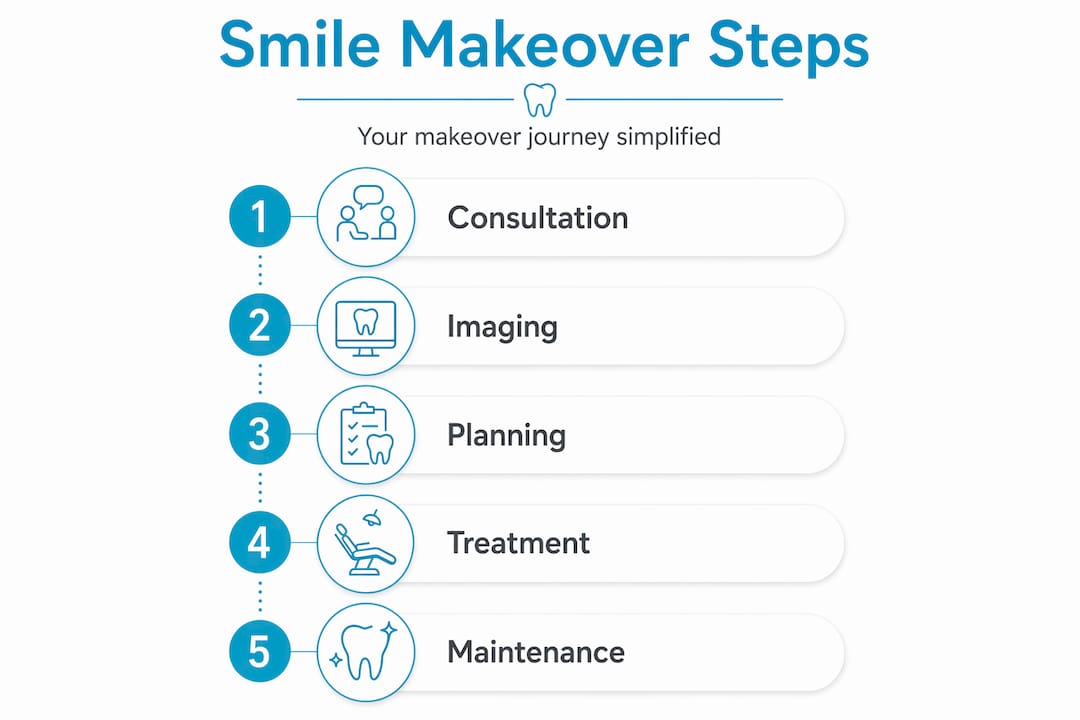
Understanding the smile makeover process before you start removes a lot of uncertainty. Here is how a well-planned makeover typically unfolds:
-
Initial consultation. Your dentist reviews your dental health, discusses your aesthetic goals, and takes photographs and X-rays. This is where the full picture comes together, including which concerns are cosmetic and which need restorative attention first.
-
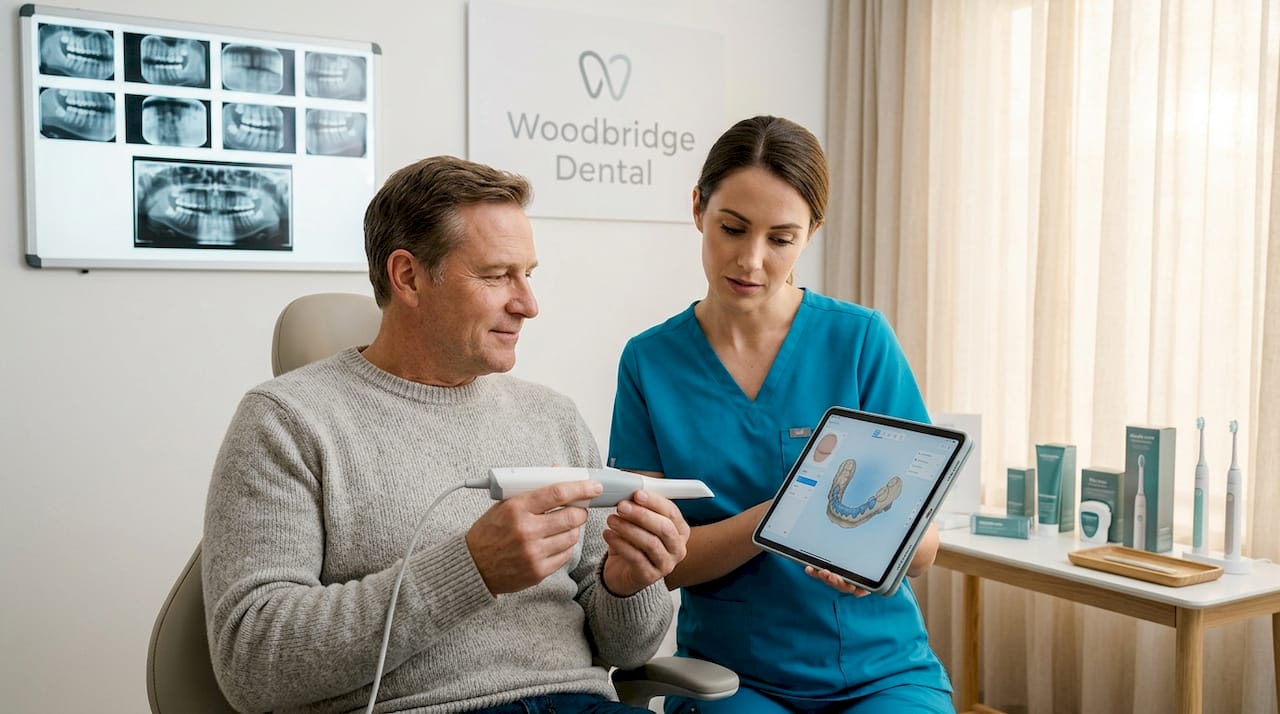
Digital smile design. Many practices now use digital imaging for visualization to simulate your results before any treatment begins. You can see a preview of your new smile and give feedback, which makes the final outcome far more predictable.
-
Treatment sequencing. This step is often underestimated. Whitening before restorations allows your dentist to match veneers or crowns to your newly brightened shade. Skip this step, and you risk having restorations that are noticeably darker than your whitened natural teeth.
-
Temporary restorations as a trial. Before permanent placement, many patients receive temporary veneers or crowns. Trial restorations let you and your dentist preview and refine the results, reducing the risk of a final smile that looks off or disconnected from your facial features.
-
Permanent placement and refinement. Once you and your dentist are satisfied with the trial, permanent restorations are placed. Minor adjustments to bite and shape are made at this stage.
-
Post-treatment review. A follow-up appointment 4 to 6 weeks after completion allows your dentist to assess healing, check your bite, and give you specific maintenance guidance.
Pro Tip: Never whiten your teeth after your restorations are placed. Whitening agents do not affect porcelain or composite materials, so you will end up with a two-tone smile. Always complete whitening first, then move to veneers, crowns, or bonding.
The use of 3D imaging in planning is particularly valuable when implants are part of the makeover, giving your dentist precise placement data before a single incision is made.
Benefits of smile makeovers beyond aesthetics
Most people start thinking about a smile makeover because of how their teeth look. What surprises them is how much changes beyond appearance.
- Confidence and social ease. Patients consistently report that they smile more freely, make more eye contact, and feel less self-conscious in professional and social settings after treatment.
- A more youthful appearance. Restoring tooth length and brightness produces a subtly younger look without anything that looks overdone or artificial. Worn or short teeth age a face significantly, and restoring them reverses that effect.
- Improved oral function. Replacing missing teeth with implants or correcting a misaligned bite through orthodontics improves chewing efficiency and reduces strain on the jaw.
- Better long-term oral health. Straighter teeth are easier to clean. Replaced missing teeth prevent bone loss. Covered or bonded teeth are protected from further wear or decay.
The psychological uplift from a well-executed smile makeover is consistently underestimated by patients before treatment. Many describe it as one of the most confidence-building investments they have made. The psychological benefits of restoring your smile are well-documented and extend into daily quality of life in ways that are hard to anticipate until you experience them.
“A smile makeover is best viewed as a comprehensive, coordinated design process that considers all smile components and facial harmony, rather than a collection of piecemeal treatments.” — SmilePedia
Cost factors and what to expect for maintenance
The cost of a smile makeover varies more than almost any other dental service, because no two treatment plans are identical. Several factors drive the final number:
What affects your cost:
- The number of teeth being treated
- Which procedures are included (whitening alone vs. whitening plus veneers plus an implant)
- Your geographic location and the experience level of your dentist
- Whether any preparatory work is needed, such as gum treatment or bone grafting before implants
In general, minor enhancements start around $1,000 while full smile transformations can exceed $10,000. Here is a realistic cost breakdown by scope:
| Makeover scope | Typical treatments included | Estimated cost range |
|---|---|---|
| Minor enhancement | Whitening plus bonding | $1,000 to $2,500 |
| Moderate transformation | Whitening plus veneers (4 to 6 teeth) | $4,000 to $8,000 |
| Full transformation | Veneers, crowns, implants, whitening | $10,000 to $30,000+ |
Most dental insurance plans do not cover cosmetic procedures, though restorative elements like crowns or implants may receive partial coverage depending on your plan. Ask your clinic for a detailed, fixed quote before treatment begins. Transparent pricing protects you from unexpected costs mid-treatment.
Maintaining your results is where many patients fall short. The good news is that smile makeover results can last anywhere from 5 to 20 years or more with the right care. That lifespan depends heavily on your habits and follow-up.
Key maintenance practices include:
- Attending professional hygiene visits every 6 months
- Avoiding heavily staining foods and drinks, particularly coffee, red wine, and dark sauces, especially in the weeks after whitening
- Following specific aftercare for restorations, including post-whitening dietary guidance to protect your results
- Using a non-abrasive toothpaste on veneers and bonding
- Wearing a night guard if you grind your teeth, since grinding is one of the fastest ways to damage cosmetic restorations
Pro Tip: Schedule your 6-month hygiene visits before you leave the office after your makeover is complete. Patients who book follow-up appointments in advance are significantly more likely to maintain their results long-term.
For patients with implants as part of their makeover, daily implant care is a non-negotiable part of the maintenance routine.
My take on what makes a smile makeover actually work
In my experience working with patients considering cosmetic dentistry, the biggest mistake I see is treating a smile makeover like a menu of individual items. Someone comes in wanting veneers, gets them placed without addressing an underlying bite issue, and six months later the veneers are chipping. The treatment worked technically. The planning did not.
What I have learned is that the coordination of treatments matters as much as the quality of each individual procedure. Digital smile design is not just a sales tool. It is a genuine planning asset that helps align the final result with your facial proportions and natural features. I have seen patients who were initially skeptical of the simulation step become its biggest advocates once they realized how much it prevented after the fact.
I also want to be honest about expectations. The goal of a well-done smile makeover is not perfection in the Hollywood sense. It is a smile that looks like the best version of yours. Natural, proportionate, and confident. Patients who communicate openly with their dentist throughout the process, asking questions, reviewing trial restorations carefully, and flagging anything that feels off, consistently get better outcomes than those who defer entirely to the dentist.
If you are considering a smile makeover, start with a thorough consultation and do not rush the planning phase. That phase is where the real work happens.
— Felix
Start your smile makeover at Woodbridge Dental Centre
At Woodbridgedentalcentre, we understand that considering a smile makeover is a significant decision. Dr. Michael Rouhi, Dr. Sandra Farber, and our team approach every smile makeover with a coordinated, patient-first plan that accounts for your dental health, aesthetic goals, and long-term oral function. We use advanced digital imaging to help you visualize your results before treatment begins, and we take the time to walk you through every step.
Whether you need dental restorations in Woodbridge, implant care, or a full smile transformation, we offer flexible appointment options and transparent treatment plans. We serve patients across Vaughan, Maple, and surrounding communities. Contact us today to schedule your consultation and take the first step toward a smile you feel genuinely good about.
FAQ
What is a smile makeover?
A smile makeover is a personalized combination of cosmetic and restorative dental procedures, such as whitening, veneers, crowns, implants, and bonding, designed to address specific aesthetic concerns and improve the overall appearance of your smile.
How long does a smile makeover take?
The timeline depends on which treatments are included. Minor makeovers involving whitening and bonding can be completed in a few visits, while full transformations including implants or orthodontics may take 6 to 18 months.
Does insurance cover smile makeovers?
Most dental insurance plans do not cover cosmetic procedures. However, restorative elements like crowns or implants may qualify for partial coverage. Always confirm with your insurance provider and ask your clinic for a detailed quote.
How long do smile makeover results last?
With proper care and regular dental check-ups, smile makeover results can last anywhere from 5 to 20 years or more, depending on the treatments involved and your maintenance habits.
What are the signs you need a smile makeover?
Common signs include persistent tooth discoloration, chips or cracks, gaps, missing teeth, worn-down enamel, or a smile you actively avoid showing in photos or social situations. A consultation with a cosmetic dentist will clarify which treatments best address your specific concerns.
Recommended
- The Psychological Benefits of Restoring Your Smile with Dental Implants in Woodbridge – Woodbridge Dental Centre | Cosmetic, Implant & Family Dentistry
- What’s the Difference Between Invisalign and Smile Direct Club? – Woodbridge Dental Centre | Cosmetic, Implant & Family Dentistry
- Why a Bone Graft Might be Necessary Before Getting Dental Implants – Woodbridge Dental Centre | Cosmetic, Implant & Family Dentistry
- The Step-by-Step Guide to Getting Dental Implants – Woodbridge Dental Centre | Cosmetic, Implant & Family Dentistry


