

A dental treatment timeline is a structured, phased schedule that maps every step of your care from the first urgent visit through to long-term maintenance. It tells you what happens, in what order, and roughly how long each stage takes. Understanding this schedule helps you plan your life around treatment, set realistic expectations, and stay confident that your dentist is working through a logical, safe sequence rather than rushing to the finish line.
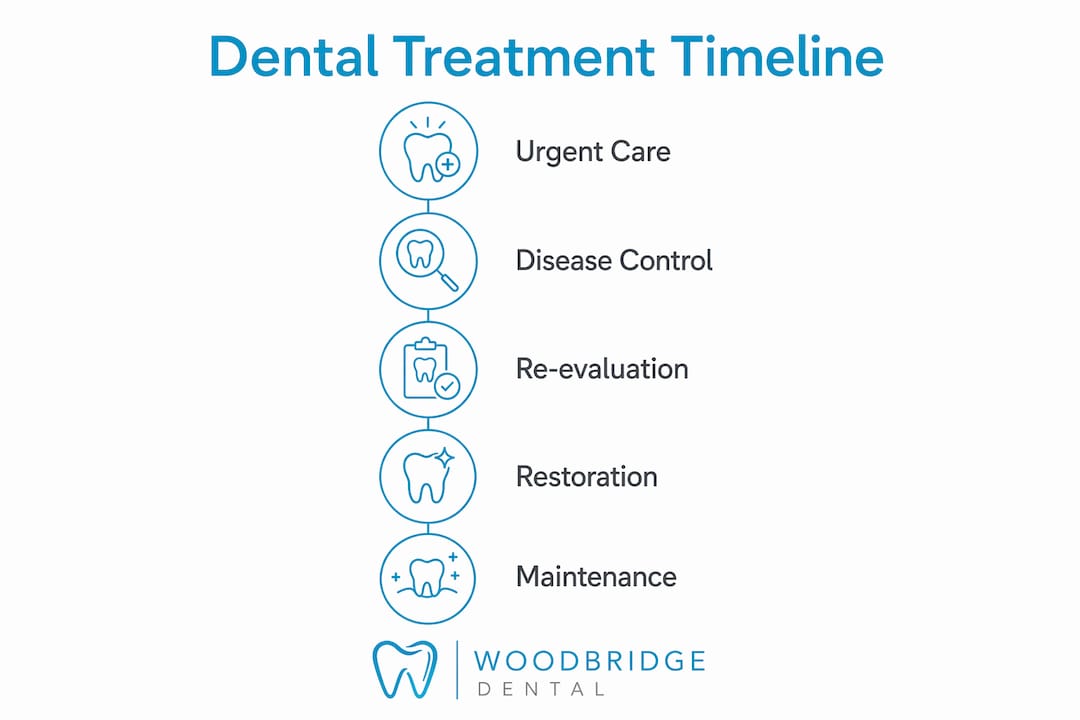
A well-built dental treatment plan follows five recognized phases:
- Urgent phase: Addresses pain, infection, swelling, or bleeding right away
- Control phase: Manages active disease such as gum disease or decay
- Re-evaluation phase: Confirms healing before any major restorative work begins
- Definitive phase: Completes restorations, implants, or other corrective treatment
- Maintenance phase: Ongoing checkups and prevention to protect your results
How long the full timeline runs depends on the complexity of your case and how your body heals. A straightforward filling might wrap up in a single visit. A case involving implants, bone grafting, and orthodontics can span over a year or longer.
What are the standard phases of a dental treatment timeline?
Phased treatment sequencing is the foundation of responsible dental care. Skipping a phase or rushing into restorative work before disease is controlled is one of the most common causes of treatment failure.
-
Urgent phase. Any pain, swelling, infection, or bleeding gets addressed first. Nothing else moves forward until the patient is comfortable and stable. If you ever need to reach us quickly, our team at Woodbridgedentalcentre can help you book urgent care without delay.
-
Control phase. This is where we tackle the root causes of disease, whether that is active decay, gum inflammation, or failing old restorations. The goal is a stable, disease-free mouth before any major work begins.
-
Re-evaluation phase. After the control phase, we pause. This holding period lets tissues heal and gives us a clear picture of what still needs to be done. Rushing past this step risks placing expensive restorations on a foundation that has not fully stabilized. Re-evaluation is the phase most patients never hear about, yet it protects the entire investment of care that follows.
-
Definitive phase. Now the restorative and corrective work begins: crowns, implants, orthodontics, bridges, or whatever the treatment plan calls for. Sequencing within this phase matters too, since periodontal work, endodontics, and prosthetics each have their own healing requirements.
-
Maintenance phase. Regular recall visits, cleanings, and monitoring keep your results intact. The Canadian Dental Association advocates for patient-centered planning that is honest about duration, alternatives, and the possibility of future work.
Pro Tip: Your role in the timeline matters as much as ours. Patients who follow home-care instructions and attend every scheduled visit consistently reach their treatment goals on time. Patient compliance is one of the strongest predictors of whether a timeline holds.
How long does a dental implant treatment take from start to finish?
Many patients in Vaughan and Maple are surprised to learn that a single-tooth implant typically takes 3–9 months from placement to final crown. When preparatory procedures are needed, that window extends further.
- Consultation and planning: 1–2 appointments over 1–2 weeks
- Tooth extraction (if required): Simple extractions typically require several weeks to heal.
- Bone grafting (if required): Adds 3–6 months of healing before implant placement can proceed
- Implant placement surgery: The procedure itself takes 1–2 hours; initial healing runs 1–2 weeks
- Osseointegration: The titanium post fuses to the jawbone over 3–6 months. Lower jaw implants typically integrate in 3–4 months; upper jaw implants take 4–6 months because upper jaw bone is softer
- Abutment placement: A minor procedure, with 2–4 weeks of gum healing
- Crown fabrication and placement: 2–4 weeks for the lab, then a single fitting appointment
| Scenario | Approximate total timeline |
|---|---|
| No preparatory procedures needed | Several months |
| With tooth extraction | Adds a few weeks |
| With bone grafting | Adds several months |
| Complex case (multiple preparatory steps) | Can extend to over a year |
Many patients feel much better within the first week after surgery and assume the hard part is over. The osseointegration process is largely invisible, happening quietly beneath the gum surface for months. Feeling comfortable does not mean the implant is ready for a crown. Bone heals on its own schedule, and your dentist will confirm fusion with imaging before moving forward.
If a bone graft is part of your plan, understanding why that step is necessary makes the extended timeline much easier to accept.
What is the typical orthodontic treatment timeline for braces and aligners?
Orthodontic treatment with traditional braces generally runs 18 months to 3 years. Clear aligners such as Invisalign typically require 12–24 months, though simpler cases can finish sooner.
- Traditional metal braces: 18–30 months for most patients; highly effective across all misalignment types
- Ceramic braces: Similar duration to metal, 18–30 months, with a less visible appearance
- Clear aligners: 12–24 months; removable and discreet, but require strict daily wear compliance
- Lingual braces: 18–36 months; placed behind the teeth, with a longer adjustment phase
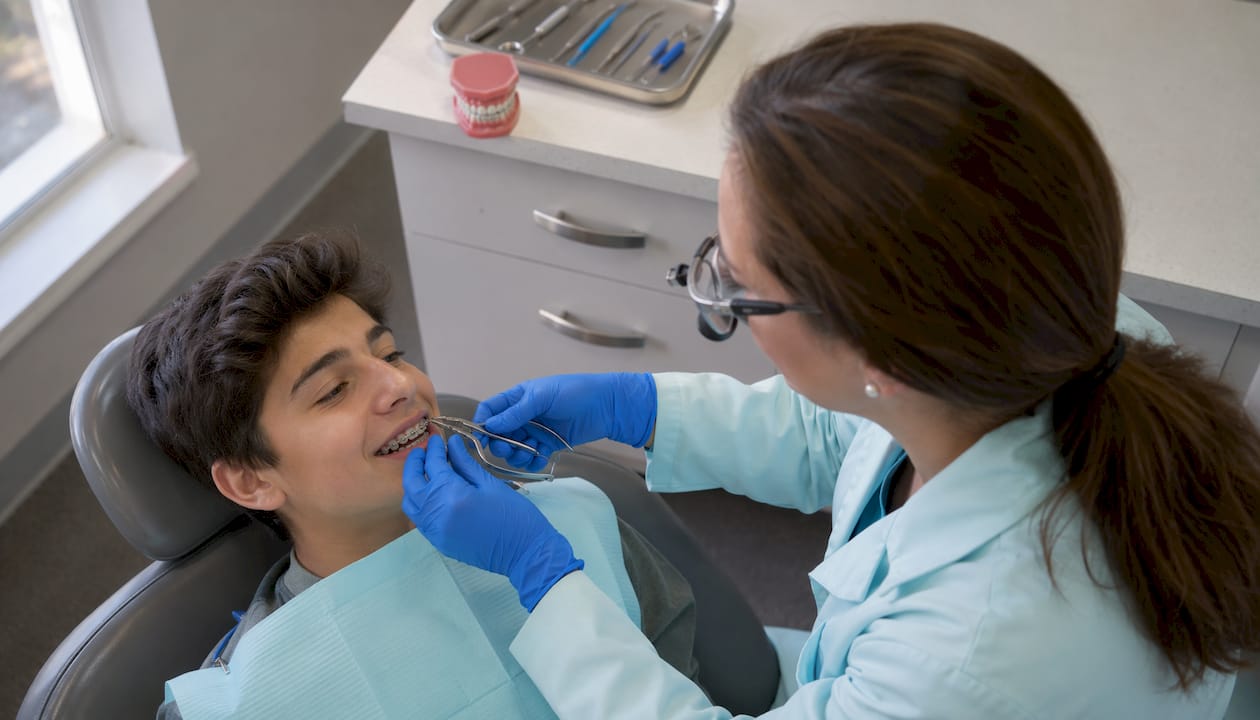
Adjustment appointments happen every 4–8 weeks throughout active treatment. Missing appointments or not wearing aligners as directed adds time to the overall schedule. Age also plays a role: younger patients tend to move teeth faster because their bone is more responsive.
For families in Woodbridge wondering whether aligners are the right fit, our Invisalign guide covers the full timeline and what to expect at each stage. After active treatment ends, a retention phase begins. Retainers hold the teeth in their new positions and are typically worn long-term to protect the result.

How often should you schedule routine dental checkups?
The standard recall interval for most adults is every six months, but that is not a universal rule. Your dentist sets your recall frequency based on your individual risk profile.
- Every 6 months: Appropriate for most healthy adults with good home care and low decay risk
- Every 3–4 months: Recommended for patients with active gum disease, high cavity risk, or a history of frequent problems
- Every 12 months: Sometimes appropriate for very low-risk patients with consistently excellent oral health
At each checkup, your dentist examines for new decay, gum changes, and any signs of wear or shifting. X-rays are taken on a schedule based on your history. Cleanings remove buildup that brushing and flossing cannot reach. For families across Vaughan and Maple, routine family dental care at consistent intervals is the single most effective way to catch problems early and avoid longer, more complex treatment down the road.
What are typical recovery timelines after common dental procedures?
Recovery varies widely depending on the procedure, your age, and your overall health. Here is a practical overview:
- Fillings: Mild sensitivity for 1–2 days; normal function resumes almost immediately
- Tooth extraction (simple): Soft tissue heals in 1–2 weeks; full bone healing takes 6–8 weeks
- Crown placement: Temporary sensitivity for a few days; the crown itself requires no healing time
- Implant surgery: Significant swelling and tenderness for 3–5 days; most patients return to desk work within 1–2 days; full osseointegration takes 3–6 months
- Bone graft: Similar initial recovery to extraction; the graft site needs 3–6 months before implant placement
Age and systemic health genuinely affect healing speed. Patients managing diabetes, taking certain medications, or who smoke tend to heal more slowly, which is why your dentist asks about your medical history before any procedure.
Pro Tip: Cold soft foods, gentle salt-water rinses, and avoiding straws after oral surgery protect the healing site. Follow your dentist’s post-operative instructions closely. Skipping a follow-up appointment because you feel fine is one of the most common ways patients set back their own recovery.
For patients planning implant surgery, our preparation guide covers exactly what to do before and after the procedure to support smooth healing.
How does the Canadian dental care system affect your treatment timeline?
In Canada, insurance coverage and access to care can shape how a treatment schedule unfolds in practice. Many dental insurance plans in Ontario require pre-authorization before covering major procedures like crowns, implants, or orthodontics. That approval process can add 1–4 weeks to the start of a phase, so building that buffer into your schedule is worth doing.
The Canadian Dental Care Plan, introduced for eligible Canadians, has expanded access for many patients who previously delayed treatment due to cost. Earlier access to care generally means problems are caught at a less complex stage, which shortens overall treatment timelines. Patients who delayed care due to cost often arrive with more advanced disease, which means the control and re-evaluation phases take longer before definitive work can begin.
Private insurance plans in Ontario typically cover a percentage of major restorative work up to an annual maximum. When a treatment plan spans multiple calendar years, coordinating which procedures fall in which benefit year can meaningfully reduce your out-of-pocket costs without changing the clinical sequence. Talking through the financial schedule with your dental team at the start of treatment is time well spent.
How to plan your daily life around a dental treatment schedule
Most dental treatment fits into a normal routine more easily than patients expect. A filling or checkup rarely disrupts more than an hour. Implant surgery and extractions deserve a day of rest, and most patients are back to desk work within 1–2 days.
For longer treatment courses like orthodontics or implants, the key is thinking in phases rather than treating the whole timeline as one long disruption. Each phase has its own demands, and most of the time between appointments involves no restrictions at all. Planning around the few days after a surgical procedure, rather than the entire 6-month osseointegration window, makes the process far less daunting.
Scheduling appointments early in the week gives you the weekend to recover from any procedure that causes temporary soreness. Keeping a simple calendar of your upcoming appointments and any dietary or activity restrictions for each phase helps you stay organized without stress. Our team at Woodbridgedentalcentre is happy to work around school schedules, work commitments, and family routines for patients across Woodbridge and Vaughan. If you want practical tips on fitting dental care into a busy week, our guide on dental care and busy schedules is a good starting point.
At Woodbridgedentalcentre, Dr. Michael Rouhi, Dr. Sandra Farber, and our team walk every patient through their personal treatment schedule before any work begins. Whether you need a routine checkup, an implant, or orthodontic care, we make sure you know what to expect, how long each phase takes, and how to prepare. Book your appointment and let us build a clear, honest plan together.

Key Takeaways
A dental treatment timeline is a phased, sequenced schedule that guides care from urgent needs through maintenance, with total duration driven by procedure complexity and individual healing.
| Point | Details |
|---|---|
| Five standard phases | Every treatment plan moves through urgent, control, re-evaluation, definitive, and maintenance phases in order. |
| Implant timelines vary widely | A single implant takes 3–9 months; bone grafting adds 3–6 months, and complex cases can extend to over a year. |
| Orthodontic treatment duration | Braces run 18 months to 3 years; clear aligners typically take 12–24 months with strict compliance. |
| Recall intervals are individualized | Most adults need checkups every 6 months; high-risk patients benefit from visits every 3–4 months. |
| Canadian insurance affects scheduling | Pre-authorization for major procedures can add 1–4 weeks; coordinating treatment across benefit years reduces costs. |
FAQ
What are the five phases of a dental treatment plan?
The five phases are urgent (pain and emergency care), control (disease management), re-evaluation (confirming healing), definitive (restorations and corrective work), and maintenance (ongoing monitoring and prevention). Each phase must be completed before the next begins to protect treatment outcomes.
How long does a dental implant take with a bone graft?
A bone graft adds 3–6 months of healing to the implant timeline before placement can proceed, bringing the total treatment course to over a year for complex cases.
Can a tooth extraction site heal in 4 days?
Soft tissue begins closing within days, but meaningful healing takes longer. Most patients feel significantly better by day 4–5, though full soft tissue healing takes 1–2 weeks and complete bone healing requires 6–8 weeks.
How often should most Canadian adults see a dentist?
Most healthy adults benefit from a checkup and cleaning every 6 months. Patients with gum disease, high cavity risk, or complex dental histories are typically seen every 3–4 months to monitor and maintain their oral health.
Does patient compliance really affect how long treatment takes?
Yes, consistently. Patients who wear aligners as directed, follow post-operative care instructions, and attend every scheduled appointment reach their treatment goals on time. Missing visits or ignoring home-care instructions extends timelines and can compromise results.


