

Same-day dental emergencies are managed through immediate triage, structured assessment, and prioritized treatment designed to relieve pain and prevent complications as quickly as possible. Whether you’ve cracked a tooth, developed a painful abscess, or knocked out a tooth entirely, understanding how dentists handle same-day emergencies helps you act faster and feel less anxious when it matters most. At Woodbridge Dental Centre, Dr. Michael Rouhi and Dr. Sandra Farber follow clear clinical protocols to assess every urgent case and get patients the right care without delay.
How dentists triage and prioritize same-day emergency cases
Dental triage is the process dentists use to classify how urgently a patient needs care based on the severity of their symptoms. Not every toothache carries the same risk, and triage based on pain, swelling, fever, trauma, breathing, and bleeding determines who gets seen first. This is the foundation of how dentists prioritize emergency cases.
Dentists typically sort urgent cases into three levels:
- Critical (immediate care): Uncontrolled bleeding, facial swelling that threatens the airway, trauma with tooth loss, or signs of spreading infection. These cases are seen as soon as the patient arrives.
- Moderate (same-day or next-day): Severe toothache, lost crown or filling causing pain, a cracked tooth with sensitivity, or a dental abscess without systemic symptoms. Most patients in this group are seen within hours.
- Low urgency (scheduled soon): A broken tooth with no pain, a loose crown, or mild sensitivity. These can typically wait a day or two without risk of worsening.
Emergency dentistry prioritizes patients by risk, not order of arrival. A patient who walked in five minutes before you may wait longer if your situation involves a higher risk of systemic infection or airway involvement. Many patients are surprised to learn this, but it is the safest and most responsible way to manage urgent dental care.
Many practices also assign protected emergency slots each day specifically for urgent cases. This means the schedule is never fully booked for emergencies, and same-day dental care remains accessible even on busy clinic days.

Pro Tip: When you call about a dental emergency, describe your symptoms as specifically as possible. Mention whether you have swelling, fever, bleeding, or difficulty swallowing. This helps the front desk assign the right triage level before you even arrive.
What happens during a same-day emergency dental visit?
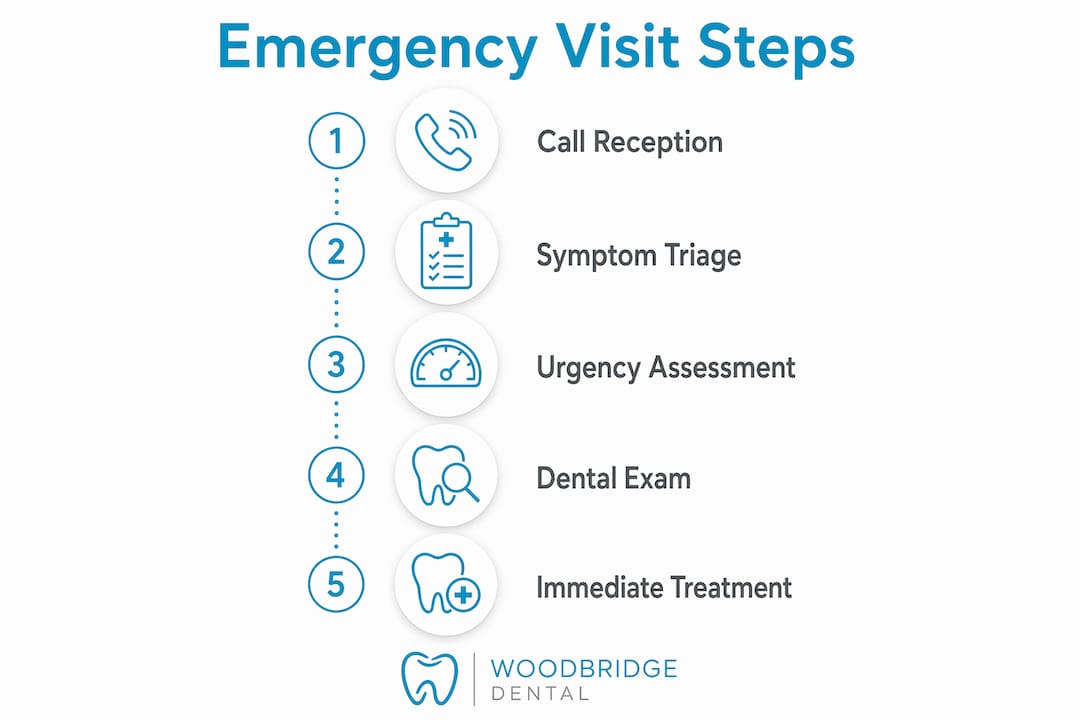
The moment you arrive for an emergency appointment, the clinical team begins gathering information to guide treatment. Here is what a typical same-day visit looks like from start to finish:
- Check-in and health history review. The team confirms your medical history, current medications, and allergy information. This step takes about five minutes but directly affects which anesthetics and treatments are safe for you.
- Symptom assessment. A dental team member records your pain level, when symptoms started, and any relevant history such as recent dental work or trauma.
- Clinical examination and digital X-rays. The dentist examines the affected area and takes digital X-rays to identify the source of the problem. Some emergency practices include up to two digital X-rays in a flat-rate emergency evaluation fee of around $125, covering exam, diagnosis, and prescriptions.
- Diagnosis and treatment planning. The dentist explains what they found and outlines the immediate treatment options. You are always part of this conversation.
- Immediate treatment. Depending on the diagnosis, this may include pain relief injections, a temporary filling, abscess drainage, tooth splinting, or a prescription for antibiotics.
- Follow-up scheduling. Most emergency visits address the acute problem. Complex restorations, root canals, or implant planning are scheduled as follow-up appointments.
Emergency appointments typically last 45 minutes to 2 hours, with most patients seen within 30 minutes to 2 hours of their initial call. That window reflects how quickly a prepared dental team can move from triage to treatment.
| Emergency type | Typical same-day treatment | Follow-up needed? |
|---|---|---|
| Severe toothache | Pain relief, X-ray, diagnosis | Often yes, for root canal or extraction |
| Knocked-out tooth | Reimplantation attempt, splinting | Yes, monitoring over 2 to 4 weeks |
| Dental abscess | Drainage, antibiotics, pain relief | Yes, for root canal or extraction |
| Cracked or broken tooth | Temporary filling or bonding | Yes, for crown or restoration |
| Lost crown or filling | Temporary cement or replacement | Yes, for permanent restoration |
Pro Tip: Ask about same-day dentistry benefits when you call. Some clinics can complete certain restorations in a single visit using in-office milling technology, which saves you a second appointment.
How to prepare before your emergency appointment
What you do before you arrive at the dental office has a direct effect on how quickly you receive care. Calling ahead is the single most effective step you can take. Calling ahead reduces wait times significantly, from up to 90 minutes for walk-ins to about 15 minutes when the office can prepare the room and anesthesia in advance.
Here is what to do before your appointment:
- Call the clinic immediately. Describe your symptoms clearly, including pain level on a scale of 1 to 10, any visible swelling, bleeding, or fever, and whether you have difficulty swallowing or breathing.
- Bring your health information. Carry a list of current medications, known allergies, and any relevant dental records if you have them. This speeds up the health history review.
- Manage pain and swelling at home. Take over-the-counter ibuprofen if you have no contraindications. Apply a cold pack to the outside of your cheek in 10-minute intervals to reduce swelling before you arrive.
- Handle a knocked-out tooth correctly. Place the tooth in a small container of milk or your own saliva. Do not rinse it with water or wrap it in a dry tissue.
- Avoid eating or drinking if you suspect you may need sedation. Ask the receptionist when you call.
Effective symptom description and medication disclosure are key to appropriate triage and treatment planning. The more clearly you communicate, the better prepared the dental team will be when you walk through the door. For families in Vaughan and Woodbridge, this preparation can mean the difference between a 15-minute wait and a 90-minute one.
What patients should know about same-day emergency care limitations
Same-day emergency dental care is designed to address the acute problem, not always the complete solution. Understanding this distinction helps you set realistic expectations and plan for follow-up care.
A few important points to keep in mind:
- Life-threatening symptoms require the emergency room first. If you have difficulty breathing, severe facial swelling that is closing your airway, or signs of a spreading neck infection, go to the nearest emergency room. Emergency rooms provide only temporary pain relief and antibiotics, not definitive dental treatment, but they are equipped to manage airway emergencies. Follow up with your dentist as soon as you are medically stable.
- Patients on blood thinners or who are pregnant can still receive emergency care. Protocol adjustments for blood thinners or pregnancy allow safe emergency treatment with proper planning. Always disclose these details when you call.
- Time is critical for knocked-out teeth. Successful reimplantation is usually possible within 60 minutes if the tooth is preserved in milk or saliva. Every minute counts.
- Antibiotics treat infection, not the source. A dentist may prescribe antibiotics to control a spreading infection, but the underlying cause, whether a decayed tooth or a failed root canal, still requires in-office treatment.
- Delaying care makes things worse. A small crack can become a complex fracture and a mild ache can develop into an abscess if left untreated. Acting quickly protects both your tooth and your overall health.
“The goal of same-day emergency care is to stop the pain, control the infection, and protect the tooth. Full restoration often comes next, but the most important step is getting in the chair as soon as possible.”
For children experiencing dental trauma or sudden pain, it is worth reviewing pediatric dental emergency guidance to know exactly when to call and what to bring.
Key takeaways
Dentists handle same-day emergencies through structured triage, rapid diagnosis, and targeted immediate treatment, with the primary goal of relieving pain and preventing complications before a full restoration is planned.
| Point | Details |
|---|---|
| Triage determines priority | Dentists assess pain, swelling, fever, and trauma to decide who is seen first, not order of arrival. |
| Call ahead to reduce wait time | Calling with clear symptom details can cut your wait from 90 minutes to as little as 15 minutes. |
| Same-day visits address acute problems | Most emergency appointments stabilize the tooth and relieve pain, with restorations scheduled as follow-ups. |
| Time-sensitive injuries need speed | A knocked-out tooth must reach the dentist within 60 minutes for reimplantation to be viable. |
| Patient preparation matters | Bringing medication lists, describing symptoms clearly, and managing swelling at home all improve care speed. |
Why I think most patients wait too long before calling
In my experience, the biggest obstacle to good emergency dental outcomes is not the severity of the problem. It is the delay. Patients often wait hours or even a full day hoping the pain will pass on its own. Sometimes it does. More often, it does not, and what started as a manageable crack or a localized infection becomes something that requires far more complex treatment.
Many patients also assume that emergency dental care means a long wait or an overwhelming bill. That is not the reality at most well-run practices. Woodbridge Dental Centre, like many family-focused clinics in Vaughan and Maple, keeps daily appointment slots available specifically for urgent cases. The system is built to move quickly when you need it most.
The other misconception I hear regularly is that the emergency room is a reasonable substitute for a dental office. It is not. Emergency rooms can manage pain and prescribe antibiotics, but they cannot treat the source of a dental problem. You will still need to see a dentist, and by then the condition may have progressed. Call your dentist first. If the situation is truly life-threatening, go to the ER and then follow up with your dentist immediately after.
The good news is that most dental emergencies, when treated promptly, resolve well. A tooth that might have needed extraction with a two-day delay can often be saved with same-day care. That outcome is worth the phone call.
— Felix
Same-day emergency care at Woodbridge Dental Centre
When a dental emergency happens, you need a team that is ready to act. Woodbridge Dental Centre serves families across Vaughan, Woodbridge, and Maple with same-day urgent dental services led by Dr. Michael Rouhi and Dr. Sandra Farber. The clinic keeps daily emergency slots available, accepts most insurance plans, and provides transparent information about costs before treatment begins.

Whether you are dealing with a severe toothache, a broken tooth, or a lost filling, the team focuses on pain relief, stabilization, and honest guidance about your next steps. For ongoing dental health beyond the emergency, explore family dental care at Woodbridge Dental Centre, where every age and every concern is welcome. Call us today and let us help you feel better, fast.
FAQ
How quickly can I be seen for a dental emergency?
Most patients are seen within 30 minutes to 2 hours of calling, depending on the severity of their case. Calling ahead with a clear description of your symptoms reduces wait time significantly.
What counts as a dental emergency requiring same-day care?
Severe toothache, dental abscess, knocked-out tooth, uncontrolled bleeding, cracked tooth with pain, and lost crown causing discomfort all qualify as same-day emergencies. Symptoms like facial swelling with fever or difficulty swallowing require immediate attention.
Should I go to the emergency room for a dental problem?
Emergency rooms provide only temporary pain relief and antibiotics for dental issues, not definitive treatment. Go to the ER only if you have difficulty breathing or a rapidly spreading neck infection, then follow up with your dentist as soon as possible.
What should I do with a knocked-out tooth before reaching the dentist?
Place the tooth in milk or your own saliva and get to a dentist within 60 minutes. Successful reimplantation is most likely when the tooth is kept moist and treatment begins quickly.
Can pregnant patients or those on blood thinners receive emergency dental care?
Yes. Dentists adjust their protocols for patients who are pregnant or on blood thinners to deliver safe emergency care. Always disclose these details when you call so the team can prepare appropriately.
Recommended
- How an Emergency Dental Visit Works: What to Expect
- What’s a Pediatric Dental Emergency? | Know When to Call the Dentist – Woodbridge Dental Centre | Cosmetic, Implant & Family Dentistry
- What to Do if My Child Knocks Out a Tooth | Emergency Dental Response Guide – Woodbridge Dental Centre | Cosmetic, Implant & Family Dentistry
- Can My Child Go to School After a Dental Visit? | What to Expect Same Day – Woodbridge Dental Centre | Cosmetic, Implant & Family Dentistry


