

Many people assume cosmetic dentistry is purely about looking better. In my experience, that misses the deeper story. How cosmetic dentistry improves confidence goes well beyond the surface. When a patient stops covering their mouth when they laugh, starts making eye contact in conversations, or finally feels at ease in a job interview, something real has shifted. Research now confirms what we see in the clinic every day: improving your smile has measurable effects on self-esteem, social comfort, and overall well-being. This article walks you through the science, the treatments, and the practical steps to help you get there.
Key Takeaways
| Point | Details |
|---|---|
| Dental aesthetics and self-esteem are linked | Research shows a significant positive correlation between perceived dental appearance and global self-esteem scores. |
| Self-esteem mediates well-being | Improved dental confidence raises self-esteem, which in turn drives broader life satisfaction and social comfort. |
| Early wins matter | Addressing visible concerns like staining or chips first produces faster psychological gains, even before full treatment is complete. |
| Communication shapes outcomes | Sharing your confidence goals with your dentist leads to more targeted, personally meaningful treatment plans. |
| Cosmetic and restorative care work together | Combining aesthetic improvements with functional dental health supports lasting confidence, not just short-term results. |
How cosmetic dentistry improves confidence through self-esteem
Most patients who come to us at Woodbridgedentalcentre mention confidence before they mention appearance. They want to feel comfortable smiling at work, in photos, or with their families. What they may not realize is that this connection between their teeth and their sense of self is well-documented in clinical research.
A cross-sectional study of 300 adults found a significant positive correlation between the psychosocial impact of dental aesthetics and global self-esteem scores, measured using the Rosenberg Self-Esteem Scale. In plain terms, the more a person felt their dental appearance affected their social life and interactions, the lower their self-esteem tended to be. Improving that dental appearance reversed the pattern.
The same research noted that dental self-confidence correlates moderately with global self-esteem (r=0.500, p<0.05). That is not a small number. It places dental appearance in the same category of influence as other well-established self-esteem factors.
Several real-world patterns stand out from the research:
- People who feel embarrassed about their teeth often reduce social interaction, avoid smiling in photos, and speak less freely in group settings.
- Gender and education level can affect how strongly dental appearance influences self-esteem, meaning treatment goals should always be personalized.
- Social anxiety connected to dental appearance is not vanity. It reflects a genuine psychological burden that cosmetic treatment can relieve.
- Clinicians who consider psychosocial dimensions alongside clinical outcomes tend to produce more meaningful results for their patients.
“Dental aesthetics are not just a clinical concern. They are a psychosocial one. When we treat the appearance of a smile, we are also treating the person’s relationship with their own confidence.” — Dr. Michael Rouhi, Woodbridge Dental Centre
The benefits of cosmetic dentistry extend into daily life in ways that a shade guide or X-ray cannot measure. That is why we ask patients about their social and emotional goals, not just what they want their teeth to look like.
The psychology behind dental confidence and well-being
Understanding why cosmetic dentistry and self-esteem are so tightly connected requires looking at how confidence actually works in the mind. It is not a single switch. It is a chain.
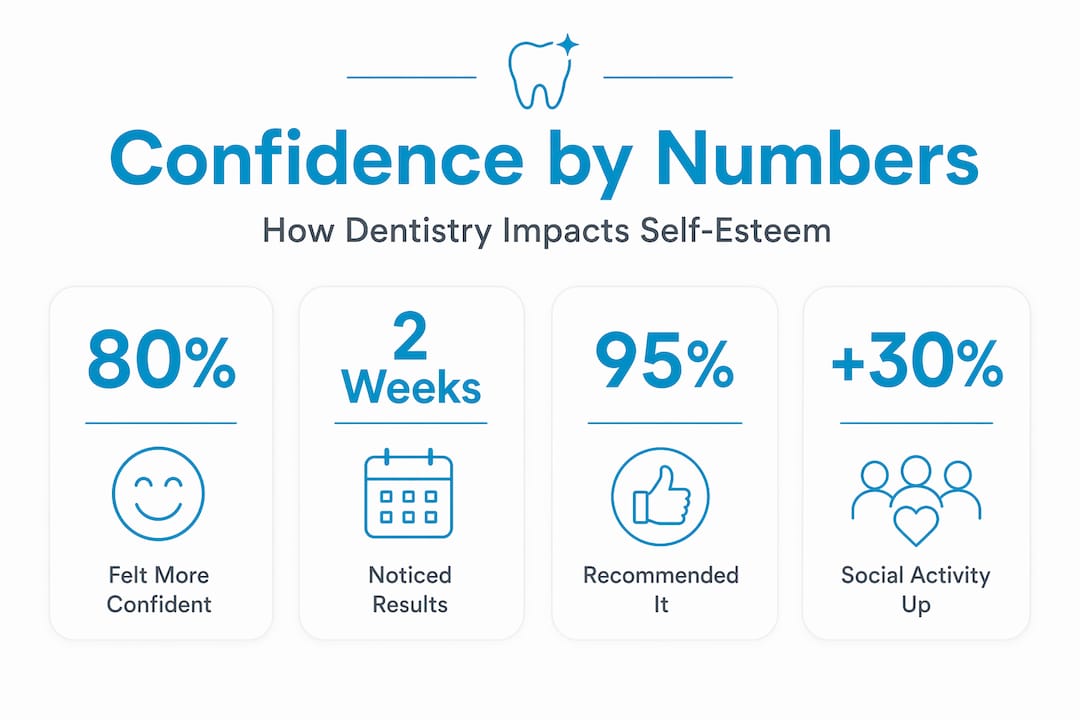
A 2025 study on dental confidence in young adults showed that self-esteem acts as a partial mediator between dental confidence and subjective well-being. In practical terms, improving how you feel about your teeth raises your self-esteem, and that raised self-esteem then improves your overall life satisfaction. The mediation model explained nearly 60% of the variance in subjective well-being, which is a striking finding for a single treatment domain.
Here is how that chain typically unfolds for a patient:
- Dental concern identified. A patient notices staining, a chipped tooth, or spacing they find distracting. They begin avoiding social situations or smiling less.
- Treatment begins. Even at the consultation stage, knowing a plan is in place shifts the patient’s emotional state. Prospective cohort research shows psychological well-being improves significantly between the first consult and mid-treatment.
- Self-esteem rises. As visible changes appear, the patient’s self-perception shifts. They feel more comfortable in conversations, at work, and in personal relationships.
- Well-being follows. With higher self-esteem, patients report improved mood, better social functioning, and greater life satisfaction.
One thing that supports this process before treatment even starts is clear visual planning. When patients can see a realistic preview of their expected results, it aligns their self-image with the outcome and reduces anxiety. This expectation management is something we prioritize at Woodbridgedentalcentre before any cosmetic procedure.
Pro Tip: Before your first cosmetic consultation, write down two or three specific social situations where you feel held back by your smile. Sharing those with your dentist gives them a much clearer target than simply saying “I want whiter teeth.”
Common procedures and how quickly confidence improves
One of the most common questions we hear is: how soon will I actually feel different? The honest answer is: sooner than most people expect.
| Procedure | Primary Confidence Benefit | Typical Timeline |
|---|---|---|
| Teeth whitening | Reduces staining embarrassment, improves smile brightness | Visible results in 1 to 14 days |
| Porcelain veneers | Corrects shape, color, and minor spacing | Results visible at placement appointment |
| Dental bonding | Repairs chips and small gaps | Same-day improvement |
| Invisalign | Addresses misalignment discreetly | Gradual improvement over months |
| Same-day crowns | Restores damaged or discolored teeth | Confidence restored same visit |
Teeth whitening is often the entry point for patients exploring cosmetic dentistry. A randomized trial on low-concentration whitening strips using 3% hydrogen peroxide showed significant shade improvements as early as Day 1, with continued gains through Day 14. Many patients are surprised to learn that how teeth whitening boosts confidence begins almost immediately, not after weeks of waiting. If you are considering at-home options, it helps to review safe whitening methods before starting.
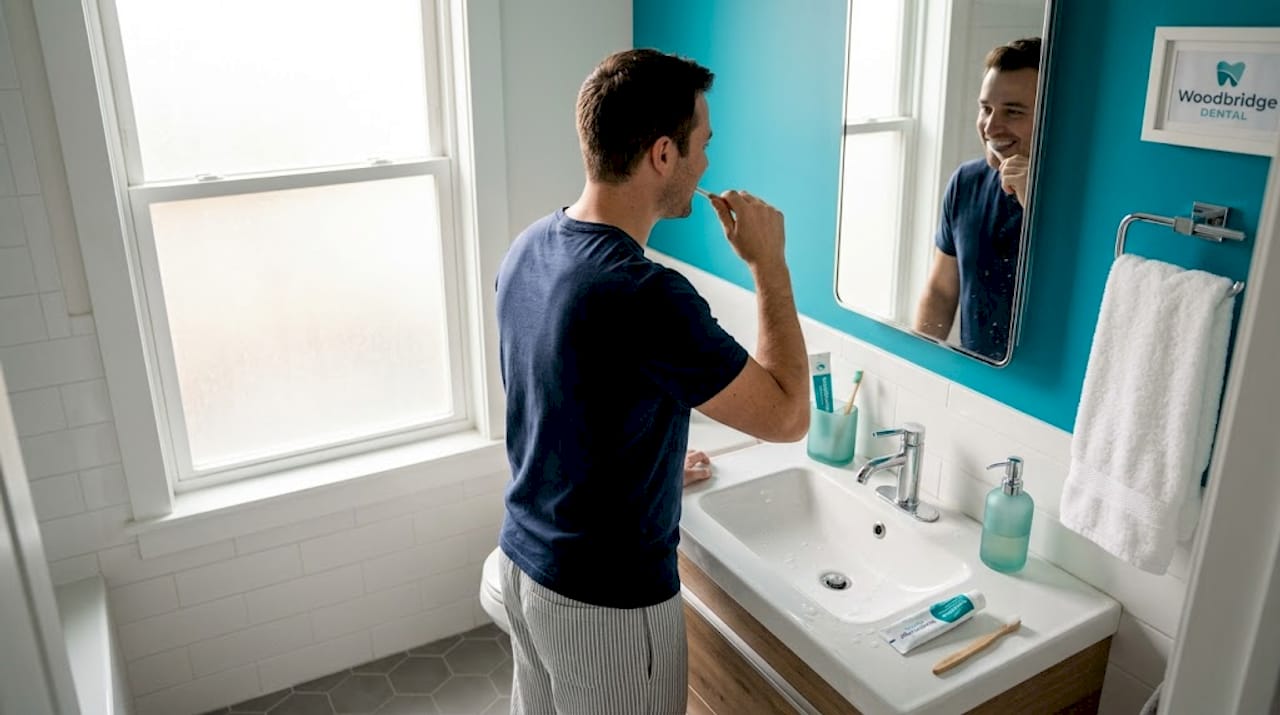
The confidence boost from veneers tends to be more dramatic because veneers address multiple concerns at once. Color, shape, minor chips, and slight spacing can all be corrected in a single treatment phase. Patients who have lived with these concerns for years often describe the result as transformative, not because their face changed, but because their relationship with their own reflection did.
Dental bonding is worth mentioning for its speed. A small chip or gap that has caused years of self-consciousness can be corrected in a single appointment. The psychological return on that investment is disproportionately large.
Pro Tip: Ask your dentist about addressing your most visible concern first, even if you plan to do more later. Early psychosocial gains from treating high-impact areas build the confidence feedback loop that makes the rest of the process feel easier.
Practical tips for getting the most from cosmetic treatment
Improving self-image with dentistry works best when you approach it as a partnership with your dental team. Here is what we recommend to patients who want lasting results:
- Be specific about your goals. Tell your dentist exactly which situations make you self-conscious. A job interview? Family photos? First dates? The more specific you are, the more targeted the treatment plan.
- Manage your expectations honestly. Cosmetic dentistry can make a real and meaningful difference. It will not resolve underlying mental health concerns on its own. If anxiety or self-esteem issues run deeper, cosmetic treatment is one part of a broader approach.
- Protect your whitening results. Avoiding staining foods and drinks in the first 48 hours after whitening is one of the simplest ways to extend your results. The white diet after whitening is a straightforward guide to follow.
- Schedule follow-up appointments. Cosmetic results need maintenance. Regular cleanings, touch-up whitening, and periodic check-ins keep your results looking their best and your confidence steady.
- Start with a visible win. Treating the concern that bothers you most first creates momentum. Patients who experience early improvement are more motivated to continue with broader treatment goals.
The right treatment depends on your individual situation, your oral health baseline, and what matters most to you personally. There is no single path that works for everyone.
Cosmetic dentistry within overall oral health
One thing I want to be clear about: cosmetic dentistry is not separate from your oral health. The two support each other in ways that matter for long-term confidence.
When we combine aesthetic improvements with restorative care, we address both how teeth look and how they function. Patients who feel good about their smile are also more motivated to maintain it. They brush more carefully, keep their appointments, and take their oral health seriously. That motivation loop is one of the most underappreciated benefits of cosmetic dentistry.
For families in Woodbridge, Vaughan, and Maple, this matters across every age group. A child who grows up with healthy dental habits and a positive relationship with their smile carries that confidence into adulthood. An adult who finally addresses a long-standing concern often describes it as a turning point in how they carry themselves.
Research confirms that patients receiving restorative and cosmetic treatment show improved mood, social interactions, and life satisfaction. These are not minor side effects of treatment. They are meaningful outcomes that deserve to be part of every treatment conversation.
We also believe in honest, personalized recommendations. Not every patient needs veneers. Not every discolored tooth requires a crown. The right treatment is the one that addresses your specific concern in the most conservative, effective way possible.
My perspective on confidence and cosmetic care
In my experience over 25 years of treating patients in Woodbridge and across Vaughan, the most meaningful outcomes I have seen were never purely cosmetic. They were personal.
I have watched patients walk in covering their mouths with their hands and walk out a few appointments later making full eye contact and laughing openly. I have seen adults who avoided professional photos for years finally feel comfortable at their company headshot session. These changes happen because the psychological benefits of improving your smile are real, not imagined.
What I have learned is that the confidence gains come fastest when we address what bothers the patient most, not what looks most dramatic on paper. A small chip that someone has been hiding for a decade can matter more to their daily confidence than a full-mouth reconstruction they never asked for.
I have also learned that empathy and clear communication before treatment begins matters as much as the clinical work itself. Patients who understand what to expect, who feel heard about their goals, and who see a realistic plan tend to experience better outcomes, both clinically and emotionally. That is the approach we take at Woodbridgedentalcentre, and it is the one I believe in most.
Cosmetic dentistry does not change who you are. It removes a barrier that was getting in the way of who you already are.
— Felix
Ready to explore your options at Woodbridge Dental Centre?
At Woodbridgedentalcentre, we work with patients across Woodbridge, Vaughan, and Maple to create personalized cosmetic treatment plans that address real confidence goals. Whether you are considering teeth whitening, veneers, bonding, or a full smile makeover, our team takes the time to understand what matters most to you before recommending anything.
Dr. Michael Rouhi and Dr. Sandra Farber bring decades of experience to every cosmetic consultation, combining clinical expertise with a warm, unhurried approach. If you are ready to talk about how your smile is affecting your confidence and what we can do about it, we would love to hear from you. You can also explore our dental restoration options if you are dealing with damaged or worn teeth alongside cosmetic concerns. Book a consultation with us and let’s have an honest conversation about what is possible for you.
FAQ
How quickly does cosmetic dentistry improve confidence?
Many patients notice a shift in confidence before treatment is even complete. Research shows psychological well-being improves significantly between the first consultation and mid-treatment, meaning early visible changes produce real psychological gains quickly.
Does teeth whitening actually boost confidence?
Yes. A clinical trial found that low-concentration whitening strips produce measurable shade improvements as early as Day 1, and patients consistently report reduced embarrassment and greater comfort smiling after whitening treatment.
What is the connection between dental aesthetics and self-esteem?
Research using validated psychological scales found that dental self-confidence correlates significantly with global self-esteem. Improving how you feel about your teeth has a direct, measurable effect on how you feel about yourself overall.
Which cosmetic procedure gives the biggest confidence boost?
The answer depends on what concerns you most. Veneers address multiple issues at once, while bonding and whitening deliver faster, more targeted results. Addressing your most visible concern first tends to produce the strongest early confidence gains.
Is cosmetic dentistry only about appearance?
No. The benefits of cosmetic dentistry extend to social functioning, mental well-being, and life satisfaction. A 2025 mediation study showed that improved dental confidence raises self-esteem, which in turn improves overall subjective well-being, well beyond how teeth look.
Recommended
- The Psychological Benefits of Restoring Your Smile with Dental Implants in Woodbridge – Woodbridge Dental Centre | Cosmetic, Implant & Family Dentistry
- What Is a Smile Makeover? Your 2026 Guide
- Why Dental Implants Have a High Success Rate – Woodbridge Dental Centre | Cosmetic, Implant & Family Dentistry
- 5 Key Benefits of Choosing Dental Implants Over Dentures – Woodbridge Dental Centre | Cosmetic, Implant & Family Dentistry


