

Compassionate dental care is the single most important factor in whether patients actually follow through with the treatment they need. At its core, it means treating every person as a whole human being, not just a set of teeth. When patients feel genuinely heard and respected, they come back. When they feel rushed or dismissed, they avoid the dentist entirely, and their oral health suffers for it.
The benefits of this patient-centered approach are real and well-documented:
- Reduced dental anxiety, which directly increases appointment attendance and treatment completion
- Stronger patient-dentist trust, making it easier to discuss concerns honestly and plan care collaboratively
- Better oral hygiene adherence between visits, because patients who feel respected are more motivated to follow through
- Improved outcomes for children and special needs patients, who respond especially well to calm, individualized care
- Stronger connection between oral and mental health, since untreated dental problems carry measurable psychological costs
- Greater access equity, because compassionate care lowers the emotional and practical barriers that keep vulnerable populations away
These benefits apply across every age group and every background. Whether we are talking about a nervous seven-year-old in Woodbridge, a senior managing multiple health conditions in Vaughan, or a newcomer family navigating an unfamiliar healthcare system, the approach is the same: empathy first, then excellent clinical care.
Why compassionate dental care matters for oral health outcomes
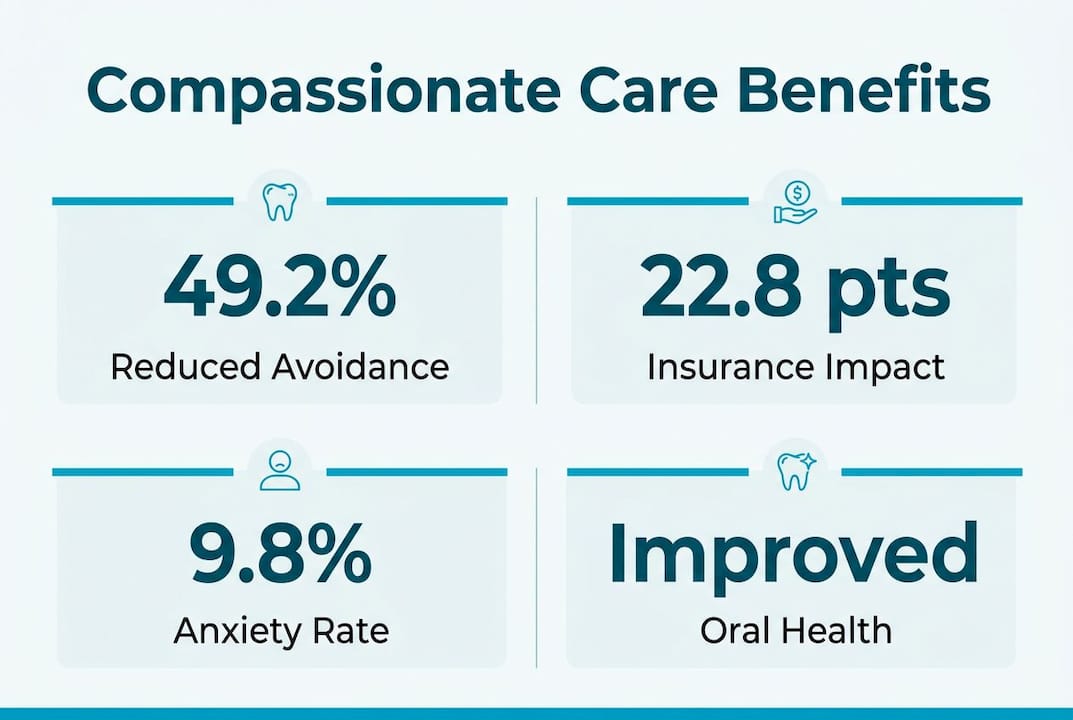
The clinical case for empathy-driven dentistry is growing. A scoping review published in BMC Medical Education found that studies examining compassion in dental treatment show that dentists with higher empathy scores tend to have patients with better oral hygiene and fewer cavities, measured using the Oral Health Assessment Tool (OHAT). That is a direct, measurable link between how a dentist communicates and what happens inside a patient’s mouth.
Dental anxiety is a major driver of poor outcomes in Canada. A national survey of Canadian adults found that 9.8% reported some fear of dental treatment, and 7.6% had missed, cancelled, or avoided an appointment because of anxiety. Among those with high fear, 49.2% had avoided care at some point, compared to just 5.2% in the low-fear group. Avoidance means untreated decay, gum disease, and pain that compounds over time.

Access barriers compound the problem. Ontario research shows that dental insurance raised yearly visit rates from 56.6% to 79.4%, a 22.8 percentage point increase, with the largest gains among lower-income groups. Compassionate care and financial access work together: removing emotional barriers and cost barriers at the same time produces the biggest improvement in who actually gets care.
The oral-mental health connection adds another layer. Among Syrian refugee parents in Ontario, poor self-rated oral health correlated significantly with higher levels of depression, anxiety, and stress. A dentist who treats the whole person, not just the cavity, is practicing a form of integrated healthcare.
| Outcome | Finding | Source |
|---|---|---|
| Appointment avoidance | 49.2% of high-fear Canadians avoided dental care | Canadian national survey |
| Visit rate with insurance | Increased from 56.6% to 79.4% in Ontario | Ontario health data |
| Oral-mental health link | Poor oral health significantly associated with higher anxiety and depression | Ontario refugee study |
| Empathy and oral hygiene | Higher dentist empathy scores linked to better oral hygiene and fewer cavities | Scoping review |
How compassionate care serves patients of all ages and special populations
Children and adolescents
Children who have a frightening first dental experience often carry that fear into adulthood. Gentle, child-friendly dental care uses age-appropriate language, slow introductions to instruments, and plenty of positive reinforcement. The goal is to build a child’s confidence in the dental chair, not just complete the appointment.
Patients with special needs
Children and adults with autism spectrum disorder, Down syndrome, sensory processing differences, or physical disabilities require individualized approaches. This might mean shorter appointments, sensory accommodations like dimmed lighting or reduced noise, or a gradual desensitization schedule spread across several visits. Behavioral and clinical support tailored to the individual consistently leads to better dental experiences and outcomes.

Seniors
Older patients often manage multiple medications, reduced mobility, and conditions like dry mouth or gum recession. Compassionate care for seniors means taking extra time to explain treatment, coordinating with other healthcare providers when needed, and never making a patient feel like a burden for asking questions.
Cultural sensitivity and newcomer families
Vaughan and the surrounding communities are among the most culturally diverse in Ontario. Language barriers, unfamiliarity with the Canadian dental system, and previous negative experiences in other countries can all make dental visits feel intimidating. Compassionate practices address this by offering clear explanations, avoiding judgment, and welcoming patients from every background without assumptions.
- Use plain language and visual aids when language is a barrier
- Ask about cultural preferences around treatment decisions
- Never moralize about past dental habits; focus on what is possible now
- Recognize that financial stress affects how patients engage with care recommendations
What techniques actually reduce dental anxiety?
Anxiety in the dental chair rarely comes from pain alone. Research shows patients feel most distressed when they feel disempowered and misunderstood, not just when a procedure is uncomfortable. Addressing the psychological dimension is as important as managing physical discomfort.
Practical techniques that work:
- Tell-show-do: Explain each step before doing it, show the instrument, then proceed slowly. This removes the element of surprise.
- Patient-controlled stops: A simple hand signal that pauses treatment gives patients a genuine sense of control, which lowers anxiety measurably.
- Gradual exposure appointments: Short, low-stakes visits before any treatment begins allow anxious patients to build comfort at their own pace.
- Collaborative treatment planning: Discussing options and letting patients choose builds trust and commitment to the plan.
- Mindfulness and breathing techniques: Guided slow breathing before and during treatment reduces the physiological stress response.
- Sedation options: For patients whose anxiety cannot be managed behaviorally, options range from nitrous oxide to oral sedation to general anesthesia. The graduated approach starts with the least invasive option and escalates only when needed.
Pro Tip: If you or your child has significant dental anxiety, ask for a “meet and greet” appointment before any treatment. A short visit just to see the office, meet the team, and ask questions can make the actual treatment appointment far less stressful.
The Journal of the Canadian Dental Association describes a five-part patient-centered model that includes understanding the patient’s social context, demonstrating genuine empathy, avoiding moralizing, minimizing the social distance between dentist and patient, and favoring direct personal contact over clinical detachment. Moving away from paternalistic dentistry toward this kind of collaborative partnership is what builds lasting trust.
The long-term benefits of staying with a compassionate dental practice
Patients who trust their dentist come back regularly. That consistency is where the real oral health gains happen. Preventive care, caught early, costs far less and causes far less discomfort than emergency treatment for problems that were allowed to progress.
Long-term benefits of compassionate, consistent dental care:
- Fewer dental emergencies, because problems are caught and treated before they become urgent
- Better home care habits, since patients who feel respected are more likely to follow through on brushing, flossing, and dietary advice
- Reduced systemic health risks, given the well-established oral-systemic health connection between gum disease and conditions like heart disease and diabetes
- Lower lifetime dental costs, through prevention rather than repeated restorative treatment
- Psychological confidence, because a healthy mouth contributes directly to self-esteem and social comfort
- Continuity of care for families, where a trusted practice knows each family member’s history, preferences, and concerns across decades
At Woodbridgedentalcentre, we see this play out every day. Families who started bringing their children in for first visits years ago are now bringing those same children back as adults. That continuity is only possible when patients feel safe enough to keep coming back.
Compassionate care in the Canadian context: what local research tells us
Ontario presents a specific set of challenges and opportunities for patient-centered dentistry. The province has one of the most diverse populations in Canada, with communities like Woodbridge, Maple, and Vaughan reflecting that diversity directly. Financial barriers, language differences, and varying cultural relationships with healthcare all shape how patients experience dental visits.
The Ontario data on insurance and visit rates cited earlier tells part of the story. The 22.8 percentage point increase in yearly dental visits when insurance is present shows how powerfully access barriers suppress care-seeking. Compassionate practices that work to reduce emotional barriers produce a similar effect on the patients who are present but disengaged.
The research on Syrian refugees in Ontario is a pointed reminder that oral health and mental health are inseparable for many patients. A mean self-rated oral health score of 3.2 out of 5 in that population correlated directly with elevated anxiety, depression, and stress. Dentists who understand this connection treat the appointment as more than a technical procedure.
At Woodbridgedentalcentre, Dr. Michael Rouhi, Dr. Sandra Farber, and their team have built the practice around exactly this model. Every patient, from a toddler’s first cleaning to a senior’s restorative appointment, receives the same unhurried, respectful attention. For families across Vaughan and Woodbridge, that consistency is what makes the difference between dreading dental visits and actually looking forward to them.
| Population | Key challenge | Compassionate care response |
|---|---|---|
| High dental fear (9.8% of Canadians) | Appointment avoidance, worsening oral health | Gradual exposure, sedation options, empathetic listening |
| Low-income Ontarians | Financial barriers reduce visit rates | Accessible scheduling, clear cost communication, insurance navigation |
| Newcomer and refugee families | Language, cultural, and systemic barriers | Plain language, cultural sensitivity, non-judgmental approach |
| Children with special needs | Sensory and anxiety challenges | Individualized accommodations, shorter visits, behavioral support |
Woodbridgedentalcentre welcomes patients of all ages and backgrounds. If you or someone in your family has been putting off dental care because of anxiety, past experiences, or uncertainty about what to expect, we encourage you to reach out. Our team is here to make every visit feel manageable. Learn more about our family dental care services, or explore our family oral health guidance to get started.
Key Takeaways
Compassionate dental care directly improves patient attendance, oral hygiene, and long-term health outcomes by removing the psychological and practical barriers that keep people away from treatment.
| Point | Details |
|---|---|
| Anxiety drives avoidance | 49.2% of high-fear Canadians have avoided dental care, compared to 5.2% in the low-fear group. |
| Insurance and access work together | Dental insurance raised Ontario visit rates from 56.6% to 79.4%, a 22.8 percentage point increase. |
| Oral and mental health are linked | Poor oral health correlates significantly with higher anxiety, depression, and stress in Ontario populations. |
| Empathy improves clinical outcomes | Higher dentist empathy scores are associated with better oral hygiene and fewer cavities in patients. |
| Long-term relationships prevent emergencies | Consistent compassionate care reduces emergency visits and lowers lifetime dental costs through prevention. |
FAQ
What is compassionate dental care?
Compassionate dental care is a patient-centered approach that prioritizes empathy, clear communication, and respect for each patient’s emotional and physical needs, alongside clinical treatment.
How does dental anxiety affect oral health in Canada?
A national Canadian survey found that 7.6% of adults had avoided dental appointments due to anxiety, and among those with high fear, nearly half had skipped care entirely, leading to worse oral health over time.
What techniques help anxious dental patients?
Graduated exposure visits, patient-controlled stop signals, collaborative treatment planning, and sedation options ranging from nitrous oxide to general anesthesia all help manage dental anxiety effectively.
Why does compassionate care matter for children with special needs?
Children with sensory sensitivities or developmental differences benefit from individualized accommodations like shorter appointments, reduced sensory stimulation, and behavioral support, which produce better experiences and outcomes.
How do I know if a dental practice is truly patient-centered?
Ask whether the team takes time to explain procedures before starting, whether you can ask questions to ask about dental care options without feeling rushed, and whether the practice has experience with anxious patients or special needs populations.


